
Humble and reverent
Westminster Abbey, May 2nd, 2025
Elizabeth of York. I have researched her more thoroughly than any of the other queens and yet her personality, that sense of realness I have for say, Margaret of Anjou or Henrietta Maria, is missing. I have a list of facts, of dates and events, but where is the woman herself?
She was born the eldest daughter of a king in a (relatively) stable kingdom. She was affianced three times before her father died, which would have seemed natural to a girl educated to be a princess and then most likely the queen of an allied foreign power. She was considered beautiful, but she would have had to have been truly horrendous for commentators to say otherwise. Like Anna of Denmark, its possible to split Elizabeth’s life into three discrete periods; that of her father’s reign when she was the Princess Royal; that of her uncle’s reign, when she was an awkward bastard to keep an eye on; and that of her husband’s reign, when she was queen and mother of the new dynasty.

It feels like the middle period is where she is most likely to be found – it was a period of imprisonment while she was with her mother in the sanctuary of Westminster Abbey, and even after emerging from the abbey, a time of uncertainty and public degradation. Her relationship with her uncle Richard III is interesting maybe because the possibilities are so – to be honest – gross. Elizabeth is painted as being docile, obedient and respectful – to her father, her siblings, her husband, even her mother-in-law Margaret Beaufort. But for the two years of Richard’s reign she wasn’t quite right. Regardless of the Titulus Regius act making her and her siblings illegitimate, she was, in the suspicious absence of her brothers, the true Yorkist heir according to Richard’s enemies and even a lot of his allies. Richard went to great trouble to winkle her and her sisters out of sanctuary, making one of his many public proclamations that he intended to protect the girls (something no other king felt the need to do, methinks the gentleman doth protest too much). He clearly wanted her where he could control her. During this short period there are two sources that cast opposing lights on her character. The Ballad of the Lady Bessy, which tells the fictionalised account of Elizabeth personally orchestrating the rebellion against Richard and her marriage to Henry; and the Buck letter, which if Buck is to be believed is written by Elizabeth to a third party begging them to help in speeding up her marriage to her uncle. Frustratingly, neither can really be believed – the Ballad is a mess of romance and courtly tropes, and no historian in their right mind would believe that the letter really said what Buck claimed it said.

So we’re left again with a void, with those two opposing ideas of her cancelling each other out. She probably wasn’t a revolutionary, and she probably wasn’t interested in an incestuous relationship with the king who had hounded her and her family for months and was publicly believed to have murdered her two young brothers. So for goodness sake what did she want? Her mother made dynamic choices of her own accord – to retreat into sanctuary twice (even recognising when she had nothing left but bad choices and gave up her son Richard to his eventual murder) and later to retire to a convent. Elizabeth’s mother-in-law Margaret Beaufort took control of her life as soon as she was able, ultimately resulting in her being declared femme sole and legally in charge of her money and lands despite her husband, even electing to take a public vow of chastity with his support. I’d say Elizabeth was eclipsed by these two strong women, but history has pretty much forgotten them too.

Once Richard was out of the way, she was then systematically eclipsed by Henry’s ego. He couldn’t be seen to be claiming the crown through Elizabeth’s right, so she had to wait through 11 months and the birth of a male heir before she could be crowned queen. For the most part she becomes the ideal of a queen – produces heirs, goes on progresses to be seen by her people, makes the appropriate charitable gifts (and gets so far into debt Henry has to help her out by permitting her to pawn her silverware to him). During her reign there are two cracks in the façade where the real woman peaks through: in refusing to allow her daughter Margaret to travel north to be with her husband the king of Scotland until she is at least 14 (having heard he was a terrible womaniser and worrying that he wouldn’t wait before expecting her to fulfil her wifely duties); and in her support of Henry when they hear that Arthur has died. She is reported as saying to Henry “…God has left you yet a fair prince and two fair princesses…and we are both young enough”. She packs away her own grief to comfort him, offering her body to replace the lost son even though at 36 it would be dangerous, before giving vent to her own feelings in private. It frustrates me that in that moment when Henry comes to comfort her in his turn, all he can do is repeat her own words back to her. He has nothing to offer anywhere near the significance and gravity of what she offers him. It doesn’t matter how rich or powerful a king is, the thing they all value above everything is heirs, and he can’t get those without a queen. Anna of Denmark knew it, and it seems Elizabeth knew it too. What strength it must have taken, to hear in a moment that your 15 year old son, your golden child and the hope of your future dynasty is dead, and died a hundred miles away from you, alone and without you to comfort him, and in the next moment to swallow all your pain and say “I will make you another”. In the absence of any other evidence, I chose to believe this was the real Elizabeth. Call her docile or obedient, even invisible, but she was strong and not just for herself.
The death of Arthur and the strain of her final pregnancy probably finished her off. She went into premature labour at the Tower of London and died a week later, almost certainly from iron-deficiency anaemia. Henry was with her, though none of her children were. She’s buried in the crypt of the Abbey and her joint tomb with Henry is a testament to their pragmatic union, bringing together two houses and beginning a line that is still in power today.
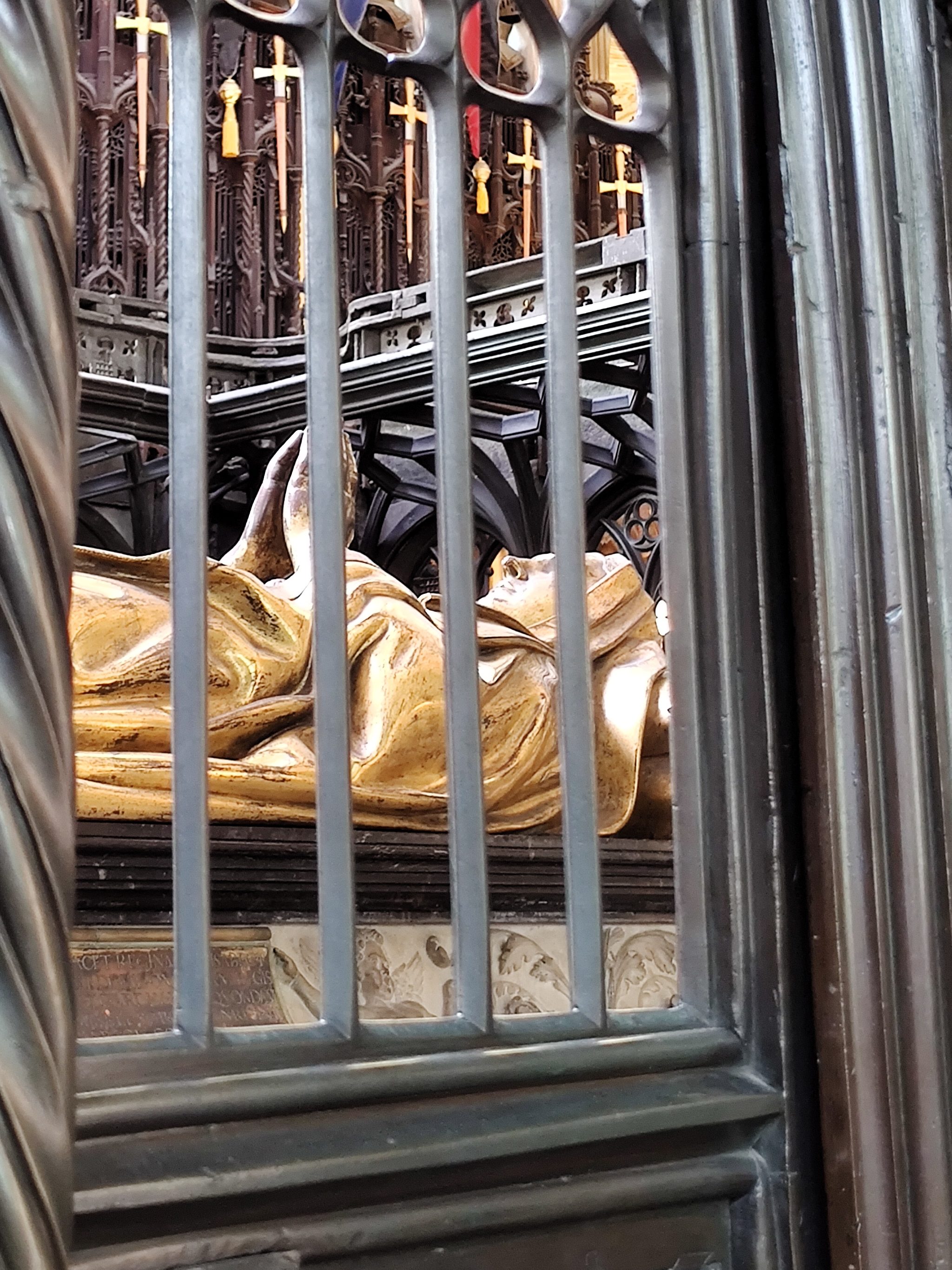
Elizabeth is seen as a cut-out, letting things happen to her, a very correct princess and queen. But she was loyal to the people she loved, and she loved them fiercely, and that’s not nothing. Elizabeth of York, Queen of England, I honour you.
The Life of Elizabeth of York (or what we know of it)
Between the major sources for Elizabeth’s life there are only a few dates on which they agree, while most have a drift of a few days or even weeks. For the timeline below, I have usually hedged my bets and gone with Alison Weir’s date, but the others can be found in their various sources. 1502 and 1503 have more financial details and more evidence of Elizabeth’s movements because those are the only years for which we have accounts of her treasury.
1466
- February 11: Elizabeth is born to Elizabeth Wydeville and King Edward IV of England. She is baptised later that month in St. Stephen’s Chapel of Westminster Abbey by George Neville, Archbishop of York. Her godmothers are Cecily Neville, Duchess of York and Jacqeutta of Luxembourg, Duchess of Bedford, with the Earl of Warwick as godfather. Elizabeth’s new household is headed by Margaret, Lady Berners, who receives a salary of £100 per year for her role as governess. She and her sister read and write in English and French, and enough Latin to understand the rites of the church, but not enough to converse. She learns to dance, to sing and to play various instruments. She learns to ride and to hunt, as well as needlecraft, sewing and games of chance. [11, 12, 14]
1467
- August 11: Elizabeth’s mother Elizabeth Wydeville gives birth to a daughter, named Mary, at Windsor Castle [14]
- October 9: Elizabeth is granted for life the manor of Great Linford, probably so the rentals from the manor will offset the cost of her upbringing [14]
1468
- October 9: Elizabeth’s mother Elizabeth Wydeville is granted £400 per year for the upkeep of the two princesses, who are now living at Sheen Palace [14]
1469
- March 20: Elizabeth’s mother Elizabeth Wydeville gives birth to a daughter, named Cecily, at Westminster Palace [14]
- June 24: Elizabeth and her sister Mary accompany Elizabeth Wydeville on her visit to Norwich. They are greeted as they enter the city by a pageant featuring angels and giants, banners decorated with fleur-de-lys, crowns and roses, and speeches and songs by the city officials. While here they hear the news of Edward IV’s defeat and imprisonment by Elizabeth’s godfather the Earl of Warwick and her uncle the Duke of Clarence. At the same battle her grandfather and great-uncle are beheaded without trial [12, 14]
- September: Elizabeth is proclaimed the heiress apparent of her father Edward IV, in the absence of any male children [14]
1470
- January 5: Elizabeth is formally betrothed to George Neville, brother of the Earl of Warwick, probably as a way of frustrating George, Duke of Clarence’s pretensions to the throne. However when the groom-to-be defects, the contract is cancelled [11, 14]
- June 8: Elizabeth travels with her mother and father to Canterbury to celebrate the Feast of Pentecost and to give thanks for their survival in the northern rebellion [12, 14]
- June 10: Elizabeth goes in procession with her parents to High Mass at Canterbury Cathedral, celebrated by Thomas Rotherham, Bishop of Rochester [14]
- September: Elizabeth, hers sisters and mother take refuge in the Tower of London after Edward IV is forced to flee in the face of Margaret of Anjou’s forces [14]
- October 1: Elizabeth, her sisters and mother, now 8 months pregnant, sneak away by water from the Tower and register themselves as women of sanctuary at Westminster Abbey, allowing them to remain there unmolested by the Earl of Warwick and the Duke of Clarence’s forces. They are received by Thomas Milling, Abbot of Westminster, who insists on them residing in his own chambers in Cheneygate [12, 14]
- November 1: Elizabeth’s mother Elizabeth Wydeville gives birth to son, named Edward, who would later become Edward V, while hiding in sanctuary at Westminster Abbey. He is baptised in the Abbot’s house by the sub-prior. The Duchess of Bedford and Lady Scrope stand as godmothers while the Abbot George Milling and Prior, John Eastney, in the absence of any other men of rank, stand as godfathers. Elizabeth takes part in the ceremony, carrying the chrisom [12, 14]
1471
- April 10: Elizabeth, her mother and sisters are escorted out of sanctuary by her returned father Edward IV, who has re-established his throne and re-imprisoned Henry VI [14]
- April 11: Elizabeth and her reunited family stay at Cecily Neville’s home at Barnard’s Castle [12, 14]
- April 13: Elizabeth’s betrothed husband, George Neville, Lord Montagu is slain at the Battle of Barnet, along with her godfather the Earl of Warwick, by Edward IV’s forces [14]
- May 12: Elizabeth and her family take refuge in the Tower of London as Thomas Neville leads c.17,000 men against London to free Henry VI. The force is repelled by Elizabeth’s uncle, Lord Rivers [14]
1472
- April 10: Elizabeth’s mother Elizabeth Wydeville gives birth to a daughter named Margaret, at Windsor Castle [11, 14]
- December 11: Elizabeth’s sister Margaret dies, and is buried at Westminster Abbey [11, 14]
1473
- August 17: Elizabeth’s mother gives birth to a son, named Richard, at the Dominican Friary in Shrewsbury. He is initially raised in the same household as Elizabeth, though their brother Edward has a separate household at Ludlow Castle [14]
1475
- June 20: Elizabeth is granted 10,000 marks towards her marriage in her father Edward IV’s will, as he prepares for war against France. [11]
- August 29: Elizabeth’s father Edward IV meets with Louis XI of France to agree the terms of the Treaty of Picquigny, part of which includes the betrothal of Elizabeth to the Dauphin Charles. England would return the Duchy of Aquitaine to France as part of Elizabeth’s dowry. If Elizabeth dies before the wedding, her sister Mary would take her place. Elizabeth would travel to France when she was 12 and in the meantime is styled Madame la Dauphine [14]
- November 2: Elizabeth’s mother Elizabeth Wydeville gives birth to a daughter, named Anne, at Westminster [14]
- December 18: Elizabeth’s governess Lady Berners dies [14]
1476
- July 29-30: Elizabeth, her parents and sisters travel to Fotheringay Castle in Northamptonshire. They attend the re-interment of Elizabeth’s grandfather the Duke of York and her uncle the Earl of Rutland. After the service Elizabeth and her family distribute alms to the poor, and attend a celebratory feast [14]
1477
- March: Elizabeth’s mother Elizabeth Wydeville gives birth to a son, named George [14]
- April 28: Elizabeth, her mother Elizabeth Wydeville and her aunt Cecily of York are inducted into the Order of the Garter. However no spaces are made available to any ladies during the ceremony, so they are forced to watch from the rood loft [14]
1478
- January 15: Elizabeth is present at her brother Richard’s wedding to Anne Mowbray, daughter of the Duke of Norfolk, in St. Stephen’s Chapel, Westminster. Elizabeth is allowed to hand out prizes at the celebratory tournament afterwards [12, 14]
- February 18: Elizabeth’s uncle George, Duke of Clarence is attainted and executed for treason. His son, Edward Earl of Warwick and probably also his daughter Margaret of Clarence, join Elizabeth’s household [14]
- February: Elizabeth turns 12 years old and per the terms of the Treaty of Picquigny, is expected to be called to France. However, Louis XI puts off the trip saying the Dauphin Charles is too young (he is 8 at the time) and that the jointure which Edward IV desperately wants won’t be paid until they are married [14]
1479
- March: Elizabeth’s brother George dies at Windsor Castle, and is buried at Westminster Abbey [14]
- August 14: Elizabeth’s mother Elizabeth Wydeville gives birth to a daughter, named Katherine, at Eltham Palace [14]
1480
- June: French envoys arrive at the English court with an offer of 15,000 crowns maintenance for Elizabeth until she is married to the Dauphin Charles, as a way of stalling Edward IV from supporting the rival Burgundians [14]
- November 10: Elizabeth’s mother Elizabeth Wydeville gives birth to a daughter, named Bridget, possibly for her grandmother Cecily of York’s favourite saint. [14]
- November 11: Elizabeth’s sister Bridget is christened at Eltham Palace, with Elizabeth and her grandmother Cecily of York standing as godmothers. She is baptised by the Bishop of Chichester, and is early on dedicated to the nunnery at Dartford [11, 14]
1482
- May 23: Elizabeth’s sister Mary dies at Placentia Palace in Greenwich. She is buried in St. George’s Chapel. Windsor. Neither Elizabeth no any of her family attend, apart from Edward who is chief mourner [11, 12, 14]
- December 23: Elizabeth’s betrothal to Dauphin Charles is annulled by the conclusion of the Treaty of Arras between Louis XI and Maximillian of Austria [12, 14]
- December 25: Elizabeth is with the royal court at Westminster for the Christmas holidays [14]
1483
- April 9: Elizabeth’s father Edward IV dies at Westminster, possibly from typhoid. He is succeeded by his 12-year old son as Edward V. In his will, Edward IV allows Elizabeth £10,000 for her marriage, and reportedly puts her into the care of Thomas, Lord Stanley, husband of Margaret Beaufort, though no evidence survives to suggest she was ever actually in his care. [12, 14]
- April 20: Elizabeth’s father is interred in St. George’s Chapel, Windsor. Neither Elizabeth nor any of her female relatives attend [14]
- April 29: Elizabeth’s brother Edward V is intercepted on his way from Ludlow to London by her uncle, Richard, Duke of Gloucester and a large number of men, and Edward’s uncle Anthony Rivers is arrested and imprisoned. Elizabeth would never see her brother again. [12, 14]
- April 30: Elizabeth’s mother Elizabeth Wydeville, fearing retribution from Richard, Duke of Gloucester for her family’s success, takes her children and registers herself for sanctuary at Westminster Abbey, accompanied by her brother, Lionel Wydeville, Bishop of Salisbury. They would remain there for the next 11 months [11, 12, 14]
- May 7: Elizabeth and her family inside the Abbey are left penniless when Edward IV’s executors decline to administer his will, claiming that the money cannot be paid to anyone under the protection of sanctuary. [14]
- June 16: Elizabeth’s uncle, Richard, Duke of Gloucester brings a force to Westminster Abbey to remove the young Richard, Duke of York from his mothers’ “imprisonment”, ostensibly so he can attend his brother Edward’s coronation. Elizabeth’s mother gives up the boy, but keeps her daughters in sanctuary with her. The brothers were probably lodged in the Tower for the next couple of months, during which people saw less and less of them [11, 12, 14]
- June 25: Elizabeth’s uncle the Earl Rivers and her half brother Lord Grey are summarily executed on the orders of her uncle, Richard Duke of Gloucester. On the same day Elizabeth’s brothers Edward and Richard are proclaimed illegitimate on the grounds that Edward IV had a pre-existing marriage contract before he married Elizabeth Wydeville. Richard, Duke of Gloucester, as the only surviving male descendant of Richard, Duke of York, is proclaimed King Richard III [14]
- July 6: Elizabeth’s uncle is crowned Richard III alongside his wife Anne Neville in Westminster Abbey, close to where Elizabeth, her mother and sisters are hiding. Shortly afterwards, Elizabeth and her family are placed under armed guard within the Abbey. [14]
- September 3: The night identified as most likely being the that on which Elizabeth’s two younger brothers Edward and Richard are murdered in the Tower on the orders of her uncle, Richard III. Their deaths leaves Elizabeth as the Yorkist heiress to the throne [14]
- December 25: Henry Tudor, in Rennes Cathedral, publicly proclaims his intention of marrying Elizabeth and unifying the two houses of York and Lancaster. Henry’s claim to the throne is relatively weak, but would be significantly bolstered by a match with Elizabeth, leading many Lancastrians and disaffected Yorkists to declare their support for him [14]
1484
- January 23: Elizabeth’s uncle Richard III passes the Titulus Regius, officially making her and her siblings illegitimate on the grounds that Edward IV had been formally betrothed to another woman, Eleanor Butler, before marrying Elizabeth Wydeville. They are stripped of their titles and barred from inheriting any property from their parents[12, 14]
- March 1: Elizabeth and her sisters are offered public protection in a written declaration made before the high council and the Lord Mayor of London by her uncle, Richard III. He offers to marry them to suitable men and provide for their dowries, though significantly less than they were worth, if they would only leave sanctuary. Being pressed by her advisors and not having any other option, Elizabeth’s mother Elizabeth Wydeville send them out the same day. The five sisters are initially welcomed at court by Richard, before travelling to be with their mother who left shortly after them, possibly at Sheen Palace or Heytesbury in Yorkshire. [11, 12, 14]
- March 27: Elizabeth’s potential marriage to Henry Tudor receives a papal dispensation [14]
- April 9: Elizabeth’s cousin, Edward of Middleham, Prince of Wales dies, leaving his father Richard III without an heir [14]
- December 25: Elizabeth is sent by her mother Elizabeth Wydeville, with her sisters, to attend Queen Anne at the Christmas Court at Westminster. Rumours are circulating that as Anne is seriously ill, Richard is looking either at her death or a divorce as a way of then marrying Elizabeth. While at court, Elizabeth is encouraged to wear some of the Queen’s dresses, causing a scandal, since as being proclaimed illegitimate, she has no right to such colours and fabrics. [11, 14]
1485
- January 6: Elizabeth is probably present at Richard III’s crown-wearing ceremony at Westminster Palace for the Feast of the Epiphany [14]
- February: Elizabeth is alleged to have written a letter to Sir John Howard, Duke of Norfolk, in which she begs his assistance in moving forward a potential marriage between herself and her uncle. The text of the letter is never fully transcribed, and it was only seen by one person before it was heavily damaged by fire [12]
- April: Richard III publicly refutes the rumour that he had ever intended to marry Elizabeth. Copies of his proclamation are sent to all major towns and cities [14]
- Summer: Elizabeth is staying at Sheriff’s Hutton in Yorkshire, in the household of Richard III’s bastard son and other noble children. [14]
- August 22: Elizabeth’s uncle Richard III is killed at the Battle of Bosworth Field, and her fiancee Henry Tudor is proclaimed king. Within hours Henry sends Sir Robert Willoughby and Sir Ian Halewell to Sheriff Hutton to release Elizabeth, and also fetch her mother Elizabeth Wydeville. She is escorted to Margaret Beaufort’s house at Coldharbour in London, probably later joined by her sisters [14]
- October 30: Elizabeth’s fiancee Henry Tudor is crowned King Henry VII at Westminster Abbey. She does not attend, Henry keen to make it clear he is king by right of conquest, not through marriage. Very shortly afterwards, Henry has the Titulus Regius act repealed, without allowing it to be read in public, thereby re-legitimising Elizabeth and her sisters [14]
- November 7: Elizabeth’s mother’s marriage to Edward IV is upheld by Henry VII’s first parliament, re-legitimising Elizabeth and her sisters. People who have copies of the unspoken-off Titulus Regius are ordered to destroy them before the following Easter on pain of imprisonment and fine [12]
- November 17: Elizabeth is likely present at the wedding of her aunt Katherine Wydeville to Henry VII’s uncle Jasper Tudor [14]
- December 10: Elizabeth’s wedding date is set for the 18th January and she is, in the interim, styled the Duchess of York, in a move to placate any Yorkist sympathisers [14]
1486
- January 14: Elizabeth and Henry VII’s representatives present a petition to the English papal legate requesting dispensation to marry as they are related in the fourth degree [14]
- January 16: Elizabeth and Henry VII’s marriage receives legatine approval, with the papal bull issued on 2nd March [14]
- January 18: Elizabeth is married to Henry VII at Westminster Abbey. Elizabeth wears a gown of gold and crimson worth £11, with her hair loose on her shoulders and threaded with jewels, and is presented with a gold wedding ring valued at 23s. Though only costing 23s, Elizabeth’s wedding ring weighed .666 of an ounce, significantly more than modern rings which weigh between .13 and .18 of an ounce. The wedding is followed by a great feast, and the couple spend their wedding night in the Painted Chamber at Westminster Palace. [12, 14]
- March: Elizabeth remains at Placentia Palace, Greenwich with Margaret Beaufort while Henry travels north on a progress to York. Elizabeth is known to be pregnant, and probably remains behind due to morning sickness and fatique [14]
- March 27: Papal bull issued by Pope Innocent VIII, approving the marriage of Henry VII and Elizabeth of York. It also confirms the crown of England to Henry VII and the heirs of his body ‘as by the right of his most noble [victory] and by election of the lords spiritual and temporal and other nobles of his realm, and by the ordinance and authority of parliament made by the three estates of this land’. ‘Furthermore he approveth, confirmeth and declareth that if it please God that the said Elizabeth, which God forbid, should decease without issue between our sovereign lord and her of their bodies bor[n and had], then such issue as between him and her whom after that God shall join him to shall be had and born [shall be] heritors to the same crown and realm of England’. The bull makes no mention of Elizabeth’s right to the throne, and that if she has no children, it is Henry’s line that will hold the throne [7]
- June 5: Elizabeth travels by barge with Henry from Sheen Palace into London for his official welcome back to the city [14]
- August: Elizabeth and Henry remove to Winchester for her lying in, as Henry believes the city was the original location of Camelot and wants his child to be born there. Elizabeth’s actual lying in takes place in St. Swithnin’s Priory, attached to the cathedral. She is joined in her privy chamber by her mother Elizabeth Wydeville, her sisters and Margaret Beaufort, who orders the furnishings for Elizabeth’s chamber during her lying in. There are 2 pairs of Rennes sheets, 2 Rennes head sheets, 2 long and square pillows of fustian stuffed with fine down, a pane of scarlet ermine embroidered with crimson velvet-upon-velvet with a matching head sheet, a couverture of fine lawn, a mattress stuffed with wool, a feather bed with a bolster of down, a canopy of crimson satin embroidered with the king and queen’s arms, 4 crimson damask cushions, and a mantle of crimson velvet plain furred with ermine for the queen to wear in her pallet [12, 14]
- September 20: Elizabeth gives birth to her first child, a son named Arthur, at St. Swithin’s Priory, Winchester. The young prince is born several weeks early and rather than risk transporting him back to London, arrangements are made for him to be housed temporarily at Farnham under the custody of Peter Courtenay, Bishop of Winchester. Elizabeth is left weak after her labour, and suffers from a post-partum fever for several weeks [14]
- September 24: Elizabeth’s son Arthur is christened in Winchester Cathedral. Elizabeth’s sister Cecily carries the baby, with her other sister Anne carrying the chrisom, and the Marchioness of Dorset carrying the prince’s train, proceeded by 200 torchbearers. Elizabeth Wydeville stands as godmother and Thomas Stanley, Earl of Derby as godfather. A gilt font is brought from Canterbury for the ceremony, where it is put on a dais in the middle of the church so everyone can see without pressing too close. It is lined with folds of Rennes linen and sits under a great gilt canopy, with a heated pan of coals to warm and freshen the atmosphere. Elizabeth Wydeville gives the child a rich cup set with jewels, the earl of Oxford gives a salt cellar of gold and his godfather Lord Matravers a coffer filled with gold set with precious stones. The prince is then returned to Elizabeth, who by tradition is the first to call him by his newly christened name [9, 12, 14]
- October 26: Elizabeth, Henry VII and the royal court arrive at Farnham Castle, where Prince Arthur is probably installed in the Bishop’s Palace [14]
- November 1: Elizabeth and Henry VII are at Greenwich for a great court to celebrate All Hallows [14]
- November 18: Elizabeth is gifted £100 by Henry VII in honour of her safe delivery [14]
- December: Elizabeth attends the wedding of her sister Cecily of York to John, Viscount Welles, Margaret Beaufort’s half-brother. [14]
- December 25: Elizabeth and Henry celebrate the Christmas holidays at Greenwich [14]
1487
- February: Elizabeth’s mother Elizabeth Wydeville is stripped of all her properties and possessions, awarded and annuity of 400 marks and retires to St. Saviours Abbey at Bermondsey. There are suggestions that Henry doesn’t trust Elizabeth, and possibly that she had been in some way involved in the Simnel Plot, but more likely she was a huge drain on his finances and this was a way of allocating those funds to Elizabeth of York. [14]
- February: Elizabeth is at Sheen Palace to receive the young Edward, Earl of Warwick, who has been publicly paraded through London to counter the claim of Lambert Simnel that he is the real Earl, and rightful heir to the throne. As Elizabeth lived with the Earl at Sheriff’s Hutton, she would have known him well [14]
- February 6: Elizabeth, her mother-in-law Margaret Beaufort, and several others, are granted a licence to found a perpetual chantry in Guildford in Surrey, and to endow the chaplain with land and rents up to 10 marks a year for upkeep. [4]
- February 20: Elizabeth has transferred to her the lordships and manors of Waltham Magna, Badewe, Masshbury, Dunmowe, Lighes and Farnham in Essex, as the start of her receiving her full compliment of dower lands [12]
- March: Elizabeth receives a summons from Henry that she and his mother Margaret Beaufort should join him at Kenilworth after he hears of the Simnel invasion from Ireland [14]
- April 15: Elizabeth is finally awarded her dower lands that had been her mother’s [14]
- May 29: Elizabeth and Prince Arthur join Henry at Kenilworth [14]
- July: Elizabeth is re-joined at Kenilworth by Henry after his victory at the Battle of Stoke [14]
- August: Elizabeth and Henry visit Oxburgh Hall in Norfolk and are hosted by Sir Edmund Bedingfield [14]
- October 27: Elizabeth and Henry travel from Warwick towards London [14]
- October 31: Elizabeth and Henry celebrate All Hallows at St. Albans [14]
- November 3: Elizabeth watches from a window of the hospital of St. Mary Spirit in Bishopsgate as Henry makes his triumphant entry into London [14]
- November 7: Elizabeth is granted 1,000 marks by the Council and City of London towards her coronation [14]
- November 23: Elizabeth begins her journey to Westminster Abbey for her coronation. She travels by royal barge with Margaret Beaufort from Greenwich to the Tower, accompanied by a huge flotilla of decorated boats. At the Tower she is met by Henry and they attend a reception for 14 new Knights of the Bath created for the ceremony. A device, or order of service was submitted to Henry for correction and approval as early as his own coronation. In it, the robes to be worn by the queen are itemised, but her name is left blank. [13, 14]
- November 24: Elizabeth makes her state entry into London in advance of her coronation. She wears a dress of white cloth of gold and ermine, with a gold and jewelled coronet and her hair loose down her shoulders. Her sister Cecily of York carries her train, and she is transported to the abbey in a litter pulled by eight white horses [14]
- November 25: Elizabeth is crowned queen of England at Westminster Abbey. She wears a robe of purple velvet and ermine. Her train is carried again by her sister Cecily, and she is attended by her aunt the Duchess of Suffolk, her cousin Margaret of Clarence and Margaret Beaufort. As Elizabeth walks towards the Abbey along a baize cloth, people crowd in behind her to cut pieces off as souvenirs, leading several people to be trampled in the crush. Preceding up the nave, her crown is carried by Henry’s uncle Jasper Tudor, and her sceptre by her own uncle John de la Pole, Duke of Suffolk. Henry does not formally attend, but watches the whole ceremony form behind a latticed screen. Elizabeth Wydeville and her younger sisters do not attend. Elizabeth is crowned by John Morton, Archbishop of Canterbury. After the ceremony, she returns to Westminster Hall for a feast: she sits alone at a table at the top of the stairs, with two ladies sitting at her feet and two kneeling beisde her. Some of the dishes served in the first course at the banquet included flesh of boar decorated with the queen’s heraldic arms, ground deer meat mixed with spices, raisins and dates, swan with sauce of chopped entrails and spices, castrated rooster, eel-like fish in a spiced wine and vinegar sauce, baby goat with flesh turned out and carp in thin pastry. The second course includes roasted peacock redressed with its plumage and tail feathers, bittern, egrets, seal, crayfish, slices of jellied dessert with Cyprus fruits, fruit fritters and jelly shaped into castles. The final act before Elizabeth leaves the feast is to drink a void, a final cup of hippocras and spices, and the cup it is served in is given as a gift to the lord mayor of London. Knights bring in the dishes, all of which are offered to her first before being distributed, including 24 just for the first course. The Garter King of Arms offers thanks to our ‘excellent princess, most Christian queen and all our most dread sovereign and liege lady’. [12, 14]
- November 26: Elizabeth and Henry attend mass in St. Stephens Chapel, then Elizabeth goes in procession to the parliament chamber where, attended by Margaret Beaufort and Cecily, Duchess of Suffolk, she receives guests and attends a banquet [14]
- December 25: Elizabeth is with Henry VII and Margaret Beaufort at Greenwich Palace for the Christmas holidays [12]
1488
- March 6: Elizabeth is granted all the goods and chattels of any of her men who are fugitives, felons or convicted criminals. The charter is granted ‘at the suit of the Queen herself’ [14]
- April 8: Elizabeth, Henry VII and Margaret Beaufort are at Windsor for the Easter holidays [12, 14]
- April 23: Elizabeth and Margaret Beaufort ride through Windsor in a chariot covered in cloth of gold and pulled by 6 horses for the Garter procession and ceremony. They, along with Henry VII, attend mass in St. George’s Chapel and although Elizabeth and Margaret wear the same gowns – as a mark of the status afforded to the king’s mother – only Elizabeth and Henry are permitted to kiss the pax. [11, 12, 14]
- May 8: Elizabeth is granted the arrears and half-yearly rents from the city of Bristol [14]
- May 20: Elizabeth, Henry VII, Margaret Beaufort and Elizabeth’s sister Princess Anne are still at Windsor for the Whitsuntide festivities [11, 14]
- October 31: Elizabeth and Henry are at Windsor for Al-Hallows-tide [11]
- December 25: Elizabeth, Henry VII, Margaret Beaufort and Elizabeth’s sister Anne are at Sheen Palace for the Christmas holidays [11, 12, 14]
1489
- March 31: Elizabeth and Henry VII are at Hertford Castle for the Easter holidays [11, 14]
- October 21: Elizabeth is granted the manor of Brettes in Essex, previously held by her uncle’s wife Elizabeth, Duchess of Clarence during the minority of her son Edward, Earl of Warwick. It will remain with Elizabeth until the Earl comes of age. [4]
- October 31: Elizabeth goes into confinement at Westminster Palace. She is attended by both her mother Elizabeth Wydeville and her mother-in-law Margaret Beaufort. In a rare relaxation of custom, she welcomes the French ambassador, though men are not normally permitted into her chamber [12, 14]
- November 26: Elizabeth’s 3-year old son Prince Arthur is created Prince of Wales. She is unable to attend, due to being in confinement [12]
- November 29: Elizabeth gives birth to her second child, a daughter named Margaret after her grandmother. She is attended by midwife Alice Massey, who was paid £10 for her service only two day earlier, and who would attend all Elizabeth’s future labours. On the same day, Elizabeth’s son Arthur is initiated as a Knight of the Bath [12, 14]
- November 30: Elizabeth’s daughter Margaret is christened at Westminster Abbey, using the gilt font brought from Canterbury Cathedral. The child is carried to the font by the Anne Fiennes, Marchioness of Berkeley, her train is carried by Katherine Wydeville, and Elizabeth’s sister Princess Anne carries the christening robe. She is christened by John Alcock, bishop of Ely, with John Morton, archbishop of Canterbury as godfather and Margaret Beaufort and the duchess of Norfolk as godmothers. Margaret gives the child a small silver gilt box filled with gold. [11, 12, 14]
- December 27: Elizabeth is churched after birth of Princess Margaret, though it is necessarily a private ceremony due to an outbreak of measles among the court ladies [11, 12]
- December 29: Elizabeth and Henry remove to Greenwich Palace to escape the measles outbreak at Westminster [11, 14]
1490
- February 2: Elizabeth, Henry VII and Margaret Beaufort go in procession to Westminster Hall to celebrate the presentation of Christ at the Temple, attended by ambassadors from Spain for negotiations of the marriage between Prince Arthur and the Infanta Katharine of Aragon [11, 12, 14]
- February 19: Elizabeth receives the remaining portion of her dower lands previously held by her mother Elizabeth Wydeville [14]
- June 10: Elizabeth inherits a park called Okeley in Salop, as part of the Inquisition Post-Mortem completed on her father Edward IV’s estate, it having passed to his son Edward who, it records, died age unknown.
1491
- June 28: Elizabeth gives birth to her third child, a son named Henry, at Greenwich Palace [11, 12, 14]
- June: Elizabeth’s son Henry is christened by Richard Fox, Bishop of Exeter [14]
1492
- February 1: Elizabeth has settled upon her the reversion of the dower lands previously held by her grandmother Cecily, Duchess of York. Elizabeth should have inherited them naturally but Henry had all her Mortimer and Clare family lands subsumed into the crown, and pays her an allowance from them. Elizabeth is also expected to fund the upkeep of her younger sisters from her own household [14]
- June 8: Elizabeth’s mother Elizabeth Wydeville dies at Bermondsey Abbey, having made her will a month earlier. She is interred with Edward IV at Windsor Castle. Elizabeth cannot attend as she has already entered confinement for her eighth pregnancy, but her sisters and her half-brother the Marquess of Dorset are present. [12, 14]
- July 2: Elizabeth gives birth to her fourth child, a daughter named Elizabeth, at Sheen Palace. She is sent to live in the same household as her brother and sister at Eltham Palace [11, 12, 14]
- October: Elizabeth remains at Eltham Palace with her children as Henry VII travels to France [14]
1493
- September 10: Elizabeth is with Henry VII and Margaret Beaufort at Northampton [12]
- December 25: Elizabeth and Henry VII are at Westminster Palace for the Christmas holidays [14]
1494
- January 6: Elizabeth is present at Westminster Hall for a grand feast thrown for the mayor of London and aldermen, in recognition of their funding Henry’s war in France [12]
- October 27: Elizabeth , Henry VII and Margaret Beaufort travel from Sheen Palace to Westminster in advance of her son Henry’s investiture as Duke of York [14]
- October 30: Elizabeth’s son Henry is created a Knight of the Bath [14]
- October 31: Elizabeth’s son Henry is invested as the Duke of York, possibly as a bid to discountenance Perkin Warbeck, who was still claiming to be Elizabeth’s brother, Richard, Duke of York. As Henry is only 3 years old, he is carried into Westminster by the Earl of Shrewsbury. Elizabeth does not attend the ennoblement, but does join the procession afterwards [12, 14]
- November 9: Elizabeth attends the celebratory tournament at Westminster in celebration of Prince Henry’s investiture. Elizabeth’s daughter, Princess Margaret, is honoured with awarding the prizes [12]
- December 25: Elizabeth and Henry VII are at Greenwich for the Christmas holidays [14]
1495
- January 16: Elizabeth and Henry VII are at the Tower of London to witness the execution of a number of men, including Sir William Stanley, Margaret Beaufort’s brother-in-law, for treason by passing information to Perkin Warbeck [14]
- February 4: Elizabeth and Henry attend the wedding of her sister Anne to Lord Thomas Howard, son of the Earl of Surrey. Henry gives the bride away himself. This marriage and that of Elizabeth’s other sister Katherine later the same year, was intended to keep the daughters of Edward IV out of the reach of any pretenders to the throne [12, 14]
- February 12: Elizabeth meets with Lord Thomas Howard to finalise the jointure for her sister Anne’s wedding contract. In it she agrees to pay £120 a year from her own money, with £26 provided by Henry VII, towards her upkeep, that of her servants, to maintain seven horses for her, and to provide her with all her clothes until the couple came into their inheritance from the Earl of Surrey. At Elizabeth’s request, the indenture is approved by parliament ‘at her special desire’ [10, 14]
- March 27: Elizabeth is granted the castle and manor of Fotheringay, previously held by her grandfather Richard, Duke of York. [5]
- May 31: Elizabeth’s grandmother, Cecily, Duchess of York, dies at Berkhamstead Castle, and is interred in the collegiate church at Fotheringay. Cecily’s lands revert to Elizabeth, bringing an extra £1,399 into the queens treasury and helping her to pay down her debts, as well as control of Cecily’s home at Baynard’s Castle. [14]
- July 27: Elizabeth and Henry VII visit Vale Royal Abbey on their progress through the north-west, accompanied by Thomas Stanley, Earl of Derby and brother to the recently executed Sir William Stanley. They remained at nearby Lathom House as the guests of Thomas and Margaret Beaufort for four days. [14]
- September-October: Elizabeth’s youngest child Elizabeth dies of ‘atrophy’ at Eltham Palace. She is buried in Westminster Abbey on the left side of St. Edward’s Altar, though neither parents attend the funeral. Elizabeth makes a pilgrimage to the Holy House of Nazareth at Walsingham, possibly in response to the recent death of her daughter. [9, 11, 12, 14]
- September 29: Elizabeth and Henry VII are at Ewelme, Oxfordshire, seat of her cousin Edmund de la Pole, Earl of Suffolk [14]
- October 3: Elizabeth and Henry arrive at Sheen Palace at the end of their progress through the north-west. By this time Elizabeth would know she is pregnant again, causing the journey south to take longer than usual [14]
- November 16: Elizabeth and Henry attend the Sergeants’ Feast at Ely Place [11]
1496
- March 18: Elizabeth gives birth to her fifth child, a daughter named Mary, at Sheen Palace. She is sent to Eltham Palace to be raised with her siblings. [12, 14]
- July 14: Elizabeth and Henry VII arrive in Southampton as part of their progress through the West Country, where they stay at Beaulieu Abbey [14]
- August 5: Elizabeth and Henry are at Salisbury [14]
- August 10: Elizabeth and Henry VII are at Heytesbury [14]
- September 10: Elizabeth and Henry return to Windsor after their West Country progress [14]
1497
- June: Elizabeth ad her son Henry, Duke of York, spend a week at Coldharbour House during the Cornish insurrection, later removing to the greater safety of the Tower of London [12]
- July 1: Elizabeth and Henry VII are at Sheen Palace, leaving the city after the events of the Cornish uprising [14]
- July: Elizabeth and Henry VII are at Woodstock to witness the formal betrothal of their son, Prince Arthur, to the Spanish Infanta Katharine of Aragon, who would be sent to England when she reaches 14 years old [14]
- September 3: Elizabeth and Prince Henry receive the Venetian and Milanese ambassadors Andrea Trevisano and Raymondo de Soncino at Woodstock. Prince Henry is regularly associated with his mother and involved in her state appearances [14]
- September: Elizabeth, Prince Henry and Margaret Beaufort leave London for East Anglia, where they make a short progress which coincidentally keeps them safe from Perkin Warbeck’s advance through the West Country [14]
- October 17: Elizabeth and her court arrive at Bishopsgate where they are met by the Lord Mayor of London, having heard of Henry’s triumph over Perkin Warbeck [14]
- October 21: Elizabeth is at Sheen Palace where she meets Katherine Warbeck, Lady Gordon, wife of Perkin Warbeck, who has been sent by Henry VII to be a part of Elizabeth’s court. She is appointed as a lady-in-waiting, and is the fifth highest ranking female at court, after Elizabeth, Margaret Beaufort and the princesses Margaret and Mary. She would remain in Elizabeth’s service for the rest of the queen’s life. [9, 12, 14]
- December 3: Elizabeth writes to Queen Isabella of Spain asking for news of the health and safety of the infanta, Katharine of Aragon, and if there is anything she can do for either of them [12]
- December 21: Elizabeth and Henry, Margaret Beaufort and their daughter Princess Margaret are at Sheen Palace when a fire catches hold in one of their apartments. The chapel is destroyed, and some of the crown jewels are lost, though Henry offers a £20 reward to anyone who finds them in the cinders. [12, 14]
- December 25: Elizabeth and Henry VII are at Byfleet, nearby to Sheen, for the Christmas holidays [12, 14]
1498
- July: In a letter from the sub-prior of Santa Cruz to Ferdinand and Isabella of Spain, Elizabeth is described as ‘a very noble woman and much beloved. She is kept in subjection by the mother of the king. It would be a good thing to write often to her, and to show her a little love’ [12]
- July 7: Elizabeth is present for a meeting between Henry VII and the Spanish envoys Sancho de Londono and Juan de Matienzo to discuss the marriage of Prince Arthur to the Infanta Katherine of Aragon. They bring letters from Ferdinand and Isabella to Elizabeth and Henry, and a good-humoured argument breaks out between the couple as Henry wants both sets of letters, but Elizabeth is determined to keep hold of hers so she can keep it about her person, out of respect for the Spanish king and queen. Elizabeth prevails. [14]
1499
- February 9: Elizabeth’s brother-in-law, husband of her sister Cecily, John Welles, dies of pleurisy. Cecily rejoins Elizabeth’s household and court. [14]
- February 21: Elizabeth gives birth to her sixth child, a son named Edmund, at Greenwich. He is baptised in the adjoining Church of the Observant Friars, with Margaret Beaufort standing as godmother, who gives the child £100. Elizabeth is said to have an easy labour despite fears to the contrary, and Henry having paid a male doctor to be on standby. [11, 12, 14]
- February 24: Elizabeth’s son Edmund is baptised. He is held by Margaret Beaufort [11, 12]
1500
- April: Elizabeth’s son Edmund dies aged 15 months at Hatfield House, possibly from the plague [11, 12]
- May 8: Elizabeth and Henry VII make the Channel crossing to Calais. This would be the only time Elizabeth would travel abroad. [12, 14]
- May 9: Elizabeth and Henry VII host the Archduke Philip of Burgundy and Elizabeth joins their discussions regarding the betrothal of their daughter Princess Mary to Philip’s son Charles [14]
- June 16: Elizabeth and Henry VII land at Dover. The entire trip for one single interview took 9 weeks and cost £1589 [12, 14]
- June 22: Elizabeth’s son Edmund is buried at Westminster Abbey, next to the shrine of Edward the Confessor. There is no record of a tomb or memorial being erected for him. [12, 14]
1501
- April: Elizabeth and Henry VII are at Eltham Palace for the Easter holidays [14]
- October 2: Elizabeth and Henry VII are at the Tower of London making wedding preparations as Katherine of Aragon lands at Plymouth [14]
- November 10: Elizabeth and Henry VII are rowed down the Thames by barge to Baynard’s Castle in advance of the royal wedding [14]
- November 12: Elizabeth watches the grand entrance of Katharine of Aragon into the city of London from the house of William Geoffrey, a London haberdasher, with Margaret Beaufort and Princesses Margaret and Mary. Henry and Prince Arthur watch from a different room, and Prince Henry rides next to the infanta [12, 14]
- November 13: Elizabeth meets Katherine of Aragion for the first time at Baynard’s Castle. They converse in Latin and enjoy dancing with their ladies. After Katherine leaves, Elizabeth rides to the home of Lord Bergavenny near to St. Paul’s, where she and Henry VII are staying the night before the wedding [12, 14]
- November 14: Elizabeth son, Prince Arthur, marries Katherine of Aragon at St. Paul’s Cathedral, officiated by the Archbishop of Canterbury. Elizabeth and Henry watch from a secret box above the consistory. Elizabeth wears an embroidered white satin gown with a purple train, and travelled to the ceremony with Katherine in an open chariot. [12, 14]
- November 16: Elizabeth and Henry VII travel by river with Katherine of Aragon from Baynard’s Castle to St. Pauls Cathedral for mass, later travelling to Westminster, attended by the Lord Mayor and aldermen [14]
- December 25: Elizabeth and Henry VII are at Richmond Palace for the Christmas holidays [14]
1502
- King’s mason, Robert Vertue, is instructed to rebuild what was formerly Placentia Palace according to the ‘new platt of Greenwich, which was devised by the queen’. £1,330 would be spent on the building over the next 6 years [9]
- January 24: Elizabeth is present for the signing of the marriage treaty between her daughter Princess Margaret and James IV of Scotland at Richmond Palace. The betrothal is held in Elizabeth’s great chamber which has been decorated with intertwined Tudor roses and Scottish thistles for the occasion. Patrick Hepburn, Earl of Bothwell stands proxy for James IV and the ceremony is performed by the Archbishop of Glasgow. Both parents are present, and are asked if they know of any impediment to the marriage, and then Margaret is asked the same, replying that if it was the king and queen’s will, it was hers also. Margaret is henceforth styled Queen of Scots and is given her own apartments at Westminster and Windsor. In the evening Elizabeth and Margaret dine alone together [9, 12, 14]
- February 1: Elizabeth pays for her sister’s children to be brought to her manor at Havering at Bower in Essex and installs them in a nursey, paying for their upkeep and education. This comes shortly before their father William Courtenay is arrested and attainted for treason, leaving her sister penniless. This suggests she was well aware of the danger her Courtenay relatives were in. [14]
- March: Elizabeth pays for two priests, Sir William Barton and Sir Richard Milner, to visit a total of 35 different shrines to make offerings on her behalf, including many to those dedicated to the Virgin Mary, the patron of mothers, suggesting how concerned she is with Prince Arthur’s health [14]
- March: Elizabeth is loaned £500 by Henry, but only on her giving up her plate as security [11]
- March: Elizabeth rewards a Robert Aleyn 3s 4d for bringing a gift of almond butter from Westminster Palace to her at Hampton Court Palace. In the same month, she gives 10s to the servant of Lady Neville for bringin the queen a present of seal meat to her at Richmond [11]
- March 28: Elizabeth sets out from Greenwich to stay at Hampton Court, home of Giles Daubeney and site of a cell of the Knight’s Hospitalller, presumably for a retreat during which to pray for Prince Arthur’s health [14]
- April 2: Elizabeth’s son Prince Arthur dies at Ludlow Castle after months of ill-health. There are many suggestions of what he might have died of, including the sweating sickness, the plague, and even having spent too much time in bed with his new wife. However he does not mention Kathrine of Aragon in his will made shortly before he dies, and he leaves all his clothes and household goods to his sister Princess Margaret. He is buried quickly at Worcester Cathedral, possibly because of the concern about infectious diseases. [14]
- April 4: Elizabeth and Henry VII are together at Greenwich when news arrives of the death of their son Prince Arthur. Henry is told first and he immediately sends for Elizabeth so they can grieve together. She comforts him, reportedly saying ‘God has left us yet a fair prince and two fair princesses and…God is where he was, and we are both young enough’, then withdraws to her own chambers where she collapses, and Henry is sent for to comfort her. Elizabeth and Henry are unable to attend their son’s funeral, as is Katharine of Aragon, who may have been ill with the same illness. [9, 11, 12, 14]
- April 27: Elizabeth travels by barge to the Tower of London [11]
- April 29: Elizabeth gives Henry a new mantle to wear for the St. George’s Day festivities of the Order of the Garter, with lace and buttons of gold and silk made by herself, for which her accounts record a payment of 20d for an ounce of Venetian silk [11]
- May 2: Elizabeth is at Greenwich Palace [11]
- May 14: Elizabeth repays a £106 13s 4d loan to William Bulstrode, against which she had given her plate as security
- May 19: Elizabeth is at Richmond Palace [11]
- May 25: Elizabeth gives 8s to the friary of St. John to bury men who were hanged at Wapping Mill
- June 5: Elizabeth and Henry VII are at Richmond Palace for the feast of Corpus Christi, for which Elizabeth briefly comes out of mourning. [14]
- June 6: Elizabeth pays £3 to Nicholas Grey, master of works, against the burning down of his house; this is presumably in the same fire that damaged Sheen Palace [14]
- June 8: Elizabeth pays 21s 10d to Henry Roper for items for the Princess Margaret including three pewter basins, a brass chafer, 2 washing bowls, a frying pan, a trussing basket, a pair of bellows and for their carriage to Westminster [11]
- June 11: Elizabeth is at Richmond Palace for a disguising, for which is paid 56s against ‘spangles sets, square pieces, stardrops and points after silver and gold for garnishing of jackets against the disguising’ [11, 14]
- June 17: Elizabeth is at Windsor Castle [11, 14]
- June 20: Elizabeth pays £10 13s 4d to dame Margaret Cotton for the diet of the Lords Henry and Edward Courtenay and Margaret their sister for four months
- July 2: Elizabeth pays 4s to William Phip for the care of her fool at Greenwich while he is sick for 4 weeks
- July 12: Elizabeth departs from Windsor Castle in company with her sister Katherine for Woodstock. By this time she would have known she was pregnant again, but undertakes her solo progress to Wales regardless [14]
- June 13: Elizabeth’s nephew Edward Courtenay dies. Elizabeth makes the arrangements for his burial, pays for the service and makes gifts to his nurse and rocker. She pays the boy’s governess Margaret Cotton 10d for travelling from Havering to Notley to deliver the news and request instructions [11, 14]
- July 14: Elizabeth is at Woodstock when she falls ill, either as a result of her pregnancy or her previous illness. She makes offerings for her soul as a remedy [11, 14]
- August 6: Elizabeth is at Flaxley Abbey in the Forest of Dean [11, 14]
- August 14: Elizabeth arrives at Mitchell Troy in Monmouthshire [11, 12]
- August 19: Elizabeth arrives at Raglan Castle where she is hosted by Charles Somerset, Lord Herbert [11, 14]
- August 28: Elizabeth is at Chepstow [11]
- August 29: Elizabeth is at Berkeley Castle where she is hosted by Maurice, Lord Berkeley [11, 14]
- September 10: Elizabeth is at Fairford [11]
- September 16: Elizabeth is at Langley [11]
- September 21: Elizabeth signs her accounts for the final time, having always paid close attention to them, suggesting either fatigue from pregnancy or ill health is forcing her to slow down. A payment is made of £10 19s 11d to her apothecary John Grice [14]
- September 28: Elizabeth is joined at Langley by Henry VII who had been hunting at nearby Woodstock [14]
- October 6: Elizabeth is at Minster Lovell [11]
- October 13: Elizabeth is at Ewelm [11]
- October 16: Elizabeth is at Easthampstead [11]
- October 25: Elizabeth is at Richmond [11]
- October 27: Elizabeth is at Westminster and she sends her barge to bring Katherine of Aragon to stay with her for a week [11, 14]
- November 3: Elizabeth makes an offering of 5s at the anniversary of the death of the king’s father, Edmund Tudor, held at Westminster Abbey
- November 14: Elizabeth interviews Mistress Harcourt for the role of nurse to her expected child, recommended by Dame Katherine Grey, but she is dismissed with a gift of 6s 8d [12, 14]
- November 14:’ Elizabeth removes to Greenwich Palace [11]
- November 26: Elizabeth is at Baynard’s Castle and is attended by ‘a French woman’ possibly in connection with her eighth pregnancy [11, 12]
- November 26: Elizabeth is at Westminster Palace [11]
- November 26: Elizabeth pays 6d to Richard Justice, page of the robes, for his costs in going from Westminster to London in the night for a gown of blue velvet for the queen
- December 9: Elizabeth pays 2s 8d to Brice, yeoman Cook for the Queen’s Mouth, for chickens and larks by him bought for the queen against her coming to Baynards Castle and to the Tower
- December 12: Elizabeth is at the Tower of London [11]
- December 13: Elizabeth receives the ‘girdle of our lady’, a holy relic delivered by a monk of Westminster Abbey, and loaned to noble women to wear as they prepare for birth [12]
- December 21: Elizabeth is at Mortlake [11]
- December 25: Elizabeth and Henry VII are at Richmond Palace for the Christmas holidays [12, 14]
1503
- January 7: Elizabeth is rowed by barge to Hampton Court, where she retreats to a cell for private prayer before her confinement [14]
- January 14: Elizabeth travels by barge from Hampton Court Palace to Richmond [11]
- January 26: Elizabeth and her sister Katherine travel from Richmond by barge to Westminster where they join Henry VII, and travel on together to the Tower of London [14]
- January 26: Elizabeth is at the Tower of London for her confinement [11]
- February 2: Elizabeth goes into labour 10 days early, having taken part in the Candlemas Day crown wearing and mass. She is attended by her usual midwife Alice Massey. Elizabeth’s delivery is the first to happen in the Tower of London since 1341, and would be the last. She gives birth to her seventh child, a daughter named Katherine, who is christened on the following Saturday in St. Peter ad Vincula church within the precepts of the Tower. A week after the birth Elizabeth becomes ill and Henry VII sends for a physician, though the man is in Plymouth, suggesting no great urgency was felt. It is possible she was suffering from septicaemia, or iron-deficiency anaemia [12, 14]
- February 7: A payment is made from Elizabeth’s treasury for £20 to Henry Coote ‘for certain plate delivered to the queen’s grace at Richmond, and there lost and burnt at the burning of the palace there’, referring to the fire at Sheen [14]
- February 10: Elizabeth condition worsens, and Henry VII sends for her personal physician Dr. Hallysworth from Kent, though the bill for sending the messenger would be paid from Elizabeth’s treasury. [14]
- February 11: Elizabeth dies early in the morning in the Tower of London from complications due to her pregnancy. Henry VII is with her, as are all her servants and attendants, it being customary for the dying to be constantly watched over, though it is unlikely any of her children were there. It is her 37th birthday. Henry puts the funerary arrangements in the hands of his mother Margaret Beaufort and Thomas Howard, Earl of Surrey, then retreats to Richmond Palace to grieve alone. He remains isolated for 6 weeks, and it would be more than a year before he emerged from mourning. On the day she dies, Elizabeth is embalmed, encased in waxed linen and put into a lead coffin, which is then put inside a wooden coffin of holly wood. She lies in the parish church for 11 days after her death, during which time she is watched over by four gentlewomen, two officers of arms and seven yeomen and grooms. Daily masses are sung. Six ladies kneel continuously around the coffin, with Elizabeth’s sister Katherine acting as chief mourner. Elizabeth’s other sisters Cecily and Bridget did not attend, possibly because Cecily was in disgrace and Bridget was seclusion in her convent at Dartford. In memory of Elizabeth, Henry VII would pay 40s to her troupe of minstrels on January 1st for the remaining 5 years of his life. [11, 12, 14]
- February 18: Elizabeth’s youngest daughter Katherine dies. She is buried in an unknown location in Westminster Abbey [14]
- February 22: Elizabeth’s coffin is transported by carriage from St. Peter ad Vincula church to the church of St. Mary at Westminster Abbey, proceeded by 200 poor men carrying torches. All of London’s churches are shrouded in black and the bells toll as the hearse passes. Her coffin passes by a group of 37 virgins at Fenchurch Street and Cheapside, each dressed in white and holding tapers. She remains in the church overnight, again guarded by ladies, esquires and officers of arms. On her coffin is an effigy wearing her purple robes of state. The body is made of pear wood stuffed with hay and covered in leather, with a rented wig of long golden hair loose on the shoulders [11, 14]
- February 23: Elizabeth’s sisters and Lady Katherine Gordon attend the funerary prayers and depart, leaving William Warham, Bishop of London to conduct the final interment in the new Lady Chapel of Westminster Abbey. Her effigy is placed in St. Edward the Confessor’s shrine and her coffin is committed to its grave. [11, 14]
References
- Deputy Keeper of the Records (1898) Calendar of Inquisitions Post Mortem and other analogous documents preserved in the Public Record Office: Henry VII V.1. London, HMSO
- Deputy Keeper of the Records (1915) Calendar of Inquisitions Post Mortem and other analogous documents preserved in the Public Record Office: Henry VII V.2. London, HMSO
- Deputy Keeper of the Records (1955) Calendar of Inquisitions Post Mortem and other analogous documenst preserved in the Public Record Office: Henry VII V. 3. London, HMSO
- Deputy Keeper of the Rolls (1914) Calendar of the patent rolls preserved in the Public Record Office: Henry VII V. 1 AD 1485-1494. London, Hereford Times Ltd
- Deputy Keeper of the Rolls (1916) Calendar of Patent Rolls preserved in the Public Record Office: Henry VII, V. 2, AD 1494-1509. London, The Hereford Times Ltd
- Elizabeth of York wiki https://en.wikipedia.org/wiki/Elizabeth_of_York
- Hughes, Paul L. & Larkin, James F. (1964) Tudor Royal Proclamations V. 1: the early Tudors (1485-1553). London, Yale University Press
- Keeper of Public Records (1963) Calendar of the Close Rolls preserved in the Public Record Office: Henry VII V. 2, 1500-1509. London, HMSO
- Laynesmith, J. L. (2004) The Last Medieval Queens: English queenship 1445-1503. Oxford, Oxford University Press
- Madox, Thomas (1702) Formulare anglicanum: or a collection of ancient charters and instruments. London, Jacob Tonson.
- Nicolas, Nicholas, Harris (1830) Privy Purse Expenses of Elizabeth of York: wardrobe accounts of Edward the Fourth with a memoir of Elizabeth of York, and notes. London, William Pickering
- Okerlund, Arlene Naylor (2009) Elizaberth of York. Basingstoke, Palgrave MacMillan
- Temperley, Gladys (1914) Henry VII. Boston & New York, Houghton Mifflin Company
- Weir, Alison (2014) Elizabeth of York: the first Tudor queen. London, Vintage
 Anglica Regina
Leave a comment