
“If she had been more fortunate, her history would have been more pompous, but her works would have been less full” -Bishop Jacques-Benigne Bousuet
“…the daughter of a father who never learned to run away…” – Charles I
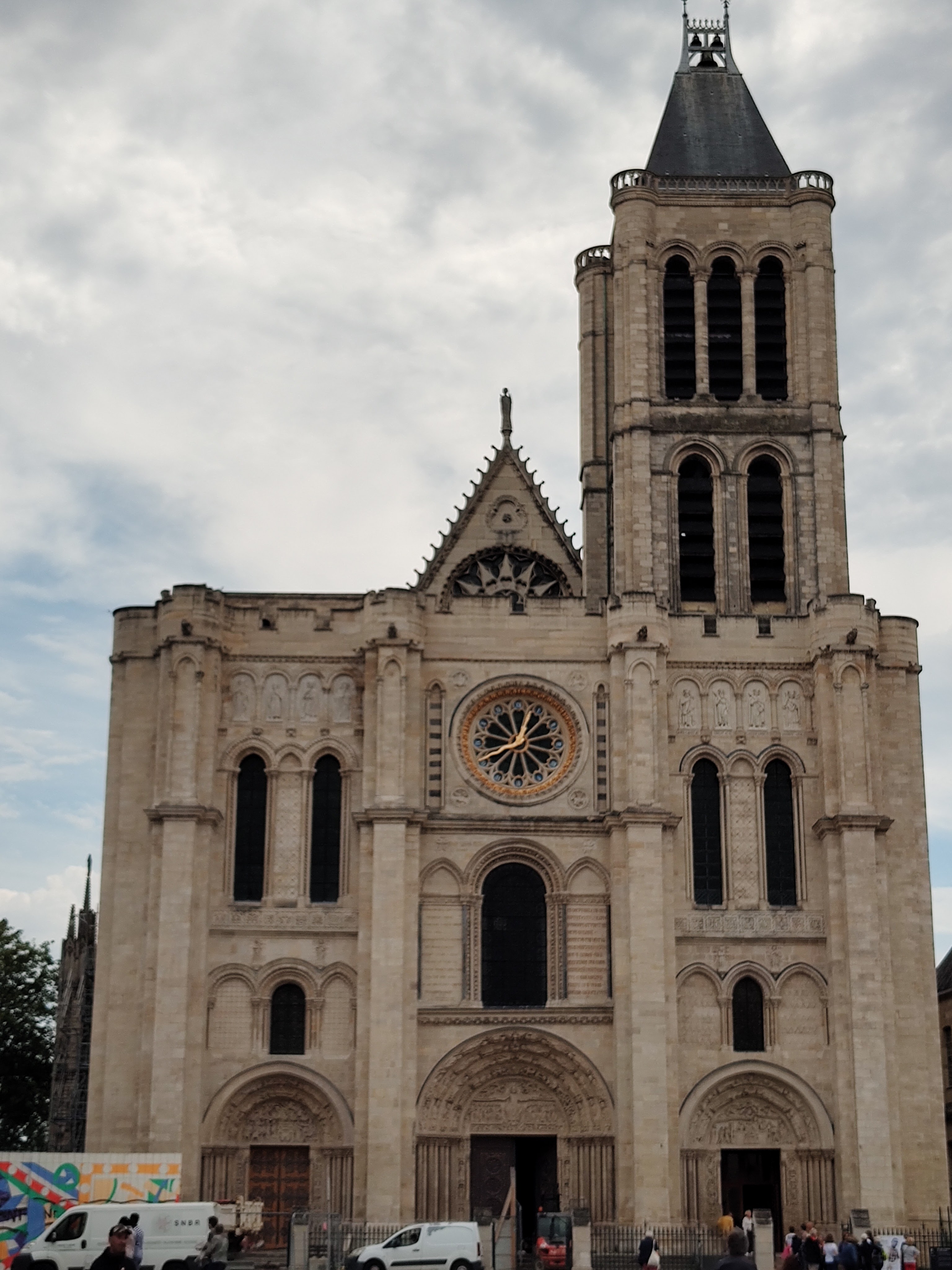
Never has a gather felt more GET. IT. DONE. than today. It took a while to find her. There is a whole chapel of Bourbons, where you’d expect to find her, a room with a bunch of hearts in boxes including her brother and nephew, and an ossuary of assorted ‘others’. Many signs, even those of ‘lesser’ value, but none for her. I did a full circuit of the other tombs (found Pepin, which having recently watched Branagh’s Henry V, made me chuckle, you started this nonsense, sir) and finally gave up and tried my luck with a guide. Jackpot. Clearly a history student as he was heavily highlighting a textbook and knew the whole Bourbon history. I started out in French ok, got through who she was, who’s sister and daughter she was, where she was supposed to be and when she died and then he asked a question and I had nothing, so we carried on helping each other between French and English. I had looked at the names outside the ossuary but he said there were more lists inside so he took me back to check, and there she was. One in a huge list of names and dates of people whose remains had been disinterred during the French Revolution and then retrieved during the Restoration. So, no tomb, no mausoleum, no box, just a plaque on a wall behind which is an assortment of princes and princesses of the blood.
This gather has felt like I was on a clock. 2 months ago I booked tickets and then had to madly research a woman who in all honesty deserved a lot better. I have a picture in my mind of a tiny Henriette, dressed like a doll, spoiled, learning to sing and dance but not much else, in full and certain knowledge of her place in the world. Daughter of a king, sister of a king, and knowing it was her absolute right as a Bourbon princess to marry the most eligible royal on the market. She was taught the divine right of kings and wherever and whoever she married, that meant her. Had she been born 100, or even 50 years earlier, she might have lived the life she felt she deserved. But the tides were turning in England and Kingship was not a licence to do whatever you liked anymore, no matter how hard Charles I tried. From the moment the marriage contract was signed, offering tolerance to English Catholics in a secret section of the document, something the English parliament would never support, she would be seen as a destructive, malicious force. Ironically, I think it was parliament’s insistence on seeing her as such that made her the problem.

In her early days as a very young queen (just 15 at the time of her marriage) she wanted only to play with her friends, throw masques and enjoy her position, eventually made significantly easier by the death of George Villiers, the Duke of Buckingham, who was a jealous little bitch who got what was coming to him. Between his assassination and roughly 1641, things went as well as they could, and might have gone better if Charles would stop using parliament as his private piggy bank and start listening to their complaints about potholes. In this calm before the storm Henriette is everything that is demanded of her: loving wife, mother, conduit to politicians and men of faith Charles couldn’t access otherwise. They were utterly committed to one another and their privileged bubble, so when Charles got into hot water with his Scottish wars, what loving wife wouldn’t try to help. I think this is an interesting moment for her. She is developing an understanding of her power, and how she can use it to rally support, but she’s still too naïve to imagine that her particular type of help will have consequences. Rallying her Catholic friends to pay for Charles’ battles bypassed parliament in a manner that amounted to tyranny, and would lead to her being impeached for treason. It’s easy to look back and see where the crucial domino fell, but I also can’t believe that not one trusted advisor didn’t have a quiet word.
After that it was dominoes left right and centre. She built her so-far unused strength remarkably quickly. By the mid-1640s she’d had 20 years of married life with Charles, knew all his strengths and weaknesses. She knew he could never be trusted to do the right thing if she was a hostage to parliament so she removed herself from the board by ‘escorting’ her daughter Mary to the Netherlands for her marriage to William of Orange. I like the irony that parliament thought Charles would be easier to control without her around, while she was perfectly capable of controlling him at a distance. In the Netherlands she was at complete liberty to move about, negotiate, to pawn the crown jewels (I know intellectually that they would have been in chests, but I love the idea of her walking past a line of suspicious parliamentarians with the jewels jangling about in her bloomers). She pleaded with him to secure an eastern port so she could send men and supplies, otherwise there was no point her doing this in the first place (he didn’t). She sent dozens of ships (the weather being against them and sinking most of them is not her fault) and when she finally came back to English soil, she not only survived a mortar attack from parliamentary ships, but went back to her bombed-out house to sleep when it was over. She led his army in the north, communicating, strategizing and frankly doing a better job than Charles. I know the idea of her standard-bearing at the head of her army, travelling south in triumph is a creation of her own romanticism, but I think she earned it.
And it was for nothing. Charles’ natural reticence left him constantly on the back foot, while her absolute determination to go head on at all comers was not helpful, though more helpful than his approach. At 6 months pregnant, Henriette left Charles at Abingdon to stay clear of the parliamentary forces and from there it was essentially over. Her one big misguided piece of advice to him was stay in the country and not flee abroad. She couldn’t bear to see him a king without a country, and I think that advice cost him his life.
Henriette had been through extraordinary trials but until now they had mostly been emotional, political. Now they were physical as well, and this one would affect her for the rest of her life. She made it out of Oxford to Exeter where she was forced to stop to give birth while suffering from tuberculosis. A royal mother would expect to spend weeks lying in both before and after the birth but three days after the most difficult labour she had experienced Henriette was back on the road, being carried in a litter on foot by a few trusted servants all the way from Exeter to Falmouth. I can’t imagine the strain it must have put on her, not only the pain but the need for secrecy and speed, as by now she had a 50,000 crown bounty on her head. She eventually made it to France thanks to some nippy Flemish traders who could outmanoeuvre the English convoys and continued the excruciating journey to Paris. Her family came to meet her, but only when she was in sight of the city. And essentially, there she stayed. It was in her apartments in the Louvre that she heard news of Charles’ execution and went into catatonic shock for a day. It was there that after a brief respite she recommitted herself to recovering the English crown for her son (despite him clearly wishing she’d stop interfering) and it was here she finally received her youngest daughter Henriette Anne who had been smuggled out of England disguised as a boy.
She continued to meddle, trying to hook the penniless Charles II up with every wealthy heiress that crossed his path, attempting to ‘save’ her remaining children by bringing them into the Catholic faith (Charles finally telling his younger brother Henry that he could absolutely do what his mother wanted, but he would never see Charles or England again.) She returned to her beloved Somerset House at the Restoration but towards the end of her life her heart was in France, in particular at her little convent at Chaillot where could equally retire or hold court, her being favoured by the distinguishing courtiers as more fun and relaxed than the dour queen mother Anne of Austria’s. She ended her life not surrounded by family and friends but at least in a place she loved and I imagine she would not have been aware of the effects of the laudanum she overdosed on, nor the rather violent attempts to rouse her by her doctors. The vultures of the next generation would argue over her estate but ultimately her nephew Louis XIV granted her a full state funeral and burial at Saint Denis.
She endured mockery, censure and misunderstanding. She lived through a rocky peace and a pointless war. She was flighty and naïve, she was headstrong and devious when her family was threatened. She was underestimated and side-lined, living long enough to see her son restored to the crown, but also long enough for that son to view her as an old nuisance. She was joyful, and courageous, and out of her time. Henrietta Maria of France, Queen of England, I honour you.
The Life of Henrietta Maria of France (or what we know of it)
[I have used the dates quoted in each of the sources, but as different authors prefer to either correct or not correct the dates to our current calendar, and some use the calendar applicable in either England or France at the time, they do not marry into a single coherent timeline. ]
1609
26th November: Henrietta Maria is born to Henry IV of France and his second wife Marie de’ Medici at the Louvre Palace. She is raised under the supervision of the royal governess, Francoise de Montglat [12]
1610
14 May: HM’s father Henry IV is assassinated. Henrietta Maria’s mother Marie becomes regent during the minority of her brother Louis XIII. [2]
1611
November: Henrietta Maria’s brother the Duc D’Orleans dies aged 4.5 [5]
1614
15 June: the final acts of baptism are performed for Henrietta Maria and her brother Gaston at the Louvre by Cardinal de Bonzi. [5]
September: Henrietta Maria is present at Louis XIII’s 13th birthday, when he is considered to have come of age. [5]
1617
April: Henrietta Maria’s mother Marie de Medici’s supporter Marechal d’Ancre is shot by a royal guard and Marie is put under house arrest. Her request that Henrietta Maria accompany her is denied. Louis XIII assumes the throne proper. [5]
1619
February: Henrietta Maria is present at the wedding of her sister Christine to Victor Amadeus, Prince of Piedmont [5]
September: Henrietta Maria’s mother Marie de Medici escapes house arrest and Henrietta Maria is present at a meeting between Louis XIII and his mother. [5]
1620
June: Henrietta Maria’s prospective husband Louis de Bourbon deserts the King’s court with two friends to join Marie de Medici’s court in Anjou [5]
September: Henrietta Maria’s brother Louis XIII leads a campaign against their mother Marie de Medici and wins, bringing her back to court and house arrest [5]
1623
February: During an official visit by Henry Rich to enquire into a marriage between Henrietta Maria and Charles, Prince of Wales, Henrietta Maria asks for a portrait of Charles to be borrowed so she could assess him, and her opinion appears to have been favourable. [5]
May: The Earl of Carlisle arrives at the French court with the official proposal of marriage between Henrietta Maria and Prince Charles [5]
August: The chief negotiator of the marriage treaty between Henrietta Maria and Prince Charles, de Vieulleville is replaced by Cardinal Richelieu, who takes a harder line on tolerance for English Catholics being an express part of the marriage contract. James I had previously promised that no such tolerance would be permitted. It is also known that Pope Urban VIII would not offer a dispensation for Henrietta Maria to marry a heretic without such a clause. [5]
October: A separate, private document is drafted and attached to the formal marriage treaty which allows English Catholics to profess their faith without molestation [5]
16 November: It is reported that Henrietta Maria is already styling herself ‘bride of the Prince of England and future queen of the two kingdoms’ [5]
23 November: The marriage treaty between Henrietta Maria and Prince Charles is signed without papal dispensation, amid concerns James I might still call it off. It is countersigned by James I and Prince Charles in Cambridge on 12 December. The contract allows for Henrietta Maria to fully practice her religion and to have properly ornamented chapels in all her residences. She would have an ecclesiastical establishment of 28 priests and her household would be entirely French Catholics chosen by Louis XIII. [5]
December: Henrietta Maria is presented with letters from James I and Prince Charles, which she gives unopened to her mother Marie de Medici to read first. Henrietta Maria sends letters of her own, as well as her colours for Prince Charles to wear in a forthcoming joust. [6]
1624
27 March: Henrietta Maria’s new father in law James I dies and her husband ascends the throne as Charles I [5]
30 April: Henrietta Maria spends the day before her wedding in religious retreat with the Carmelite nuns at the Convent of the Incarnation outside Paris [6]
1 May: Henrietta Maria is married at the Archbishop’s Palace, dressed in a gold and diamond-encrusted gown, with a velvet train so heavy it required 3 ladies to carry, as well as a page boy underneath supporting it with his head and arms. She is attended by her brothers Louis XIII and Gaston. The Duc de Chevreuse, as Charles’ closest blood relative in France, stands as proxy husband. [6]
21 May: Henrietta Maria spends a further day at the Convent of the Incarnation, feeding the nuns with her own hands [6]
1625
6 June: Henrietta Maria leaves behind her ill mother at Amiens and moves on towards the coast at Buckingham’s insistence. Marie gives Henrietta Maria a letter of motherly advice, including that she should work towards Charles’ conversion to Catholicism. The value of her trousseau is around £30,000, including clothes, furniture and even shrouds should any of her court die while in England. [6]
8 June: Henrietta Maria arrives at Boulogne after long delays caused by both her mother and brother being ill, and the logistics of transporting a huge number of people and possessions, where she sees the sea for the first time. She is met by a deputation of ladies, all from Buckingham’s family, and Sir Toby Matthew, a Catholic convert sent as translator. While there she insists on going out in a small boat onto the water with her brother Gaston, impressing Matthew. [5]
9 June: The mayor of Dover sends a report that Henrietta Maria has arrived at Boulogne; ‘this man saw her viewing the sea, and so near that it was bold to kiss her feet, so that her majesty was over shoes, and thence returned with great pleasure’ [8]
23 June: Henrietta Maria lands in England and spends the night at Dover Castle. She had been very seasick on the crossing and was carried off the boat and to the castle in a litter. She had requested that Charles not meet her straight away so she had time to compose herself after the ordeal. Charles meets her there the following day, who notes her height (she is about a head shorter than Charles). It is reported that in the private hour they spend together she asks that if she makes mistakes of custom that he not allow a third person to correct her, that he tell her himself. They then dine with her household, despite her confessor complaining that the day should be a fast day. As they mount their carriages, Henrietta Maria’s Lady of Honour gets in with the couple causing a fracas which only the ambassadors are able to calm. They then progress to Canterbury, via Barham Downs where a great number of tents area been erected and the English royal court are assembled to meet them. They then travel on to Whitehall by barge where the open parts of the marriage treaty are read aloud, the marriage is proclaimed to have been consummated and Henrietta Maria is proclaimed Queen [2, 3, 5]
17 June: Henrietta Maria’s first day in England she hears mass at Whitehall but there being no permanent and ready chapel for her use is a source of complaint among the French [5]
20 July: Order recorded in the Domestic papers of a warrant to the Mint to receive 400,000 ecus money of France and part of Henrietta Maria’s marriage portion, which should be re-minted as English currency and paid into the Exchequer [8]
1 August: Parliament is reconvened at which Charles agrees that all Catholic orders except that serving Henrietta Maria should be banished, but the parliament is dissolved on 12th August after Buckingham’s authority is challenged. Henrietta Maria and Charles leave for Hampshire after being chased from castle to castle by the plague. [5]
2 August: a warrant is issued to pay 3,000l to Henrietta Maria’s jeweller Charles Mercadet, for casting her new Privy Seal [8]
18 September: Henrietta Maria and her court noisily disrupt an Anglican priest who had been brought to preach at her court. This is seen as part of a campaign of unruliness as a result of Buckingham’s scheming. The same preacher is subject to death threats and even near misses by members of Henrietta Maria’s household. [6]
20 November: Charles writes angrily to Buckingham that he may soon have cause to evict the French courtiers he believes are poisoning Henrietta Maria towards him [5]
31 December: Letter between royal secretaries noting that a certain Richard Carpenter of Bedfordshire, a professed Romish scholar has previously been permitted to attend Henrietta Maria’s court and is on his way back to it now: the letter demands that he be apprehended and examined. [8]
1626
January: Henrietta Maria is gifted Somerset House by Charles as a reconciliation gift [6]
19 January: In discussions about the forthcoming coronation, an argument is reported saying that the Henrietta Maria’s bishop claimed the right to crown her, but this was being refused by the Archbishop of Canterbury [8]
February: the lands of Henrietta Maria’s jointure are agreed upon, being the Pontefract Castle, Oatlands Manor, Nonsuch House and Hanslopp Park. Her land and revenues amount to 18,000l [8]
29th March: Henrietta Maria is granted Oatlands House in Surrey, along with rentals as part of her jointure during her life. [4]
April: a memoranda is entered in the Domestic rolls discussing the danger of Henrietta Maria’s being allowed to have so many Catholic bishops and advisors, all of whom owe allegiance to the pope and to the detriment of the king. It is suggested that they be treated the same way the French government dealt with Jesuits, either by forcing them to sign an agreement or by arresting them. [4]
1 May: Henrietta Maria watches the coronation procession for Charles at Westminster from a nearby house. Louis XIII would not allow Henrietta Maria to kneel to an Anglican bishop to be crowned and Charles would not allow any deviation from the historic ceremony, so Henrietta Maria was forced to absent herself, and was never crowned queen. Even being a little removed proves to be unpopular with the people of London [5,6]
June: continuing concern is recorded in the Domestic rolls about the religion of Henrietta Maria’s advisors and almoners, some of whom it describes as not being in her household with the king’s consent. [4]
June: Henrietta Maria makes a pilgrimage on foot from St. James’ Palace past the gallows at Tyburn, and prays for the Catholics executed there, incensing the proudly Protestant Londoners [5]
July: a note is drafted by Lord Conway that the Captain of the Guard and some ‘other men’ should be on site when Henrietta Maria’s servants are requested to remove in case there is ‘more violent passion found’, and for barges to be ready to escort them off site to Somerset House [4]
24 July: Henrietta Maria is asked to be godmother to the Henriette Marie of the Palatinate, daughter of Elizabeth of Bohemia, and Charles’ sister [8]
26 July: multiple petitions are made from the grooms of the Queen’s Great Chamber that they be either paid per day, or paid at all [8]
31 July: Henrietta Maria is surprised in her bed chamber by Charles and his Privy Council where he demands all of her French household leave her service and presence immediately. They are instructed to remove immediately for Somerset House, from where they should leave the country. In Henrietta Maria’s rush to the window to see her courtiers she breaks the glass with her hand, and Charles tears at her dress in an effort to pull her back. Many of Henrietta Maria’s courtiers could not afford the travel as they had not been paid, and had lent what they did have to the queen. They are ultimately paid more than 8,000l in coin for unpaid bills and a further 22,000l plus jewels to get them on their way [5, 6, 8]
August: An abstract from the combined household of the king and queen notes an ‘an increase of French bread served daily to the queen’ either increasing or totally 230l [4]
August: Henrietta Maria’s French household, having refused to leave until their bills and travel were paid, are finally removed from Somerset House for Dover. Almost all of Henrietta Maria’s wardrobe was stolen in the melee. Buckinghamshire’s female relatives are installed in her household and she is not permitted to speak or write French except under supervision [5]
1 October: Henrietta Maria is present for the first visit of Francois de Bassompierre, special envoy from her brother Louis to investigate her treatment. [5]
27 October: Bassompierre is heard by the commissioners investigating the Henrietta Maria’s affairs. They claim the queen’s household had been exciting fear and mistrust in Protestants’ and celebrating mass illegally. Her praying at Tyburn was claimed as accusing the King’s predecessors of tyranny. The commissioners claimed the secret section of her marriage treaty was only a matter of for4m and not expected to apply to anyone but Henrietta Maria. The outcome of the talks was that Henrietta Maria should have a French household again, and that her chapels at St, James and Somerset House would be finished. Also that all priests detained in English prisons should be released. This was accepted by neither Henrietta Maria nor Louis when Bassompierre returned to Paris in December. [5]
December: Henrietta Maria begins learning the lute form a tutor so she can play at her 12th Night masque. The tutor is later arrested on suspicion of spying, along with 3 others of Henrietta Maria’s new household, by Charles [6]
1627
February: a note recorded in the signet book for 1628 mentions that Henrietta Maria had 18,000l per annum allowed her [4]
14 May: Henrietta Maria and Charles attend a lavish supper for Buckingham at York House before he leaves to command English vessels to support Huguenots under attack at La Rochelle. Due to increasing Anglo-French tensions, exacerbated by piracy, no mail could cross the channel for months, leaving Henrietta Maria feeling completed isolated. [5]
18 June: Henrietta Maria’s dwarf Little Geffrey falls out of a window at Denmark House, troubling her so much that she cannot bear to dress all day [9]
July: Henrietta Maria travels to Wellingborough in Northamptonshire, a watering place popuar with ladies hoping to conceive. It is reported that she and her ladies camped in tents around the holy well. [5]
3 August: Henrietta Maria writes to the Lord Treasurer asking that the second half of the 2,000l she was promised be paid, without which she is ‘incommodated’ and cannot pay her servants [9]
December: Henrietta Maria’s brother Louis XIII releases and returns the captured soldiers from Buckingham’s ill-fated attack on Ile de Re as a gift to Henrietta Maria [6]
1628
23 August: the Duke of Buckingham, favourite and confidante of Charles I is assassinated, leading to more cordial relationship between Henrietta Maria and her husband. The assassin claimed that the killing was doing his country a service [5]
1 September: Henrietta Maria is forcibly withheld from visiting her favourite courtier the Countess of Carlisle as the countess has smallpox. ‘They had much ado to keep the Queen from her”. A month later Henrietta Maria is the first person to visit the Countess, and gives leave for the countess to keep on her mask in her presence when she returns to court, to hide any blemishes. [10]
2 September: Henrietta Maria meets Charles at Farnham, offering him comfort despite not liking the Duke. Villiers died with more than £60k in debt which the King had to cover. He was interred in Westminster Abbey secretly to avoid a public outcry. By the end of the month ambassadors were reporting the improved relations of Henrietta Maria and Charles, and how much influence she was starting to wield. [5]
3rd September: in a letter Lord Henry Percy describes the assassination of the Duke of Buckingham by a man named Felton who gave as his cause the reading of the Remonstrance. Henrietta Maria is recorded as equalling her husband’s lamentations, but ‘rather out of discretion than out of a true sensation of his death’ and ‘I need not tell you that she is glad of it’. [4]
1629
29 March: Henrietta Maria removes to Greenwhich for her lying in [10]
17 April: Letter from the King’s warrant to Sir Adam Newton complaining that Henrietta Maria’s creditors are ‘clamorous and importunate’ at not being paid. the amount was at least 21,000l at this point [4]
8 May: Henrietta Maria is at Greenwhich to meet ambassador Contanini and celebrate the signing of the Anglo-French peace treaty, putting an end to the squabbles over her household [5]
12 May: Henrietta Maria goes into premature labour and without any doctors available Charles attends her bed personally. Eventually surgeon Peter Chamberlen is summoned who uses the revolutionary technique of forceps. On being asked to make a choice between mother and child, Charles asks the surgeon to save Henrietta Maria as she was irreplaceable. The boy is born alive and is baptised immediately but dies within the hour. He is buried at Westminster Abbey next to his grandfather James I. In her doctor, Theodore Mayerne’s words, ‘God has shown us a Prince of Wales but the flower had been cut down the same instant that it saw the light. The mother was doing well, and was full of strength and courage’. The Countess of Denbigh was provided with 420l to distribute to the servants who attended Henrietta Maria during her lying-in. [6, 10]
1630
29 May: Henrietta Maria gives birth to her second child, a son named Charles, at St. James’ Palace in London. The Anglican litany of this period has no place for parents so Charles watches from a window while Henrietta Maria could physically not attend and waits in her bedchamber while he is baptised. Henrietta Maria’s brother Louis and mother Marie stand as godparents, despite the Protestant service patently contravening the marriage treaty. The health of the child caused some misgivings among Protestants that providing an heir solidified Henrietta Maria’s position and increased Catholic entanglements [5, 6]
1631
4 November: Henrietta Maria gives birth to her third child, a daughter named Mary, at St. James’ Palace in London. She is baptised immediately due to being born 3 weeks premature. The Countesses of Carlisle and Denbigh and Thomas Coventry stand as godparents [5, 6]
1632
September: Henrietta Maria lays the foundation stone of her new chapel at Somerset House. From this time Henrietta Maria’s community of Capuchin monks becomes more active in delivering the sacrement and encouraging converts to Catholicism [5]
1633
9 January: Henrietta Maria stars in her latest pastoral play for the court (and the longest at 7 hours) despite increasing public intolerance for women on the stage in particular and theatrical productions in general. In his Histrio Mastix, William Prynne wrote ‘women actors [are] notorious whores’, for which he was pilloried, fined and imprisoned. [5]
Spring: Henrietta Maria sends letters of recommendation with the Earl of Angus on his trip to Rome to assess the likelihood of the Pope raising an Englishman to a Cardinalate position. The fact that Henrietta Maria had never engaged with politics or national religion was a mark against her as far as Rome was concerned, but they seemed to be willing to look into her suggestion if she would try to exert some of her authority with the King. [5]
14 October: Henrietta Maria gives birth to her fourth child, a son named James, at St. James’ Palace in London, who was later baptised by the Archbishop of Canterbury [5]
1635
10 February: Henrietta Maria stars in the Temple of Love pastoral play with set pieces and engineering by Inigo Jones [5]
March: Henrietta Maria accompanies Charles I to inspect his naval shipyards in East Anglia. The previous year coastal counties had been required to pay an ancient levy to the crown. This caused disastisafaction among the people including in London where legal advice stated this could not be levied except through parliament, which Charles had disolved. There were also concerns Charles was appropriating some of the money for himself. [5]
June: Henrietta Maria is pregnant, and Charles I announces he will make no long journeys on account of wishing to be near her [5]
28 December: Henrietta Maria gives birth to her fifth child, a daughter named Elizabeth, at St. James Palace in London. The young Prince Palatine Charles Louis who was visiting the country stood as godfather [5]
1636
July: Henrietta Maria is presented with a jewelled cross by George Con, papal envoy to her personal household, sent by Pope Urban. Charles admires it, which gave fuel to the rumours of a possible return to Rome [5]
September: Henrietta Maria is 12 weeks pregnant and staying at Oatlands when news reaches her that lunatic Rochester Carr has escaped is coming to muder her. She has to have her bodice strings cut to allow her to breathe [5]
December: Henrietta Maria attends mass at the newly completed chapel of Somerset House. At her request the chapel was decorated in a theatrical style centred on the Holy Sacrement, and so many onlookers vied for a view that the chapel was not cleared for 3 days. Several days later on an unrelated trip Henrietta Maria and Charles visit the Capuchin monks at Somerset House, sharing the monks’ meal, giving rise to further gossip among both Protestants and Catholics. [5]
1637
17 March: Henrietta Maria gives birth to her sixth child, a daughter named Anne, at St. James’ Palace in London after a mere 2 hour labour. Anne’s brother Prince Charles and sister Princess Mary stand as godparents. [5]
August: Henrietta Maria and Charles are at Greenwich to celebrate the wedding of Mary Villiers, daughter of the Duke of Buckingham, and Charles’ cousin James Stuart. [5]
September: Henrietta Maria and Charles attend the launch of the ‘Sovereign of the Seas’ from Hampton Court, the pride of the ship-money fleet. Charles has begun to rely on the ship-money, which does not require approval by parliament, leading to John Hampden testing its legality in a Buckinghamshire court. The following year the court would find for the King. [5]
24 December: Henrietta Maria hears midnight mass in company with recent Catholic court converts in light of a proclamation that Catholics were still subject to ‘laws and penalties’ [5]
1638
6 February: Henrietta Maria stars in Luminalia, a court masque with sets designed again by Inigo Jones [5]
14 April: Henrietta Maria’s childhood friend the Duchesse de Chevreuse arrives in England on her way to meet Marie de Medici in Holland, and is received by Henrietta Maria and Charles in private, as well as being lavishly wardrobed, given servants and the tabouret – the priviledge of being seated in royal company. She was known as a notorious meddler and Catholic [5]
19 May: Henrietta Maria is present as her 8-year old son Prince Charles is invested as a Knight of the Garter at Windsor [5]
September: Henrietta Maria’s brother Louis XIII finally becomes a father after 24 years of marriage, for which the queen has Te Deums sung and bonfires lit [5]
18 October: Henrietta Maria’s mother Marie de Medici lands at Harwich having outstayed her welcome in Belgium and Holland, arriving at St. James where a suite of 50 rooms are prepared for her and her entourage. It would cost the court £3k a month to keep her as Louis XIII refused to let her claim money from her dower lands in France unless she returned to her birth home of Florence [5]
1639
January: Henrietta Maria gives birth to her seventh child, a daughter named Katherine who survived only long enough to be baptised. Henrietta Maria herself was unusually ill, thought to be as a result of not being able to give birth at St. James’ palace while her mother was there. [5, 6]
March: Henrietta Maria sees off Charles on his journey north to quell the Scots, with the Privy Council left in charge of the country, on the understanding they keep Henrietta Maria informed. Charles takes the precaution of willing her an extra £40k a year in the event of his death. The force was poorly manned, equipped and financed, leading Henrietta Maria to call for all Catholics to fast in the king’s name and give generously towards his endeavours, through a published and circulated letter. However nowhere near what was needed was raised (£14k out of a necessary £50k). There is also significant push-back against the Catholic faction, though not yet specifically at the Queen. [5]
August: Henrietta Maria welcomes Charles home with a hero’s welcome, despite the King having been outmanoeuvred. Despite having signed a truce, the Scots almost immediately raise further demands, which Charles refuses to hear. [5]
1640
February: Henrietta Maria and Charles perform in the court masque Salamacida Spolia, with the usual message of benevolent autocracy. This would be their last production. [5]
April: Henrietta Maria is rumoured to be in league with the Spanish and intriquing to get Charles to first call then almost immediately disolve parliament. In practice her machinations were about convincing Charles to make further war on the Scots, expecting to be able to raise further funds from English Catholics and possibly even the pope. The pope replies to her letters that he couldn’t fund a heretic, but if Charles were to convert it would be a different matter [5]
13 April: Henrietta Maria watches from a stage in Whitehall as Charles rides through London to re-open parliament, forced by the Covenenters in Scotland to ask for further funds. 3 weeks later, clear that no money would be forthcoming, Charles dissolves parliament again. [6]
8 July: Henrietta Maria gives birth to her 8th child, a son named Henry, at Oatlands. His two older brothers Princes Charles and James, and his sister Princess Mary stood as godparents. As a baptism gift Charles granted pardons to all Catholic priests then in prison and suspends the penal laws against Catholics for the month of Henrietta Maria’s lying-in [5, 6]
December: Henrietta Maria is instructed to dismiss the English Catholics in her service as part of sweeping anti-Catholic feeling. She refuses as her marriage treaty stipulated a Catholic household, but the papal agent Rossetti has to withdraw from her chambers to St James’ palace for his safety. [5]
15 December: Henrietta Maria’s daughter Anne dies at Richmond of a ‘suffocating catarrh’, or tuberculosis [5]
1641
January: Henrietta Maria writes again to the pope asking for a loan of 5 million crowns with which to buy off the puritans [5]
27 January: a paper is produced in the Commons titled ‘Motives for a contribution from the Catholics to the King’s northern expedition’, quoting Henrietta Maria’s letters and arguing that this amounted to a Catholic plot to enable Charles to govern tyranically without parliament, and an armed insurrection by Catholic Irish troops to bring down the Protestant government. When the letter is read, a vote of thanks is proposed, but no member of parliament answers. To her plans to visit France to raise funds and support she is rebuffed by Richelieu. It is claimed she was involved in arranging for moderate and opposition figures to accept positions at court with Charles as a way of bolstering his support, though this was never substantiated [6]
22 March: Henrietta Maria and Charles attend the trial of the Earl of Strafford as a show of support, although he is not permitted to attend as King and must watch from behind a grill. Henrietta Maria and her ladies are reported to take copious notes of the proceedings. Throughout the trial, Henrietta Maria is secretly and personally financing the re-fit of Portsmouth harbour and castle: it would be an ideal location to land any continental troops she could muster. She is also privately scheming to take over the English army in the north (by paying their overdue pay) and marching them south in case Strafford’s trial goes the wrong way, but the plan couldn’t survive all the in-fighting between conspirators [5, 6]
21 April: Henrietta Maria’s daughter Mary is to marry Prince William of Orange, in advance of which he arrives in the country, though due to the trial of the Earl of Strafford, and the act of attainder against him, the welcome festivities are somewhat muted [5]
2 May: Henrietta Maria’s oldest daughter Mary is married to Prince William of Orange at Whitehall. Henrietta Maria and her mother watch from a curtained recess and later walk with the young couple and a few other young people through Hyde Park in the evening. After the ‘bedding’ to make sure the marriage could not be annulled, the Prince spends the rest of the night in Charles’ chambers [5, 6]
5 May: Henrietta Maria sends a note in her own hand warning her Master of Horse, Henry Jermyn, to flee the country after a royalist plot is publicised, and he being accused of ‘too great an intimacy with the queen’ [5, 6]
6 May: Charles describes Henrietta Maria in a letter as ‘the daughter of a father who never learned to run away, and she had no intention of doing such a thing herself’ [5]
8 May: Henrietta Maria and Charles make plans to flee London as rumours spread that a mob is coming for them. They are persuaded by ‘confidential persons’ to remain. On the same day the Earl of Strafford is found guilty and sentenced to death, and a motion passes both houses that parliament cannot be disolved except by parliament. [5]
9 May: Henrietta Maria’s Capuchin monks flee her household and her mother Marie de Medici has extra guards posted for her protection at St. James’ Palace. Charles finally signs the act of attainder, capitulating to parliament and sentencing the Earl of Strafford to death [5]
8 June: Henrietta Maria’s part in the Army Plot of 1639 is exaggerated in the commons preliminary report, claiming she had wanted the army to march on London. It was reported by Venetian ambassador that members of the houses were researching historic records for how traitorous queens had been dealt with in the past [5]
24 June: Henrietta Maria and Charles bid farewell to papal envoy Rossetti who flees England after being called before parliament. It also demands that her mother be expelled for instilling ‘evil counsels into her daughter’. The Ten Propositions demand Henrietta Maria’s Capuchins be expelled and her public chapel closed, and that all future appointments to her household or those of her children be by parliamentary approval. [5]
October: Henrietta Maria is ordered to relinquish her son Prince Charles to parliament, who are afraid of his being too much under her influence. He returns to Richmond under the care of his tutor the Marquis of Hertford. In Charles absence, Henrietta Maria concentrates her efforts on keeping any royalist ministers at parliament, instead of them going home to escape the plague or public disturbances. Henrietta Maria is also blamed for the revolution of the Irish, despite this likely having more to due with the execution of the Earl of Strafford. [5]
24 November: Henrietta Maria and her three elder children meet Charles on his return from Scotland at Theobalds’ [5]
25 November: Henrietta Maria and Charles ride through London to great public acclaim and celebration. The royal family and court agree to spend Christmas holidays in London, after aldermen beg them not to leave businesses without the court’s custom [5]
1642
January: Henrietta Maria is required by parliament not to meddle in royal affairs, Charles to proclaim that he would not take any political or religious advise from his wife, and that anyone found helping Prince Charles to leave the country would be guilty of high treason [6]
4 January: After a Christmas full of rioting and scheming, Henrietta Maria unwisely lets slip to one of her ladies Charles’ plan to regain control of Parliament. Charles’ attempt to arrest the five ringleaders fails as a result. She afterwards blames herself for the failure of the plan, but it had also been betrayed to the five by the Earl of Essex [5, 6]
10 January: After trying to hold on at the Tower of London, Henrietta Maria, Charles and their children flee the city for Hampton Court. As no prepartions could be made in time, the whole family must sleep in a single bed. Their attempts to fortify the palace alert parliament who order the local militia against them, forcing them to move on to the greater fortifications of Windsor Catle. [5, 6]
9 February: Henrietta Maria leaves Windsor with Mary to escort her to her husband in the Netherlands. She manages to smuggle out some very valuable jewels she plans to sell to fund Charles’s campaigns. It was felt in parliament that the king would be more amenable without the queen’s influence, though Henrietta Maria believed he would be free to make bolder moves if he was not always concerned for her safety and the risk of her being held hostage [5]
23 February: Henrietta Maria says farewell to Charles at Dover before their crossing to the Hague: Charles rides his horse along the coast until her ship the Lion is out of sight. In Holland they are greeted by Prince William and Elizabeth of Bohemia, though the Prince of Orange and the Dutch burghers are less keen on her arrival. [5, 6]
April: Henrietta Maria writes to Charles at York reprimanding him for not accupying Hull, an important eastern port which would be vital to allow safe transport of letters, supplies and money. [5]
June: Henrietta Maria attends a military inspection in Utrecht with her daughter Mary, Prince William and the Prince of Orange [5]
July: Henrietta Maria writes to Charles that she has 30k guilders from the Prince of Orange, which was sent in the Providence: the ship is attacked by parliamentary forces but escapes and lands to be successfully unloaded. Other ships sent by the queen are not so lucky, being captured or forced to turn back. [5]
20 August: Henrietta Maria’s step-nephews Princes Rupert and Maurice arrive at Newcastle with a consignment of money, arms and crucially, men, for Charles [5]
1643
2 February: Henrietta Maria departs from Scheviningen with the last load of munitions. They hit incredibly rough seas and Henrietta Maria and her ladies spend the 9 days strapped down in their cots. She vows to donate a silver ship to the shrine of Our Lady of Liesse if she survives the crossing. Two ships sink, 2 safely make it to harbour but Henrietta Maria’s and 6 others are forced back to port. After a 10 day wait for repairs at Scheviningen, Henrietta Maria sets sail again on 22nd, making landfall at Bridlington Bay in Yorkshire. That night the village is bombarded by the parliamentary navy and Henrietta Maria and her ladies are forced to flee in their nightgowns. [5]
March: Henrietta Maria is resident at Sir Arthur Ingram’s house, having ridden on ahead of the ammunition and baggage train. Here she creates a pseudo-court of advisers and even manages to make some conversions to the royalist cause. [5]
30 March: Henrietta Maria writes to Charles to warn him not to make any concessions in his negotiations at Oxford, threatening again to retire to a French convent if he does. The treaty ultimately collapses and the negotiators return to Parliament on 14 April [5]
23 May: Henrietta Maria is formally impeached by parliament for treason through her military shenanigans and pawning the crown jewels. In the writ they are determined not to call her the queen as she was never crowned, but this forces them to use her family name of Bourbon, sure to upset the French. [5]
30 March: Henrietta Maria writes to Charles from Yorkshire detailing her troop movements in the north, unable to yet travel south to meet him [5]
9 April: Henrietta Maria writes to Charles about her forces laying siege to Leeds [5]
4 June: Henrietta Maria marches south from York with 4,500 horse and foot soldiers, arriving at Newark on the 18th and remaining there for two weeks [5]
27 June: Henrietta Maria writes to Charles that she leaves Newark with 3,000 foot soldiers, 30 companies of horse, 6 canons and 2 mortars. Her descriptions of riding at the head of army and living with the soldiers may something of her penchant for romanticism. [5]
13 July: Henrietta Maria is finally reunited with Charles at Kineton, staying at Sir Thomas Pope’s house in Wraxton before entering Oxford the next day to great fanfare. Her return to his personal presence and court leads to a great deal of discontent among advisors as she expected to be heard as the ultimate authority [5]
1644
8 January: a coded letter describing Henrietta Maria as Eunabia Sylvander and Charles I as Silvancer, describes their various locations, Henrietta Maria being at Abingdon and expected to remain in confinement, and Charles I at Oxford possibly in prison [4]
17 April: Henrietta Maria and Charles spend what will be their final night together at Abingdon. Henrietta Maria is six months pregnant and suffering the early symptoms of what was likely tuberculosis [6]
18 April: Henrietta Maria leave Oxford heavily pregnant, bidding farewell to Charles at Abingdon, stopping at Bath and continuing on to Exeter, residing at Bedford House [5]
3 May: Henrietta Maria writes to Theodore Mayerne begging him to attend her confinement, with Charles echoing this plea. Anne of Austria, now queen regent of France sends both nursing supplies and an invitation to spend time in France if it would be beneficial to her health. [5]
16 June: Henrietta Maria gives birth to her 9th child, a daughter named Henriette at Exeter who seemed healthy, but the labour exacerbates Henrietta Maria’s condition, so much so she writes to Charles that she thinks she’d dying. She makes the decision to flee the parliamentary army so as not be captured and used against Charles, and is carried in a litter as far as Truro [6]
30 June: Henrietta Maria travels with only two ladies towards Falmouth hoping to cross the channel and remove herself from the chance of being used as a hostage by parliament. She leaves the two week-old Henriette behind in Exeter. Parliament has by this time put a bounty of 50,000 crowns on her head. [5]
9 July: Henrietta Maria arrives at Truro where she sets out to cross with a Flemish fleet who, with speed on their side are able to evade the parliamentary navy and land her in France [5]
November: Henrietta Maria, accompanied by her brother Gaston and after a long painful journey across France with frequent stops for relapses, arrives within sight of Paris where she is met by the queen regent and the 6 year-old king Louis XIV. She is granted appartments in the Louvre where she remains for the next 8 years, along with 30,000 livres rentals on her childhood home of St. Germain en Laye. While in France she begins negotiations with various ambassadors and heads of state to fund or otherwise support Charles, though few would actually intervene. She feels her efforts are hampered by not receiving regular updates from Charles, depiste there being a parliamentary blockade in the channel. [5]
1645
January: Henrietta Maria writes to Charles in advance of the Conference at Uxbridge not give way in matters of religion or his Catholic supporters would never trust him again [5]
February: As the Uxbridge negotiations are breaking down, Henrietta Maria arranges for the Duke of Lorraine to provide 10,000 men. However both France and Holland refuse to let the army through their borders or help with transport, and in June the Duke takes his men off to Spain [5]
21 March: The Venetian ambassador in Paris reports that Henrietta Maria has provided Charles with 36,000 crowns from her own pension, leaving herself perilously short. She dismisses all but the most essential ladies and servants and keeps no carriage or guards. She does retain the services of Henry Jermyn who writes, encodes and deciphers her mail, though at Charles’ urging she tries to deal with his letters herself, despite poor heath and worsening eyesight [5]
May: After another period of illness Henrietta Maria writes with details of a plan to provide 10,000 Irish soldiers on conclusion of a peace treaty with the Irish rebels [5]
June: Henrietta Maria hears of the royalist defeat at the Battle of Naseby while summering at St. Germain en Laye. In his retreat Charles was forced to leave behind his personal cabinet containing years worth of correspondence with Henrietta Maria [5]
July: Henrietta Maria’s personal correspondence with Charles is published, demonstrating Charles’ willingness to bring foreigners and Catholics into the country to maintain his rule [5]
1646
1 January: Henrietta Maria begs her brother Gaston to provide French troops being quartered for the winter but the plan comes to nothing again without transport or a safe landing site [5]
22 April: Charles’ last letter, from Oxford after the complete routing of his forces, to Henrietta Maria explains his plan to head to Scotland to try to find a truce with the Covenenters. He asks that if any harm befall him that she continue her efforts for Prince Charles ‘like thy father’s daughter’ [5]
17 May: Henrietta Maria writes to Prince Charles quoting both Charles’ and her desire that he and his court leave the Channel Islands and meet with Henrietta Maria in Paris. Prince Charles’ advisors are reluctant to see him under the sole influence of his mother [5]
25 June: Henrietta Maria’s eldest sone Prince Charles sets sail from Jersey to St. Malo and later on to Paris where he is received cordially and Henrietta Maria begins attempts to find him a wealthy wife. Later in the year Lady Dalkeith succeeds in smuggling Henrietta Maria’s youngest daughter Henriette out of England to Paris to be reunited with her mother [5]
1647
2 January: In a letter to Henrietta Maria, Charles admits finally that he is actually a prisoner of the Scots, who later hand him over to the parliament for the sum of £400,000 [5]
1648
June: Henrietta Maria suggests, at a council of English refugees in Paris, that Prince Charles should join the Scots army. After a number of defections to the royalist cause the prince instead sails for Holland where he meets up with his brother James who had escaped parliament control. Henrietta Maria then retires to the Carmelite convent in the Faubourg St. Jacques, possibly as a way of saving money. [5]
1649
30th January: Henrietta Maria’s husband Charles I is executed by decapitation at Whitehall. He is interred a week later in St. George’s Chapel, Windsor Castle. Henrietta Maria’s son is immediately proclaimed King Charles II [2]
February: Henrietta Maria hears the news of Charles’ execution from Henry Jermyn. She is reported to have been in silent shock for many hours until one of her ladies came crying to her, at which she finally cried also. She temporarily returns to the Carmelite convent, but returns to Paris to continue the fight for Charles II. [5]
July: Henrietta Maria is briefly reunited with Charles II in France, but he explains that she is not to be part of his court or council [5]
1650
13 August: Henrietta Maria’s younger children Elizabeth and Henry, still under parliamentary control, land at Cowes on the Isle of Wight to keep them from being rescued by Charles II, who had been proclaimed king in Scotland and was cemeting his support there. [5]
8 September: Henrietta Maria’s fifth child Elizabeth dies at Carisbrooke Castle on the Isle of Wight. She dies of a cold that turned into pneumonia. She is buried at St. Thomas’ Church, Newport on the Isle of Wight. [12]
1651
June: Henrietta Maria is able to purchase a property at Chaillot, due to the generous donation of an anonymous benefactor, in which she installs a dozen nuns of the Order of the Visitation, a foundation intended to meet the spiritual needs of gentle women. Henrietta Maria has her own suite of rooms and would often stay for weeks at a time. [5]
1652
August: Henrietta Maria is escorted from the Louvre by Charles II after rioting breaks out in Paris as a result of the Wars of the Fronde. Charles had been routed by Cromwell and travelled to France disguised as a beggar. They join the rest of the French royal family at St. Germain en Laye. [5]
1653
March: Henrietta Maria’s youngest son Henry is sent out of the Commonwealth, citing not having to pay for his upkeep. He lands in Holland where his sister Mary, Princess of Orange offers to pay for his keep and education but Henrietta Maria wants to be reunited with him in Paris. [5]
1654
18 July: Henrietta Maria’s son Charles II departs France for Holland after France formally recognises the republican parliament and Cardinal Mazarin suggests its time for Charles to leave. Before going he extracts a promise from Henrietta Maria that she would not convert Henry to Catholicism. Charles, on hearing she has gone back on her word, and rarely roused to temper, writes immediately saying Henry would never see his brother or England again if he goes ahead. Despite his mother’s entreaties, Prince Henry had been so shaken by his fathers’ final plea to keep the Protestant faith that he refuses her. Henrietta Maria disowns him on the spot, and he is put into the care of Charles’ messenger to get him back to Cologne. Mother and son would never see each other again. [5]
1656
February: Henrietta Maria receives her eldest daughter Princess Mary at Paris, which is embarrassing for Charles since he is planning manoeuvres with Spain against the new French-Anglo alliance [5]
1658
September: Henrietta Maria receives news of Oliver Cromwell’s death, along with congratulations from many courtiers and ambassadors. In October she writes to Charles offering her support, but he writes back warning against any rash moves. [5]
1659
December: Henrietta Maria is reunited with Charles at Colombes and he renews his relationship with his youngest sister Henriette. With Cromwell gone along with the the diplomatic necessity of avoiding Henrietta Maria, visitors start to return to her court, seen as a less formal and more enjoyable place than the French Queen Mother Anne of Austria’s [5]
1660
25 May: Henrietta Maria’s son Charles II lands at Dover after the disolution of the Long Parliament and his invitation to return by the newly installed Convention Parliament. Henrietta Maria travels to Chaillot to here a Te Deum sung and arranges for bonfires of celebration in Paris. [5]
24 August: Henrietta Maria receives an offer of marriage to her daughter Henriette from Louis XIV’s brother Philipe, delivered in person by Queen Anne [5]
13 September: Henrietta Maria’s youngest son Henry dies of smallpox, aged 21. He is buried in Westminster Abbey in the vault of Mary Queen of Scots. [12]
October: Henrietta Maria’s second eldest son James is embroiled in a scandal as his mistress and rumoured wife Anne Hyde is obviously pregnant. This prompts Henrietta Maria to speed up her return to England, reuniting with her children at Dover Castle. Her re-entry into London is attended by huge crowds. Returning to Whitehall and being so close to the scene of Charles’ execution causes her great distress. [5]
24 December: Henrietta Maria’s third child Mary, Princess of Orange dies at Whitehall Palace from smallpox. It is possible her illness was exacerbated by Henrietta Maria insisting her own physician take over, who was a keen proponent of blood-letting. Henrietta Maria herself is barred form the bedside in case she attempts a deathbed conversion. Mary is buried in Westminster Abbey next to her brother Henry. [2, 5]
1661
1 January: Henrietta Maria cordially receives Anne Hyde, her daughter in law, even permitting her to sit beside her as a mark of raprochement with James. It is likely this is due to Cardinal Mazarin telling her she would not be welcome back in France if she were still at odds with her sons. [5]
2 January: Henrietta Maria and Henriette leave London for Portsmouth, via Hampton Court, on their way back to France for Henriette’s wedding [5]
9 January: Henrietta Maria and Henriette set sail from Portsmouth but run aground and are forced back to port. While on board Henriette is seriously ill [5]
30 March: Henrietta Maria attends the wedding of her youngest daughter Henriette to Philip of France in her private chapel in the Palais Royal, Paris [5]
1662
March: Henrietta Maria remains in France long enough to be present for the birth of Henriette’s first child, a daughter named Marie Louise, who would later become Queen of Sardinia [5]
28 July: Henrietta Maria returns to London, meeting her daughter in law Catherine of Braganza for the first time. Despite still being full of wit, the older Queen comes to relish the younger Queen’s quieter and profoundly Catholic company [5]
29 December: Henrietta Maria is present at a grand reception for the Emperor of Russia at the Banqueting House [5]
1665
2 June: Henrietta Maria leaves Somerset House, travelling to Bourbon for her health and visit Henriette who had just suffered a still birth. While she publicaly intends to return to England, she takes almost all her possessions with her, signalling she is more likely to remain in France. [5]
1666
January: Henrietta Maria attempts to mediate between England and France but her offer is dismissed as she is French and ‘is fond of living in that country’. She nonetheless holds meetings with interested parties including Louix XIV who values her counsel. Henrietta Maria remains in France, supporting Henriette through the loss of her 2 year-old son as well as a further miscarriage. As Henrietta Maria’s own health suffers, she remains at Colombes and Chaillot where in 1668 she receives word Charles is cutting her English pension by a quarter [5]
1669
8 September: Henrietta Maria receives several royal physicians at her home in Colombes where she is prescribed a single grain of laudanum to help her sleep, but she refuses as she had been advised against this after the health scare of her last pregnancy [5, 6]
10 September: Henrietta Maria, after a restless night agrees to take the laudanum after all, dissolved in a raw egg yolk. She falls into a coma and dies between 3-4am as a result of an overdose of laudanum. There is considerable confusion after her death as she dies intestate, with Philip of Orleans claiming the French right to her estate through his wife Henriette, and Henry Jermyn claiming the entire estate for Charles II. Her body lies in state in St. Denis for 5 weeks and she is provided a state funeral by Louis XIV, buried in the royal chapel of the Abbey of St. Denis, with her heart being interred separately at her convent in Chaillot. Ultimately Charles is seen to be the rightful heir, but he leaves the Chaillot house to Henriette for her use. It is said in her funerary oration by Bishop Jacques-Benigne Bousuet “If she had been more fortunate, her history would have been more pompous, but her works would have been less full” [5, 6. 7]
References
- Wikipedia [removed]
- England’s Queens: the biography by Elizabeth Norton, published by Amberley in 2011
- The Wedding Journey of Charles I by M. R. Toynbee, published in Archaeologia Cantiania, vol 69 in 1955
- Calendar of State papers, domestic of the reign of Charles I: addenda March 1625 to January 1649, published by the Public Records Office in 1897
- Henrietta Maria: Charles I’s indomitable queen by Alison Plowden, published by Sutton in 2001
- A Royal Passion: the turbulent marriage of Charles I and Henrietta Maria by Katie Whitaker, published by Weidenfeld & Nicholson in 2010
- Funerary oration of Henriette-Marie of France online
- Calendar of State Papers: domestic of the reign of Charles I; 1625, 1626, published by the Public Record Office
- Calendar of State Papers: domestic of the reign of Charles I; 1627, 1628, published by the Public Record Office
- Calendar of State Papers: domestic of the reign of Charles I; 1628-1629, published by the Public Record Office
- Royal Renegades: the children of Charles I and the English Civil Wars by Linda Porter, published by Pan in 2017
- Britain’s Royal Families: the complete genealogy by Alison Weir, Pimlico, 2002
 Anglica Regina