Westminster, December 21st 2019
I overslept. I ended up arriving in good time but multiple traffic laws were bent/broken to achieve it. Having the car is making me quite cocky about having to be places on time. The train ride barely registers, I get the 148 bus like a local and there was no queue at the abbey so arriving was a bit of a surprise. I have walked passed Anne every time I’ve been here but because she doesn’t have a plaque I didn’t realise THAT was her. She’s another one of the royals around the edge of the Edward the Confessor shrine and even though Richard II has the name plate, she’s the one you can see. Her effigy is surprisingly small – either not life size or the comment ‘tiny scrap of humanity’ was on the money. Allegedly there’s very little left of her remains because people have stolen her bones through a hole in her tomb. I looked but I couldn’t see it.
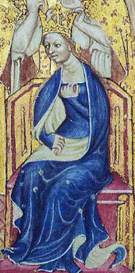
Both Anne of Bohemia and Anne Neville have been difficult to understand, so its interesting that their tombs are next to each other. Anne was the daughter of Charles IV, Holy Roman Emperor and Elisabeth of Pomerania, so she was true royalty. Her marriage to Richard was political at one of those mad moments in history when we had too many popes, and England allied with the Empire against France. Anne was essentially sold by her brother Wenceslaus to Richard, since he could afford no dote, and Richard paid 20,000 florins up front for her. On her journey to England she was blockaded by the French in Belgium for a month while their King tried to scupper the union, offering up his own children as replacements bride and groom for Richard and Anne. She spent her first Christmas in England alone at Leeds Castle and was married and crowned within days in January. At this point she was still just 15 years old.
As with Anne Neville, Anne of Bohemia is really only visible from her wake. She was the same age as Richard and they are said to have been inseparable. Because of this, for the timeline I have assumed that if Richard was signing something at Eltham or Windsor, Anne was probably there too. It is difficult to see England through Anne coloured lenses because she arrived just after the Peasants’ Revolt, and while she was married to him during his brief de-throning, she had died before the worst of his excesses and madness manifested. She was unpopular to begin with because of the huge sum of money paid for her at a time when the country was already taxed to the hilt. And she did herself no favours early in her reign when she petitioned for the traitors at Bury St. Edmond’s to be taken own and given a proper burial (a logistical and ecclesiastical nightmare for the aldermen). Bury never forgave her for that headache.

Most of what is known about her is straight fact – the grants of land and money to her, and her intercessions on behalf of convicted criminals. It is the second I find fascinating. As a new queen she hit the ground running by petitioning for the pardons of some of the instigators of the Revolt but throughout her 12 year reign she regularly interceded for not just political prisoners or the occasional pregnant woman but hardened thieves and murderers. I haven’t researched queenly intercessions by the other contemporary queens so I don’t know how typical she was. Were they acts of sympathy? Were they political, Anne believing that by petitioning for the pardon of X knight, she would be able to call in a favour later?
There is no sense of who she was. There is not even a single grand gesture to give us a glimpse of who she was and what she felt, like Anne Neville’s elopement. I refuse to believe she was just an adjunct to Richard, or status symbol. His reaction after her death was not for a trophy wife. After 12 years of marriage and queen-ship Anne died, most likely of an infection, at Sheen Palace. She must have been lingering for a while because Richard had time to send for the already-prepared funerary effigy before her death. She was buried in Westminster Abbey a month after her death – fast for a royal – and within a year Richard had not only destroyed all her written records and household accounts, dedicated himself to never go into a room where she had been, but ordered Sheen palace to be razed to the ground. Is there any impact of her reign that can be discerned from these scant pieces? Richard’s mental health dropped off a cliff after she died, which suggests he was happy with her. I suspect she saw her role as sympathiser and consoler. That they travelled together to at least one shrine dedicated to fertility says that neither of them was happy with their childlessness. In the absence of children did she throw all her emotional outpouring onto Richard, being whatever he needed her to be? She was both a distraction and a moderating influence. And in purely practical terms, Richmond Palace has been the site and subject of many future royal shenanigans, and it would never have existed without the destruction of Sheen.
Based on all this, Anne can be argued to be aristocratic and understanding of her place in the world, a lover of the finer things given the time and money spent on the upkeep of her various properties. Active and generous on behalf of her tenants and those who served her faithfully. Loyal – she was no Eleanor of Aquitaine or Isabella of France, though maybe that’s down to having no sons’ interests to meddle in. To Richard she was likely a friend, an ornament and a salve all rolled into one and her death left a gaping hole in his life which would never be filled. If any of this is true, or none of it, Anne of Bohemia, whoever you were, I honour you.
Portrait Gallery, later…
I’ve come to the Portrait Gallery to see if any of the queens are here. I’m sat under a huge portrait of Caroline of Ansbach re-reading my gather and trying to see if her personality is there in the picture, or if I’m projecting.
National Gallery, later…
Ran around the corner, via a churro stand, to the National for some a-queenly culture. I hadn’t realised that the Wilton Diptych is here which was a pleasant surprise on Anne of Bohemia day. Having said that, I was seeing it for having seen its sake ’cause who cares about Richard? Per usual I’ve made a bee-line for the Dutch rooms and I’m sat with a view of the Portrait of Hendrickje Stoffels in the white – I want to say ermine? Something heavy and luxurious. I love this. It is both intimate and guarded. She is barely dressed, at first glance it looks relaxed, but she hides a hand under the cloth, which looks protective and her young face looks so tired. There is no detail around her, just red which makes the painting look warm, enhanced by the rolled back sleeve and exposed neck. The shawl is for modesty, not warmth. I wonder if she was unwell, and propped up in bed?

Chinatown, later…
I should catch up on the rest of the day before I catch my train and am home and three weeks have gone by and I forget everything but the abbey. After I stopped weeping and people-watching in equal measure I went the quicker way to Horseferry Road and caught the bus to Borough Market. Now, I’ve been a few times an I thought I knew what busy looked like. No. Wall to wall people unable to move and when they did it was for an inch at a time. I’ve come into more intimate contact with those 500 people than friends I’ve known for years. Technically I could have had multiple affairs in that melee and no-one would be any the wiser. Anyway. I got to Mons for my extortionate cheese fix and despite wanting to branch out and expand my palette I still came away with four alpine cheeses. Also some pastries. For pastry reasons. I’ve decided to try something different for lunch each time I go so today I had a tartiflette from the Bath Cheese Company. Needed more cheese. Or salt. Or any flavouring really. Better luck next time. Tube – which made me hate myself a little because its convenient but soulless – to Leicester Square. Henry Pordes Books was right there and it would have been rude not have a browse so one Agatha Christie and one Dorothy L. Sayers later and I was drip-drying in the cloakroom of the Portrait Gallery. The visit wasn’t as successful as I had hoped. I anticipated a few more queens but I got Caroline #1 and I can go back for Charlotte and Caroline #2.
Got a weird sugar rush at the churro stand – I’ve never bought them before and I assumed they would be long thin donuts which is what they really are but these were strangely tasteless apart from the cheapest chocolate sauce dribbled on them. It filled a hole and allowed for some people watching again. Gallery number two. The National is always good for inspiration but the only one I wanted to explore was Hendrickje. I sat with the Execution of Jane Grey for a while but I was just annoyed with its historical inaccuracy. Beheaded in a virginal white satin dress? I think not. Fortunately Madam Moitessier was close by in the same room so when I got really annoyed I would look at her and calm down. Her expression today seemed to say ‘Same, Kate. Same.’
So now I’m sat in a low rent restaurant on the edge of Chinatown getting ramen all over me while sitting at the naughty table. Not kidding: it’s a table for one facing the wall. It’s Long Ji for future reference: I won’t be coming back. My feet are on fire so I will hobble back to Paddington, have some snoozle on the train and hopefully sleep it off. And then, tomorrow, all the cheese!
The Life of Anne of Bohemia (or what we know of it)
1366
- 11 May: Anne of Bohemia is born in Prague to Charles IV, Holy Roman Emperor, and Elisabeth of Pomerania
1368
- 15 February: Anne’s mother Elisabeth gives birth to her second child, Sigismund of Luxembourg
- 1 November: Anne’s mother Elisabeth is crowned Holy Roman Empress by Pope Urban
1370
- 22 June: Anne’s mother Elisabeth gives birth to her third child, John, Duke of Gorlitz
1372
- 13 March: Anne’s mother Elisabeth gives birth to her fourth child, Charles
1373
- 24 July: Anne’s younger brother Charles dies
- 29 September: Anne’s mother Elisabeth gives birth to her fifth child, Margaret of Bohemia
1375
- Anne’s mother Elisabeth gives birth to her sixth child, Mary
1377
- Anne’s mother Elisabeth gives birth to her seventh child, Henry
1378
- Anne’s younger brother Henry dies
- 29 November: Anne’s father, Charles IV dies at Prague and is buried in St. Vitus’ cathedral. Anne’s 17-year old step-brother Wenceslaus IV ascends to the throne of Holy Roman Emperor
1381
- January: Anne and her mother Elisabeth appoint three men to arrange the marriage treaty with Richard II: they are given safe passage to England for the negotiations. The French court is disturbed by the negotiations, and Charles V of France offers his daughter Catherine as a replacement bride for Richard II and his son who would become Charles VI as replacement groom for Anne
- 2 May: the contract for the marriage of Anne and Richard II is finalised: Anne comes with no dowry, and in an unpopular move Richard pays her brother Wenceslas 20,000 florins for her hand
- September: Anne departs from Germany and travels to Brussels where she spends a month blockaded by French pirates in the English Channel
- 18 December: Anne and her retinue arrive at Dover. Shortly after she disembarks her whole fleet is destroyed by a storm, seen as an omen of ill-will by chroniclers
- December: Anne spends the Christmas holidays at Leeds Castle
1382
- 18 January: Anne arrives in London
- 20 January: Anne and Richard II are married at Westminster Abbeybby Archbishop of Canterbury William Courtenay
- 24 January: Anne is crowned queen of England at Westminster Abbey
- 25 February: Anne, while staying at Westminster, begs for the pardon of Thomas de Faryngdon for his part in the Peasant’s Revolt
- 2 May: Anne begs for the pardon of Hugh Garwell of Lincoln, arrested for his part in the Peasant’s Revolt of the previous year
- 11 May: Anne’s 16th birthday
- 12 May: Anne is granted the lands of the late Edmund de Stonore, knight, in lieu of her dower lands for the minority of de Stonore’s heir, as long as she maintains the land without wastage
- 18 May: Anne, while staying at Westminster, intercedes for the pardon of one Godschalk van Han Kon after he breaks down a coat of arms of the King on display for the her coronation
- 24 May: Anne is granted her dower lands for her life, including the Honour of Eye and the hundreds of Heartesmere and Stowe, and the manor of Combes in Suffolk, the manors of Causton and Burgh and the rents from the manor of Costesey in Norfolk, the manor of Gestyngethorpe in Essex, the castle and town of Bristol, part of the manor of Kirketon in Lincoln, the manor of Havering-atte-Bower, castle and town of Leeds and the manor of Middleton in Kent, the castle and manor of Odiham in Southampton, and others. The total was worth £4,500 per year, or £2.7 million in today’s money
- 12 June: Anne is granted £33 per year from the production of cloth in Westminster
- 26 June: Anne pays for workmen to make repairs to her newly acquired properties at Havering-atte-Bower in Essex
- 8 July: Anne complains that her newly acquired manor of Kirekton in Lincoln, which should be producing £200 per year towards her dower, are not, and two clerks are dispatched to investigate. It is found they are only producing £130 a year, and Anne is compensated with lands of the late Isabelle of Bedford, the King’s aunt
- 16 July: Anne, while staying at Westminster, successfully begs for the pardon of one John Mylot of Micham in Surrey for his part in the Peasant’s Revolt, as long as he was not involved in the murder of the Archbishop of Canterbury
- 23 July: Anne is awarded the king’s prise of wine, or wine compulsorily bought for the royal household, from the ports of Bristol and Southampton towards the expenses of her household while she is not co-habiting with Richard II
- 12 August: Richard II commands that Robert de Asston, constable of Dover and the Cinque Ports provides archers and knights as protection for Przimislaus, Duke of Teschen and his retinue who are returning to Prague after accompanying Anne to England
- 3 September: Anne, while staying at Westminster, pleads for the right of the bailiff and constable of St. Albans to bury the men executed after the Peasant’s Revolt
- 16 November: Anne is granted the town and castle of Conwey in Wales, the farm and castle of Nottingham and forest of Sherwood, and the castle, town and lordship of Vise, with all their rents, rights and advowsons
- 18 November: Anne, while staying at Westminster requests a licence for Robert Playn, John Boys and Nicholas Poynter of Cirencester to found a perpetual chantry where divine service will be said for the good estate of the king while he lives and his immortal soul after he dies
- 20 November: Anne, while staying at Westminster, pleads for the pardon of one Robert de Castel of Newcastle upon Tyne of all crimes except for any murder, treason or rape
- 1 December: Anne, while staying at Westminster, begs for the pardon of one Philip Parker of Hereford for all crimes except murder, treason or rape
1383
- 28 January: Anne, while staying at Westminster is granted 20 marks a year to be paid by the prior of Bromholm
- 3 February: Anne, while staying at Westminster, begs for the pardon of one John Colles of Buckingham for his part in the Peasant’s Revolt
- 20 February: Anne, while staying at Westminster grants her tenants of Kirketon an exemption from paying any toll on their goods and produce in the city of Lincoln
- 15 March: The sheriff of Kent appears to be reprimanded for trying to collect gold on behalf of Anne from the Archbishop of Canterbury, to which she has no right
- June: Anne and Richard II go on a pilgrimage to the shrine of Our Lady of Walsingham in Norfolk, associated with fertility
- 24 June: Anne, while staying at Westminster, is granted 1 mark in 10 that is collected for the king by the lieutenant or justice of Ireland
- 4 August: Anne, while staying at Nottingham, begs for the pardon of one William de Benyngton of Essex, one of the ringleaders of the Peasant’s Revolt
- 24 November: Anne is granted the castle and town of Conwey in Wales, along with it’s fines, rents advowsons and wreck of the sea
- 12 December: Anne commissions eight men, including her chaplain Richard of Adderbury, to hear the legal case of Walter Faucomberge, knight, and others who she claims have illegally erected a sluice on her lands at Brustwyck manor, and assaulted her servants when she sent them to dismantle it. Early the next year she sends two men to investigate a water-mill having been built stopping the water flowing to her mill at Burgh in Norfolk, inundating the lands around
1384
- 5 February: Anne, while staying at Westminster, grants her tenants of the manor of Havering atte Bower exemption from paying toll on goods and produce anywhere in the kingdom
- April: Anne is made a Lady of the Garter
- 7 May: Anne, while staying at Salisbury, begs for the pardon of one John Haukewoode of Salisbury for his part in the Peasant’s Revolt
- 16 May: Anne, while staying at Salisbury, appoints her treasurer and others to take charge of Queen’s Hall, Oxford as they are so impoverished that they cannot conduct divine service
- 10 June: Anne bags for the pardon of John de Milne of Morpath, indicted for killing Robert Sherwynd. She is successful
- July: Anne and Richard II probably attend the wedding of Thomas Mowbray to Elizabeth, daughter of the Earl of Arundel
- 7 July: Anne, while staying at Arundel Castle, begs for the pardon of one Robert Freer. Freer stole a black horse with bridle and saddle, ravished and abducted Joan Laverock with her goods, stole clothes, cash and another horse, and then broke out of Nottingham gaol.
- 3 August: Anne, while staying at Westminster petitions for the pardon of one Robert Germayn, convicted of killing Robert Ketyng of Wolwich
- 30 September: Anne grants Simon de Burle, knight, the manor of Milton in Kent at a rent of 200 marks, providing he allow the farmers working it to remain
- 18 November: Anne grants the use of a house in Ropery, London to her confessor, Nicholas de Mount, which has been seized by the crown, as long as he resides in her service and is not promoted
- 22 November: Anne is granted further lands and manors in compensation for a shortfall in her dower to the value of £800 per year, and has a further £750 grants confirmed from July that year
- 22 December: Anne is granted lands stripped from John Duke of Brittany and Joan his wife for their adherence to France, amounting to a further £1,000 per year. On the same day her grant of the manor of Woodstock in Oxfordshire and others, with all their rights, is confirmed
1385
- 6 February: Anne demises to John de Dynyngton her manor of Burgh by Aylesham in Norfolk for the rent of £54 for life plus one year
- 20 February: Anne is granted the lands of the late Fulk Corbet, knight, for the minority of his daughter Elizabeth, as well as the right to decide Elizabeth’s future spouse
- 3 April: Anne is staying at Elthem in Kent
- 29 April: Anne awards Hanekin Grys and Thomas Gower, yeomen of her chamber, goods and chattels to the value of £20 from the houseold of one Reginald Drowery of Salisbury after he is branded an outlaw
- 24 July: Anne’s younger sister Mary dies
- 14 August: Anne’s mother-in-law Joan of Kent, Richard II’s mother dies. She is buried in January of the following year, though the king and queen do not attend the funeral
- 29 August: Anne, while staying at Nottingham Castle is granted the castle of Devizes, plus £80 towards repairing the castle
- 30 August: Anne, while staying at Leicester, is granted the custody and marriage of the heir of Fulk Corbet in their minority
- 10 September: Anne, while staying at Sheen Manor, is granted the county and lordship of Meryenn in North Wales
- 26 September: Anne, while staying at Westminster, is granted all amobyrs throughout Wales. An amobyr is a tax payable to the lord for the marriages of all maidens
- 10 October: Anne, while staying at Westminster, intercedes for the pardon of one John Muller of St. Neots in Cornwall for all felonies committed
- 12 November: Anne, while staying at Westminster commissions a sergeant-at-arms to investigate the robbery of goods washed ashore at her lands of Holdernesse which were intended to be given to the Scots, currently at war with Richard II, and to decide if either she or the king should have the right of them
- 16 November: Anne, while staying at Westminster, is granted £167 5s and 11d a year from the great custom of St. Botolph’s port in lieu of her dowry
- 1 December: Anne, while staying at Westminster, has granted to her tenants of Causton and Burgh in Norfolk exemption from any toll on their goods and produce
- 3 December: Richard II orders the abbot of St. Edmunds to investigate why the men of Bury St. Edmunds have not paid the £2,000 they owe to Anne. The demand is repeated in the following January
- December: Anne and Richard celebrate the Christmas holidays at Eltham in Kent, joined by Levon V, King of Armenian Cilicia, in modern day Turkey
1386
- January: Anne’s mother in law, Joan of Kent, is interred with her fomer husband Thomas Holland at Stamford. Richard does not attend the ceremony
- 8 March: Anne, while staying at Westminster, releases from bondage her servitor, John Frankish of Hedon and all his heirs, making him a free man
- 11 May: Anne’s 20th birthday
- 24 May: Anne, while staying at Westminster, grants her tenants of Bassynegurne and Badburgham exemption from paying any toll on goods and produce
- 27 June: Anne, while staying at Westminster, is granted £60 per year from the great custom in the port of Boston as compensation for the rent of the farm at Gloucester which Richard II took back from her and gave instead to Thomas Duke of Gloucester
1387
- February: A whale is beached on Anne’s lands in Lincolnshire and subsequently stolen by ‘certain evildoers’
- 16 February: Anne, while staying at Westminster, commissions John Prince and John Lynde to organise workmen, timber and carriage to prune the vines at her palace of Windsor
- 4 April: Anne, while staying at Nottingham Castle, intercedes for the pardon of one John Cook of Dukmanton for the death of John Grobber
- 2 May: Anne, while staying at Westminster, intercedes for the pardon of one John de Louthe, chaplain, for all felonies, prison-breakings, outlawries and abjuations of the realm
- 12 June: Anne, while staying at Westminster, intercedes for the pardon of one Florence, wife of Simon Lucas, for the death of Richard Exeter
- 18 July: Anne, while staying at Westminster, is granted the manor of Istelworth in lieu of £100 of the custom of the port of Southampton which had been a part of her dower and was now surrendered
- 24 October: Anne, while staying at Westminster, intercedes for the pardon of one Alice Foster of Dover for various felonies for which she had been condemned to death and had abjured the realm
- 8 November: Anne, while staying at Westminster, has Robert Markele, the king’s sergeant-at-arms, appointed to arrest and bring before her three men acused of assaulting her ministers in the hundred of Falweale in Northamptonshire
- 11 November: Anne, while staying at Westminster, intercedes for the pardon of one John Taliour of Barneby for the murder of William Cauntelieu, knight
- 12 November: Anne, while staying at Westminster has appointed John Taunton as her pelterer, who is commissioned to round up as many other pelterers from anywhere in the country as necessary to supply the queen’s wardobe, and given the power to imprison contrariants
- 14 December: Anne is requested to pay for the recovery of 40 lasts, 4 barrels of herring, and two barrells of oil after the ship they are being carried on is wrecked in a storm on the Humber and washed up on the queen’s lands
- December: Anne and Richard celebrate the Christmas holidays at Windsor
1388
- 10 February: Anne’s brother, John of Gorlitz marries Richardis of Sweden and Meckelnburg in Prague
- 28 May: a gifts is granted to the abbot of Westminster Abbey of a chasuble of gold cloth and others with Anne of Bohemia and Richard II’s coasts of arms, so they may more fully celebrate divine service
- 1 June: Anne, while staying at Westminster, has appointed William Selot, carpenter to arrest any carpenters and labourers necessary for the repair of her manor at Istelworth, at her expense, and the power to imprison contrariants
- 20 June: Anne, while staying at Westminster, intercedes for the pardon of one Robert Ammory of Swalefield for the murder of William atte Grene
- 12 November: Anne, while staying at Westminster has appointed William atte Syke and John Sergeant to gather all necessary carpenters, masons and other workmen to repair her manors in Norfolk, and to imprison contrariants
1389-1394
- Anne is granted the right by Pope Boniface IX to enter into any monastery of enclosed religious women, accompanied by up to fifty honest persons to eat and drink therein, but not to stay the night
1389
- 18 February: Anne, while staying at Westminster, intercedes for the pardon of one John Ranes, chaloner, for the theft of a silver mazer and sword and buckler from John Stoke, canon of Haughmon
- 26 February: Anne, while staying at Windsor, intercedes for the pardon of one Adam Lygthfot of Wennslydale for the murder of James Chery
- 26 February: Anne, while staying at Windsor has confirmed her licence to permit the prior of the Augustinian abbey of Bristol to elect an abbot with her assent
- 10 May: Anne, while staying at Westminster, intercedes for the pardon of one John de la Wyche of Nottingham for the murder of Henry Snayth
- 2 July: Anne sends two woollen cloths, two cloths of worsted and a piece of cloth called Raynes (Rennes linen) to her mother Elisabeth. No other cargo may be put on board the ship without paying a duty.
- 6 July: Anne, while staying at Westminster, commissions three men to to take sufficient carters to transport timber from Cheshunt to London to repair her houses there, and to imprison any contrariants
- 14 July: Richard II demands payment from the men of Ireland of the Queen’s Gold to Anne as they seem to be trying to avoid payment
- 12 November: Anne, while staying at Westminster, is granted the manor and lordship of Lowestoft in Suffolk, stripped from the recently deceased Michael de la Pole
- 1 December: Anne, while staying at Westminster, intercedes for the pardon of one Robert Hodersal, master in theology and parson, to be excused from paying a pension from his living so long as he serves in St. Mary’s, Berkhampstead
- December: Anne and Richard celebrate the Christmas holidays at Woodstock. During a festive joust, 17 year-old John Hastings, heir to the earldom of Pembroke is accidentally killed
- 28 December: Anne, while staying at Westminster, grants John de Drayton 100s a year in consideration of his poverty and his good service to her
1390
- 2 February: Anne, while staying at Westminster, is granted a further year of the rents of Mansfield and Lynby for the repair of Nottingham Castle as they have turned out to be more expensive than expected
- 4 February: Anne, while staying at Westminster, has appointed four men to ship timber from Sussex to Boston, and to compel mariners and vessels for such use as her expense
- 20 February: Anne, while staying at Westminster, has eight men appointed to investigate an illegal diversion of the river Trent on her lands, meaning no ships can pass to Nottingham Castle
- 9 March: Anne, while staying at Westminster, is granted any pensions or annuities that landholders within her dowry may be paid, after their death
- 28 March: Anne, while staying at Westminster, has her grant ratified to Margery de Molyns of some dilapidated houses of small value which she holds at farm from the queen
- 8 April: Anne, while staying at Westminster, appoints three men to cart timber from Cheshunt to London for the repair of her houses there, at her expense, and the right to imprison contrariants
- May: Anne and Ricard are witness to a series of exhibition duels between English and Scottish knights in honour of the arrival inn London of Wilhelm of Guleders and Julich
- 30 May: Anne, while staying at Westminster, co-signs a grant to John Parker, usher of the queen’s chamber, exempting him from having any of his goods or chattels seized for the use of the crown, for his long service to them both
- 30 May: Anne, while staying at Westminster, grants for her lifetime an annuity of £30 from the manor of Odiham to Roger Sigleam, his wife Katherine and their son Richard, Richard II’s godson
- 24 June: Anne, while staying at Woodstock, intercedes for the pardon of one William Hontyngfeld from theft of two sheets, three knives, 13 silver spoons and two chalices
- July: Anne and Richard are guests of his uncle John of Gaunt, newly created Duke of Aquitaine, at a lavish hunting party in Leicester
- 24 August: Anne, while staying at Westminster intercedes for the pardon of one Hugh Lylys, sentenced to death for stealing a horse, saddle and bridle, some motley green cloth and a cloak, and £25 in money
- 10 October: Anne and Richard attend the Smithfield tournament, which lasts more than a week
- 13 October: Anne and Richard are probably at Westminster for the fest of Edward the Confesssor, for which they wear their full coronation regalia. They both attend services at Prime, Vespers, Compline and Matins
- 24 October: Anne, while staying at Westminster, pleads for the pardon of one John Potter of Elyngton, convicted and sentenced to death, and has been waiting his sentence at Nottingham gaol
- 22 November: Anne, while staying at Westminster, has appointed six men to investigate John Maners of Gillingham, charged with hunting without a licence on her chace at Gillingham and assaulting her tenants and labourers
- 29 November: Anne, while staying at Westminster, intercedes for the pardon of one Thomas Herry of Braunston, convicted and sentenced to death for stealing a horse and refusing to answer questions when challenged by a justice of the peace
- December: Anne and Richard celebrate the Christmas holidays at Eltham in Kent
1391
- 1 January: Anne, while staying at Eltham in Kent, intercedes for the pardon of one John Kendale of Lostwithiel, for counterfeiting the king’s seal and currency for more than six years around Cornwall
- 5 January: Anne, while staying at Eltham in Kent, has granted to her the fee farm of Stradbrook in Suffolk, worth 40 marks, stripped from the recently deceased Michael de la Pole
- 13 January: Anne, while staying at Westminster intercedes for the pardon of one John Draper, wrongfully accused of murdering his master and stealing his goods and chattels
- 1 February: Anne’s tenants of the manor of Kyrketon are exempted from all tolls and taxes in accordance with ancient custom
- 27 March: Anne, while staying at Bristol, grants her messenger Walter Becles a mesuage in Farnham, Suffolk, rent free
- 28 March: Anne while staying at Bristol, has confirmed a lease of her lands in Richmondshire to Henry Fitzhugh, knight. Included in the terms of the lease are stated that if the country is attacked by the Scots, any taxes or tolls they owe will be paid by the queen, and that no tenant will take payment for housing any incoming people displaced by the war.
- 26 April: Anne is granted Rockingham Castle and the forest between Oxford Bridge and Staumforde Bridge under the same terms as her predecessor Queen Philippa of Hainault
- 24 May: Anne, while staying at Westminster, intercedes for the pardon of one John Sutton, for clipping surrency
- 3 June: Richard II, while staying at Westminster, grants to his brother John of Holland and his wife Elizabeth the manor of Lowestoft after the death of Anne
- 9 June: Anne, while staying at Westminster, confirms her grant to Henry London, burgess of Bristol, and his wife of a messuage called Wynchestret in Bristol for their lives, escheated to the queen after the death without heirs of Walter Brewere
- 30 November: Anne, while staying at Westminster, intercedes for the pardon of one Juliana Gylle of Hameldon in Buckinghamshire for robbery, housebreaking and attacking a woman called Agnes, gouging out her eyes and cutting out her tongue
- 8 December: Anne, while staying at Westminster, commisioned John Crowshawe and William Emle to appropriate carters and carts to gather stone, timber and the like for the repair of a sewer at her mills in Nottingham
- 14 December: Anne, while staying at Westminster is granted fee in tail in lieu of the castle and town of Richmond which was granted to her for her dower but was reassigned to John, Duke of Brittany
- December: Anne and Richard celebrate the Christmas holidays at King’s Langley
1392
- 14 January: Anne, while staying at Westminster, is granted the knight’s fees of the lands and tenements lately held by Thomas de Clifford as long as they are in her hands
- 12 February: Anne, while staying at Westminster, has commissioned six knights to investigate a group of men who have no rentals more than 40 shillings a year keeping greyhounds on Anne’s lands for hunting and carrying off her deer, against a previous statute
- 25 February: £60 is set aside for paying a new chaplain for St. Katherine by the Tower chapel in London for saying of daily divine service for the health of Richard and Anne, for the late king and his wife Philippa
- 28 February: Anne, while staying at Westminster, is granted the sheriffdom of Westmorland for as long as she holds it
- 1 March: Anne, while staying at Westminster, commissions two men to take whatever carts and carters are needed to transport timber from Sherwood Forest to Nottginham Castle for the repair of the castle, mills and sewers
- 14 April: Anne, while staying at Eltham, intercedes for the pardon of one Henry Baldewyn for the murder of Richard Walker, and for all other felonies excepting treason, murder, lying in wait and rape
- 1 May: Anne, while staying at Westminster, confirms a grant of 10 marks a year to Nicholas Ryvenys, knight, in addition to the 70 marks on his marriage to Anne Gomnys
- 4 May: Anne, while staying at Westminster, is granted as part of her dowry the town of Mansfield with the manor of Lynby and the forest of Shirwood
- 18 June: Anne, while staying at Nottingham Castle, intercedes for the pardon of one Thomas de Norton of Wadingham, for the murder of John Annotson of Wadingham, and for the pardon of his brother John
- 30 August: Anne, while staying at Sheen, interceeded for the pardon of one John Cob, vicar, for the death of John Cherchestile at Windsor
- 19 September: Anne, while staying at Woodstock, intercedes on behalf of the mayor and aldermen of London, to be pardoned for their conviction of contempt against the king
- 19 September: Anne, while staying at Woodstock, grants the city, mayor and aldermen of London all their rights and liberties that they enjoyed before the seizure and their rebellion against Richard II
- 29 September: Anne, while staying at York, grants Philip Tilney and William Speight a licence to form a fraternity in Boston: this would become the St. Mary’s Guild, originally intended to provide for the saying of masses for members both living and dead, to provide candles to burn in front of effigies of Mary, and to provide burning torches for the funerals of members. The Guidlhall still stands in Boston
- 6 November: Anne, while staying at Westminster, is granted the remaining lands of Thomas de Clifford and the shrievalty of Westmorland, with the right to appoint an under-sherriff as Sir Thomas had enjoyed
- 28 November: Anne, while staying at Westminster, has confirmed her appointment of John Verdon in his position of constable of her castle at Conwey, and Richard also confirms that if Anne should die, the constableship will remain with Verdon for his lifetime
- 2 December: Anne, while staying at Westminster, interceded for the pardon of one Adam Saunsom of Coten on the Wold for his part in the death of Thomas Seweter of Knighton
- 6 December: Anne, while staying at Westminster, has five men commissioned to investigate the re-direction and closure of a tributary of the river Trent by Nottingham Castle, which no longer allows for ships to dock at the castle
- 11 December: Anne, while staying at Westminster, intercedes for the pardon of one John Welshman and his wife Margery for harbouring three actual Welshmen accused of murder
- December: Anne and Richard celebrate the Christmas holidays at Eltham in Kent
1393
- 5 January: Anne, while staying at Eltham, intercedes for the pardon of one William Londe, minstrel and his wife Christina for the murder of William Rigge, butcher
- 9 January: Anne, while staying at Westminster, intercedes for the pardon of one William Rysum for the death of Alan Claymond
- 12 February: Anne, while staying at Alton, intercedes for the pardon of one Richard Sutton, chaplain, for the ravishing of Clemence Maskarell and attacking the men who came to stop him
- 15 April: Anne’s mother Elisabeth of Pomerania dies in Hradec Kralove and is buried in St. Vitus’ Cathedral
- 9 May: Anne, while staying at Westminster, intercedes for the pardon of three men convicted of freeing a fourth from the stock in Nottingham before his time, and helping him and his 29 stolen sheep to flee the county
- 20 June: Anne, while staying at Westminster, commissions two men to appropriate masons and carpenters to repair her manor at Havering atte Bower, and two further men the same for her castle at Nottingham
- 13 July: Anne, while staying at Westminster, confirms a grant to Edward Homas and James Baker, two of her tenants, to enclose 12 acres of coastal land on her lands in Sussex prone to flooding at a charge of 8 pence per acre
- 6 October: Anne, while staying at Westminster, confirms an enlargement of a former grant to her esquire, Robert Buckton, of some pasture and woodland known as Godewold at Eye without rent
- 17 November: Anne, while staying at Westminster, is granted all the fees and fines of the manor of Macclesfield, which she holds for life in exchange with the lady de Mohun
1394
- 12 January: Anne while staying at Westminster, has granted to her the lands of the late Richard de Chedle, along with any profits and the marriage of his heirs after she complains this was not included in a former grant. It is granted on the understanding it does not set a precendent
- 12 February: Anne, while staying at Westminster, commisions William Frome to appropriate what carters, carpenters, masons etc are needed for the repairs of her castle at Bristol
- 5 March: Anne, while staying at Westminster, grants a licence to John Parker, esquire and usher of her chamber, the pannage, herbage, dead-wood, croppings, cablish, stocks and fallen twigs at her forest of Rockingham for £10 a year on the understanding he repair and keep the fencing on the said manor, and the same licence for her park at Havering atte Bower
- 10 May: Anne, while staying at Westminster grants to John, Bishop of Salisbury and treasurer to the king and Thomas Percy, steward of the king’s household, all her lands and rights for one year after her death, and all payments of her lands should go to them for the payment of her debts
- 24 May: Anne, while staying at Westminster, confirms her appointment of William Dygeley at the post of porter of her castle and manor of Moresende for her life, which is later enlarged to being for the term of his life.
- 3 June: Richard II pays for the newly cast statue of Anne, intended as her mortuary effigy, to be transported from London to Sheen, suggesting she was close to death for the days before her demise
- 7 June: Anne dies, most likely from influenza, at Sheen Manor
- 10 June: Richard II orders members of the nobility and bishops to accompany Anne’s body on it’s progress from Sheen to Westminster
- 10 July: Richard pays £7 6 shillings and 8 pence to send messengers to all the archbishops, bishops, abbots, priors and deans of cathedral churches in England to say prayers for Anne’s soul
- 3 August: Anne’s funeral cortege travels from Sheen to St. Paul’s and finally to Westminster Abbey where she is buried in the shrine area near to Edward the Confessor. During the ceremony, the Earl Richard Fitzallen arrives late and Richard II is so overcome with grief and rage he strikes the Earl with a stick, knocking him to the ground and drawing blood. The ceremony is delayed while the abbey is reconsecrated. After the funeral Richard makes arrangements for mass to be said for his good health and Anne’s soul on the anniversary of her death every year, and any poor person who visited the abbey on the anniversary would receive 1 pence in alms and be fed in the precincts of the abbey, in return for saying the Lord’s Prayer for Anne’s soul. Ten months after her death Richard orders the palace of Sheen to be razed to the ground as he could no longer bare to visit it without her, and around the same time probably had all her household accounts and letters destroyed.
ANGLICA REGINA
An epitaph of Anne, Queen of England, daughter of Emperor Charles of Bohemia [by Geoffrey Chaucer, 1394]
The English queen Anna now lies dead.
While this lady lived, the English flourished
Celebrated daughter of the emperor and pious consort of the king,
She spurned wickedness and did all in accordance with the law.
She allayed disputes, pacified the quarrelsome,
Favoured the gentle, pleaded for the distressed –
Thus the people of London testify to me, confirming her acts,
For she ministered to all of them in their oppressions.
She was always eager to give gifts to the poor:
There never lived a patroness so great in her bestowal of goods.
Henceforth Germany and all Bohemia will grieve at heart:
But more will England, and with it Wales, weep for her death.
Cheerful, she visited pregnant women in their suffering,
And any pregnant woman in need is comforted by her.
She cleared away adversities and brought about all prosperity.
May the Almighty Lady, the Tree of Jesse, reward her.
With all ardour she fittingly worshipped the Holy Spirit
With heart and mouth out of constant habit:
Thus it is granted to her, devout of heart, to have parted on Pentecost..
Dead in body, she is afterwards endowed with marble,
Since no creature now existing or to come in this world
Will, by any provision, escape death.
This noble woman was pious and sweet in every way.
Her flesh is rosy, nor will it rot with rains and worms.
Hence, as we ought who lose such a mother,
Let us shed tears for her and often pray
That grace may be upon her, that the path she is about to travel may be good
And that the highest joys, heavenly rewards, may be her due.
 Anglica Regina