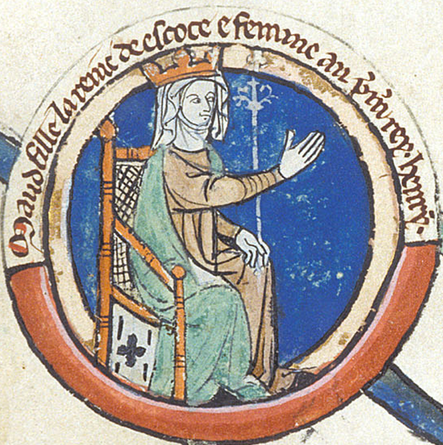
The benchmark of morals and the ornament of life
Hackney, Wednesday August 21st 2019
This probably won’t be very long: I’ve just stopped for lunch in a place that feels like a living room while I rest and regroup. It wasn’t stressful getting here, but it felt like an effort and I’m very hot and sweaty – I’ve already wiped down once at Liverpool Street and it made no difference. I’ve walked past Vagabond Tattoo Parlour on my way, looks nice and clean though I may take the average age up by twenty years. I’m thinking I’ll leave Matilda until tomorrow, she deserves to be more than a pit-stop on my rush to the hotel. I think the remainder of the day will be spent out enjoying Kingston nightlife. There’s a place called Copperleaf that has a gin bar and it looks like they take it seriously too, so I’ll give them a go.
I felt a wonderful sense of peace and freedom this morning. I was super early for the train so I read a Wimsey with a coffee and muffin and I felt so content. Same on the train. I have three days, and apart from going to Westminster at some point there is nothing tying me down. I feel like whatever happens will be fine and I will be equal to it. That may not be true in reality but I felt it and that’s rare. Today I’m wearing a necklace and make-up, I went to get a cheap pair of strappy sandals – my work ones would have been stinky and embarrassing – and I found myself trying on a gypsy top. Where does this come from. I think it’s partly the money – I have the money to get a train to London and stay over for a couple of days and I can go out for dinner and have a little splurge knowing I won’t have to live on economy noodles for the rest of the month to pay for it. .
Kingston upon Thames, later…
Well. What an afternoon. First, I should say that I am in Copperleaf, which has a weird, nautical, night time at the docks feel but very friendly and accommodating, drinking a Citadel G&T. it was, according to the tasting notes, spicy, citrus, rich though all I got was mouth burn but it is acceptable tonic’d down.
Back to earlier. I left Caffe In to head back to Vagabond. They were a bit emptier than before – I said I had been emailing with Emma who turned out to be the woman I was talking to. She asked to see the tattoo – I had thought of this and worn a short-sleeve t-shirt. Then it got weird. She called over one of the artists to look and see if he could do what I was asking. He said it was lovely work and called someone else over who also said it was lovely. Someone else overheard and came to look too. I covered it back up while we discussed it and Emma said there was some time now if I could stay. Very surprised, I also thought this would stop me from chickening out, so I said yes. And they asked to look at it again. I took a seat and filled out the release while the artists sorted out his inks. It took about 10 minutes, and he came back for another look during that time. I was quite nervous, not only of the pain but the artist doing me didn’t have a chair, he only had a flat couch on which he wrapped some clingfilm. He needed my tattoo to be facing him, so I lay sideways with one arm under my head and the other gripping the edge of the couch in anticipation. He started by drawing over the design with a sharpie to show the outline. And then the needle came out. When I had the original done, I remember interlacing my fingers and twisting to counter the pain. For the first ten minutes I closed my eyes and gripped the couch but after a while it was just annoying. I wouldn’t have wanted it to go on forever, but I could have a conversation at the same time. Not even wincing. And I should also say that the artist, whose name I didn’t get and regret it, was chattering with me about the design, who had done it, how you don’t see classic designs like it anymore and regularly asking if I was OK. I took a peak after he finished the black-work and it was already transformed. I saw the inks he was going to use for the red and green and I was a bit worried they were too light, I had hoped for richer colours, but I needn’t have worried. It looked – looks – amazing. So clearly defined, all the detail is back, the vibrancy. There’s a slight blur around the edges where the original bled out but I’m calling it an aura! The artist took some photos, told me he was going to redraw it so he could add it to his portfolio and probably showed it to everyone in the shop. For the experience and the work combined, totally worth £100! I was absolutely buzzing as I came out. it was 4.30 by then so I made a beeline for the hotel, picking up E45, tape and an annoyingly large roll of clingfilm along the way. Stripped off and planted myself in front of the fan for half an hour, took a shower, re-dressed the tattoo, got dressed up and as is now traditional, walked the wrong way and took twice as long to get to the restaurant than necessary.
I’ve just polished off asparagus tempura (the green got lost in the grease, sadly) and duck with new potatoes, corn and cherry salsa (I know but it worked) and essence of meat jus. So rich. Not allowed to lick the plate. Not that kind of place. It looked a little nouveau when it arrived, but they were two big chunks of duck, not enough fat if you ask me, but substantial all the same. I’m letting it settle before I decide about dessert. The gin is helping me to feel very mellow.
Westminster, Thursday August 22nd 2019
I am such a hypocrite. I asked a verger how to go direct to the shrine area and she not only let me through the rope, bypassing 1 million tourists but invited me to a 10-minute prayer service in the shrine area. I have also accidentally gathered Anne of Cleeves, Anne Neville and Eleanor of Castille. Don’t worry ladies, I’ll be back to do you properly.
Later…
I’m probably going to hell in a handbasket but that was very moving – to pray at the shrine of Edward the Confessor, the most sacred space known in essentially all of England. Inevitably I got a bit teary and the priest was very solicitous. There was a very worn slab at the back with two shields on, which was certainly not Matilda’s tomb, but I touched it anyway, hoping to encompass any and all royal bodies entombed in the general vicinity.

So, who have I just perjured myself to gather? Matilda of Scotland, born Edith to Malcolm, King of Scotland. Raised in a convent by her (obsessive) aunt Christina, whose ministrations Matilda resisted with a vengeance. Skirted various arranged marriages, finally assenting to wed Henry I as long as he continued to rule England according to the laws of Edward the Confessor. Bargain struck. As a queen she was an interesting dual personality. She generously endowed churches, priories, leper hospitals, gave rich gifts and exercised her influence over Henry when it suited her. She had a close, personal relationship with Anselm, archbishop of Canterbury, often referring to him as father in a more than spiritual way. But she could also show surprising ambivalence, refusing to intervene on behalf of 200 vicars who walked to her barefoot, hoping she would intercede against a tax on married clergy, and that same father Anselm chastised her for demanding such punitive taxes on her churches and estates. She gave with one hand and took with the other. She willingly gave up her daughter, aged 8, to a man in his twenties and was the grandmother of Henry II and his empire. She didn’t live long enough to witness the early death of her only son, William Aetheling, and we don’t actually know what she died of. She is buried to the south of the shrine of Edward the Confessor, whose body she, Henry and Anselm personally exhumed and reburied on its current site, later expanded and decorated by Henry II. She acted as regent on a regular basis while Henry sorted out Normandy, even when more ‘appropriate’ males were available. Regardless of what we know of her physically, or of her personality, we can see the power she exerted. We can see her influence like the wake of a ship. She was strong-willed, determined to be heard and believed, especially during her ‘trial’ to establish if she had become a nun while under her aunt’s care. That she is recorded as having stamped on her whimple in fury whenever Christina’s back was turned shows a lack of fear at being viewed as irreligious by a convocation of bishops. She understood her wealth not only well enough to give, but also to demand what was due to her. She was pious but she also had a head for business. She ruled in Henry’s stead, signed charters, held legal court and received foreign delegations. She was also a bit tricksy – getting her brother in law drunk enough to peacefully settle a dispute. She was a woman of strength, intelligence, had a sense of her identity and what that was due, pious yet worldly, greedy even, and acutely aware of not only her waxing influence, but also its wane. When to speak and when to shut up. Matilda of Scotland, I honour you.
Covent Garden, later…
My feet are killing me, pox on the strappy sandals and all their works. I’m having another ‘joining the human race’ moment sitting outside Tuttons – never heard of it, doesn’t run in my circles – submitting to an exorbitant lunch in exchange for a rest and, to be fair, top-notch people watching. I got out of the abbey as quickly as possible and I’ve come to Covent Garden for the Whiskey Emporium, which reportedly also has a good gin selection. After that to Argos on the Strand where I shall finally purchase a 10” tablet to replace my own which refused to acknowledge that Netflix or Amazon Prime even exist. I shan’t be blowing a day’s wages on dinner tonight, so I’ll need something to watch – tried TV last night, won’t be trying again. I should also try to find a walk-in NHS clinic – or friendly tattoo studio because I can’t stop the dressing from slipping and now the tattoo is just covered by tape. (My mushroom ravioli was nice but none of the mushrooms were enclosed in the big sheets of pasta in the bowl, so it more closely resembled a mushroom lasagne). I kind of have the rest of the day and I’m not sure what else to do given I have a blister the size of my face on my foot and feel like walking exactly nowhere. I didn’t sleep awesomely well either, woken up at 4am by what sounded like a thousand people under my window, and worrying about my legs cramping meant I was flexing my ankles consciously all night. Every time I even remember I have legs I half wake up with worry they’re going to go. I can feel them aching just sitting here.
Camden, Friday August 23rd 2019
The rest of yesterday was pretty much a bust. I hobbled to the Whiskey Shop and got two new gins. I hobbled to Argos and got the new tablet. Hobbled to the bus stop where I waited 20 minutes then hobbled to another bus stop because I was on the wrong side of the road, sat in pain on bus and train, hobbled to M&S for snacks and hobbled back to the hotel. So much pain, so many blisters. Lay slumped on the bed watching Elementary for all but an hour of the evening, when I went down to the hotel restaurant for a curry. Slept well though. I woke up a bit anxious about today. Originally, I’d planned to spend part of the day in Hackney but now I have the whole day until 9.03 to fill. I thought of seeing a movie, even a classic, but they were either right timing wrong film – Enter the Dragon – or wrong timing right film – Notorious. No decent art exhibitions. Really didn’t want to do Hampton Court even though it’s walking distance from the hotel. Chiswick House was closed. Again. After an hour of googling I settled on London Zoo. School holidays, baking sun, back in the walking boots because it’s either that or just not walk. I haven’t been since I was small enough to be carried on dad’s shoulders. I’m lingering in a Costa trying to push the day back as far as possible though I can pretty much guarantee I’ll be at Paddington two hours early. At least
Regent’s Park, later…
Sadly, another bust. Mostly down to London being hotter than the surface of the sun, inevitably the only animals not comatose in the shade was a rather extroverted camel. No gorillas, no tigers, four passed-out lions and a fuck-tonne of oblivious tropical fish. I think I spent more time sitting in the shade than looking at no visible animals. It’ an efficient place, water fountains, electronic lockers, helpful staff (the woman at the information desk reliably informed me that no, I did not have sunscreen smears on my face). Fascinating cross-section of parenting techniques, my favourite being a guy with his 3-year-old daughter on his shoulders, sensibly wearing a hat, to whom he solemnly read out the sign beside each exhibit and point it out, to which she would just as solemnly look and go ‘oooh’. My least favourite as pretty much every other family. Thanks to the water fountains I have consumed a disgustingly healthy amount of water, though barely replacing what I’ve sweat out I suspect. So I’m sat on a bench, in the shade, watching people drift past – rather a lot of people for a normal work day – with a breeze carrying the scent of cut grass and undertones of dog past me knowing that eventually I am going to have to stand up and make my way to the other side of Regent’s Park to the tube, and then to Paddington. But not right now.
The Life of Matilda of Scotland (or what we know of it)
1080
- Matilda of Scotland born to Saint Margaret of Scotland and Malcolm III of Scotland, and is given the name Edith
1086
- Matilda is sent with her sister Mary to Romsey Abbey, to be educated under the care of her aunt Christina, who has taken orders there. The relationship is not happy
1093
- Matilda refuses a marriage with William of Warenne, 2nd Earl of Surrey on account of ‘having taken orders’. She actually has not.
- August: Matilda is recognised in her habit at Wilton Abbey by King William Rufus
- Summer: Matilda’s father King Malcolm, enraged at finding her in a nun’s habit, removes her and Mary to Scotland
- 13 November: Matilda’s father King Malcolm of Scotland is killed with his oldest son and heir Edward at Alnwick while leading a raid in revenge for being snubbed by William Rufus
- 16 November: Matilda’s mother Margaret of Scotland dies of grief, leaving her children in the care of Turgot, Prior of Durham
1094
- February: Anselm of Acosta writes to Osmund, Bishop of Salisbury to complain about Matilda leaving the convent, and asking him to compel her to return. It is likely both Matilda and Mary returned to Wilton Abbey as lay boarders
1097
- Matilda’s brother Edgar Atheling overthrows King Donald III and takes the crown of Scotland. Her position now as sister to a king makes Matilda’s situation more favourable.
1100
- 2 August: William Rufus is shot dead by a stray arrow while hunting in the New Forest. His brother Henry immediately rides to Winchester to secure the royal treasury, then on to London
- 4 August: Henry I is crowned at Westminster Abbey. As a way of uniting the Normans and Saxons in England, he begins to consider a marriage with Matilda, who as a Saxon princess who can trace her lineage directly to Edward the Confessor
- Autumn: Matilda agrees to marry Henry I on condition he rule England according to the laws of Edward the Confessor, to which he agrees
- October: Anselm returns from banishment to advise Henry I against the marriage as Matilda is believed to be a nun. Under questioning Matilda affirms she was forced to wear the habit by her aunt Christina but never took orders. She is confirmed in this by childhood witnesses and the sisters at Wilton Abbey. A panel of bishops agree with the custom of wearing the veil to avoid the unwanted attentions of Norman men, and proclaim her free to marry. Anselm agrees and Matilda is free to marry Henry I
- 11 November: Matilda marries Henry I at Westminster Abbey and formally changes her name from Edith to the Norman Matilda, in recognition of her Norman husband. Henry I settles on her most of the lands of Edith of Wessex, including property in London, dues and taxes from Exeter, Winchester, Rockingham and Rutland, and Malmsbury and Barking Abbeys. He also issues a charter to Abingdon Abbey, which would become Matilda’s favourite religious house.
- 14 November: Matilda is consecrated queen and crowned by Archbishop Anselm
1100-1107
- Matilda commissions Turgot, Prior of Durham, to write a life of her mother.
1101
- Matilda with Henry I and Archbishop Anselm confirm Norwich church as a cathedral
- 31 July: Matilda is reported to have given birth to her first child at Winchester, named Euphemia. It is more likely that she was in the early stages of pregnancy and the dates have been misunderstood.
- Summer: Robert Curthose, brother of Henry I, invades England to reclaim his lands from William de Warenne. Hearing Matilda is in confinement at Winchester Castle, he leaves the castle in peace. Matilda later convinces him to pay her for the restitution of his lands.
1102
- Henry I arranges for Matilda’s sister Mary to marry Eustace III, Count of Boulogne.
- Summer: Early in her pregnancy Matilda removes to Abingdon Abbey so she could be cared for by the Abbot, Fabricius
- 7 February: Matilda’s first child is born at Abingdon Abbey. She is named Aethelice by her mother, but known as Matilda, or Maud
- 25 May: Matilda presides over the Whitsun court at Westminster while Henry is away quelling a rebellion
1103
- Spring: Matilda goes against Henry I by siding with Anselm in a dispute about who has the right to appoint bishops and abbots.
- October: Matilda’s second child is born at Winchester. He is named William Aetheling, and is baptised by Gundulf, Bishop of Rochester
- Matilda is instrumental in the repeal the unpopular curfew law, banning fires from burning or being lit after 8pm
1104
- Anselm convinces the Pope to excommunicate all the bishops invested by Henry I, who immediately forbids Anselm to return to England. Matilda convinces Henry I to return the revenues of the See which he has seized.
- 4 August: Matilda acts as regent when Henry I leaves for Normandy
- 15 August: Matilda is present at Abingdon Abbey to celebrate the feast of the assumption with Abbot Fabricius
- December: Matilda spends the winter at Northampton, joined by Henry I after Christmas
1105
- Henry I re-invades Normandy to aid the barons against his brother Robert Curthose
- Anselm writes to Matilda criticizing her for exacting high rents from her churches. 200 priests walk barefoot to Matilda’s court to beg her to intercede against Henry I’s punitive tax on married clergy, though she does not attempt to assist. It is suggested she senses her influence has waned after her support for Anselm.
1106
- Easter: Matilda and Henry I send the holiday at Bath
- July: Matilda acts as regent while Henry I is in Normandy
- August: Henry and Anselm resolve their quarrel, allowing Anselm authority over investitures as long as the clergy do homage to the King for their lay properties. Ill health stops Anselm from returning to England until September.
- 28 September: Henry I defeats Robert Curthose at the battle of Tinchebrai, imprisoning him in England and claiming Normandy for himself. Matilda’s uncle, Edgar Aetheling is also captured, but at her intercession he is pardoned and pensioned
1107
- January: Matilda’s brother Edgar, King of Scotland dies, succeeded by her other brother, Alexander the Fierce
- March: Matilda and Henry I are together at Rouen
- Easter: Henry I returns to England, spending the holiday at Windsor while Matilda remains at Lillebonne, following him home by Whitsun
- August: Matilda and Henry I are at Canterbury to witness Anselm consecrate the bishops invested in his absence
1107-1108
- Matilda is instrumental in founding the 2nd Augustinian Abbey in the country, part of general religious reform moving away from the Benedictine order which is seen as lax. The new foundation is built in London at Aldgate, dedicated to the Holy Trinity.
1108
- July: Anselm acts as regent when Henry I returns to Normandy but his ill health means that Matilda takes over by 1109. Matilda is granted the ‘soke’ at Ethelred’s Hythe in London. By 1152 this is known officially as the Queenhithe after Matilda, and would be enjoyed by future queens
1108-1109
- Heinrich V, Holy Roman Emperor, asks for the hand of Matilda’s daughter Maud in marriage
1109
- 21 April: Matilda’s close friend and confidant Archbishop Anselm dies
- 24 May: Contracts are finalised for the marriage between Matilda’s daughter Maud and Heinrich V
- 13 June: Matilda is present at the Whitsun court held at Westminster. Also present is an embassy from Heinrich V, who stood proxy for him during the first formal betrothal ceremony
1110
- Lent: Matilda bids farewell to 8 year old Maud as she sets sail for Germany. This is the last time they would meet
- 10 April: Matilda’s daughter Maud is formally betrothed to Heinrich V at Utrecht
- 25 July: Matilda’s daughter Maud is crowned queen of Germany and of the Romans at Mainz
- Whitsun: Matilda and Henry I hold the holiday at the newly completed Windsor Castle
- Matilda and Henry I personally assist in the exhumation of Edward the Confessor and Queen Ealswith at Newminster, to be reinterred at Hyde Abbey, which Matilda and Henry I had founded for this purpose
1111
- 12 February: Matilda’s daughter Maud has the imperial diadem placed on her head at Rome. This event is disputed, though thereafter Maud styles herself ‘Empress’
- Summer: Henry returns to Normandy, leaving Matilda as regent
1113
- Spring: Matilda’s 9 year old son William Aetheling is betrothed to Mahaut, daughter of Fulk V, Count of Anjou
- July: Matilda is suffering from an unknown illness, forcing William to return from Normandy
1114
- 7 January: Matilda’s daughter Maud is married to Heinrich V at Worms Cathedral
- September: Matilda acts as regent while Henry returns to Normandy. While there, he has his barons swear fealty to William Aetheling as his heir
1115
- Easter: Matilda spends the holiday at Odiham Castle in Hampshire
- 31 May: Matilda’s sister Mary dies of an unknown cause at Bermondsey Abbey. Mary’s only daughter, Matilda of Boulogne is immediately betrothed by Henry I to Stephen of Blois
- 28 December: Matilda, Henry I and William Aetheling attend the consecration of the new abbey church at St. Albans
1116
- April: Matilda is left as co-regent with William Aetheling while Henry I returns to Normandy
- Spring: Matilda oversees the release and celebration of a man who claimed to have been released from his chains of incarceration by the spirit of St. Etheldreda. She has the London church bells rung and masses sung in honour of the miracle
- August: Matilda heads a council of Bishops deciding the terms on which papal legates might be allowed to visit England. They uphold the ancient liberties of England and ‘annihilate’ the Pope’s demand that they be permitted entry.
1117
- Christmas: Matilda is in ill-health and Henry I returns to spend the holidays with her. She would spend her final few months at Westminster.
1118
- Matilda founds a leper hospital outside Chichester. Her final public act is to issue a writ protecting a chapter of eremetical monks living in the forest of Luffield in Northamptonshire. Matilda’s brother David visits her, and she witnesses two charters issued to Durham Cathedral.
- 1 May: Matilda dies at Westminster. Henry I funds 47,000 masses to be sung for the salvation of her soul. He does not, however, return home. Matilda’s body is carried to Westminster Abbey, angering the monks of Aldgate Abbey who believed Matilda would have wanted to be laid to rest with them. Matilda is laid to rest in the sacristy of Westminster Abbey, later being moved to a new site south of Edward the Confessor’s shrine. No monument was raised but the inscription on her grave read ‘Here lies the renowned Queen Matilda, the second, excelling both young and old of her day, she was for everyone the benchmark of morals and the ornament of life’
References
- Weir, Alison (2017) Queens of the Conquest: England’s Medieval Queens. London, Jonathan Cape
- Hilton, Lisa (2008) Queens Consort: England’s Medieval Queens. London, Weidenfeld & Nicholson.
Letter from Matilda of Scotland to Anselm, Archbishop of Canterbury
[I’ve included this here as Matilda has so few remaining letters or artefacts, almost everything about her is hearsay from decades after her death or longer. This letter is in her own words, and is so personal, so intimate in it’s language it’s really the only thing that gives me a sense of her personality.]
To her piously remembered father and worthily reverenced lord, Anselm the archbishop, Matilda, by the grace of God Queen of England, the least of the handmaidens of his holiness, wishes perpetual health in Christ.
I give unnumbered thanks to your unceasing goodness, which, not unmindful of me, has condescended, by your letters presented to me, to shew forth your mind, though absent. The clouds of sadness in which I was wrapped being expelled, the streamlet of your words has glided through me like a ray of new light. I embrace the little parchment sent to me by you, as I would my father himself: I cherish it in my bosom, I place it as near my heart as I can; I read over and over again the words flowing from the sweet fountain of your goodness; my mind considers them, my heart broods over them; and I hide the pondered treasures in the very secret place in my heart. Yet, while I praise all you have said, at one thing along I wonder; that is, at what discreet excellency has said about your nephew. Yet I do not think I can deal otherwise with your friends than my own. I might say with mine than my own, for all you are yours by kindred are mine by love and adoption. Truly the consolation of your writing strengthens my patience, gives and preserves my hopes, raises me when falling, sustains me when sliding, gladdens me when sorrowful, softens me when angry, pacifies me when weeping. Farther, frequent, though secret, consultation promises the return of the father to his daughter, of the lord to his handmaiden, of the pastor to his flock. I am encouraged to hope the same thing from the confidence which I have in the prayers of good men, and from the good will which, by skilfully investigating, I find to be in the heart of my lord. His mind is better disposed towards you than many men think; and, I favouring it, and suggesting wherever I can, he will become yet more courteous and reconciled to you as to what he permits now to be done, in reference to your return, he will permit more and better done in future, when, according to time and opportunity, you shall request it. But even though he should persist in being an unjust judge, I entreat the affluence of your piety, that, excluding the bitterness of human rancour, which is not wont to dwell in you, you turn not from him the sweetness of your favour, but ever prove a pious intercessor with God for him and me, our common offspring, and the state of our kingdom. May your holiness fare ever well.
Taken from Letters of Royal and Illustrious Ladies of Great Britain by Mary Anne Everett Green
 Anglica Regina
Leave a comment