
Westminster Abbey, September 16th 2019
That has got to be my fastest gather yet. A week to read the book, take advantage of already being in London and the association card and Bob’s your uncle. Which is something I don’t think I’ve ever said before. I’d write a long-detailed account of my journey here but in all honesty, I rode the train, I changed to a bus and I arrived. Considering the shenanigans, it’s taken to get to, and will take to get to, some of the others, I’m not sure if I’m relieved or disappointed. There isn’t much of an event about today, although true to form I welled up at both the abbey entrance and the grave marker. At least for Anne there is a grave marker, though I don’t think anyone knows how close it is to her remains, or even if she’s definitely here.
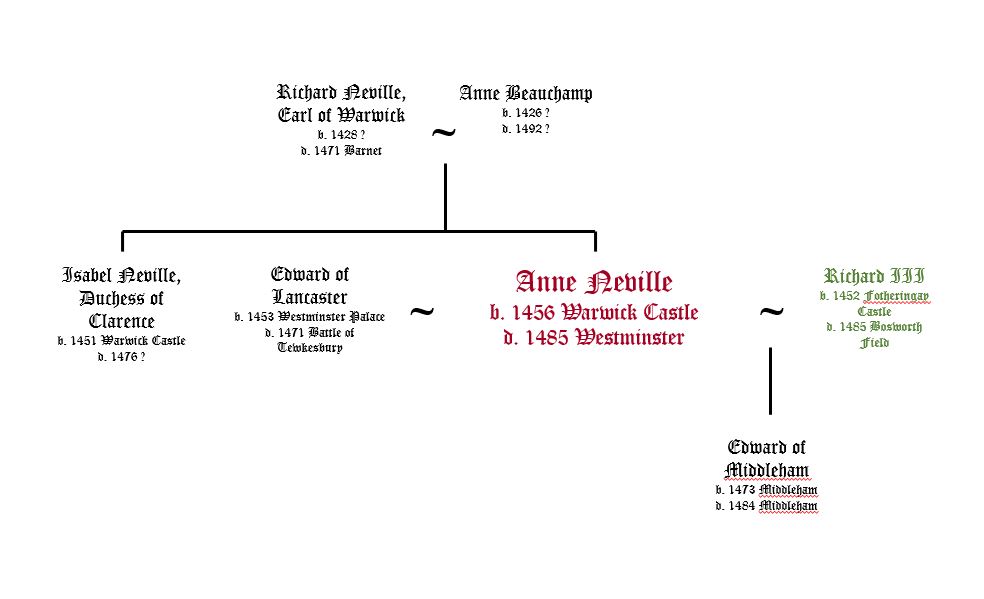
Anne seems very quiet to me. I was going to say conventional, but I don’t think that’s fair to her. It could be argued all the queens were conventional in that they, for the most part, obeyed convention. But by quiet I mean I don’t really have a sense of her personality. She doesn’t speak to me, I can’t hear her voice. I see her actions, or more usually the actions or demands of the people around her – father husband, mother in law, second husband – but I refuse to believe she simply rode their wake. It feels like she made one crucial decision when she was 16. Before and after that, history happened to her. As a daughter of someone so pivotal to English society as the Earl of Warwick, she was inevitably available for being bartered for political advantage. Being dragged repeatedly between England and France as her father strived either to right the wrongs of Henry VI or please himself, depending on your view of him, must have just seemed like normal life. She always moved with her family, never sent away for education, actually receiving other, important figures into her own home. She seems to have led a stable, family life until her wedding to Edward of Westminster, at which point she comes under the guardianship of her mother in law, Margaret of Anjou. From there its constant moving, raising troops, watching skirmishes from afar and finally fleeing the scene of Edward’s death/murder and subsequent arrest.
I wonder what influence Margaret had on Anne in those months together? Did her time with Margaret influence her decision to elope with Richard? It couldn’t have been to not allow herself to be under a man’s control again as she quite literally ran into Richard’s arms. Was she determined to get her hands on her inheritance – homes would allow her a measure of control and stability she may have wanted or needed. Maybe Richard himself was the draw. She knew him from her childhood and adolescence. Maybe she had been given a taste of life as wife with Edward and decided wife was a preferable situation to ward/hostage. Whatever her motivation, that one decision to escape from her sister’s guard was a dynamic, conscious act that defined her future and to a certain extent, her death. It is like the events of the next thirteen years clicked into place as a direct result of that choice. That is the only moment I see her make such a choice, the only time I see a person instead of just events and evidence. After that she goes silent again, spending the next decade as the ‘conventional’ duchess, running their various households, bearing the necessary son, deputising for Richard during his absences in France.
It could be argued that given his history, Richard was always going to act the way he did at Edward IV’s death. He was always going to strike at the Woodvilles and there was only one possible outcome. Despite that, after the suspicions and celebrations they might have reigned longer if not for Edward of Middleham’s death. I wonder how quickly the thought occurred to Anne, through her grief, that his death was now her failure as a queen, and now matter how happy or functional they had been as duke and duchess, she was now married to a king without an heir. I wonder if it was a surprise to hear the rumours about Elizabeth of York, whether she would have gladly permitted a bastard to be named Prince of Wales, or if she knew that was not tenable. Richard needed a legitimate heir to keep the peace and that could not come from her. Was she ready for a divorce and a retreat to sanctuary, did she start to suspect foul play, or did she already know she was probably not going to live long anyway?
Ultimately despite being present for some of the most divisive, controversial and violent events of medieval history she seems to have been spiritually absent. Likely her most defining period was as duchess, a decade when she exercised control of her household and her son, gave generously to religious houses and gave Richard the stable foundation he needed from which to soldier, politician and land owner he was required to be. It was literally what she was raised to do. However hidden or silent she was, there were desires, hopes, preferences that may only have surfaced in the written evidence briefly, but they were there. It is impossible for Richard to have eloped with Anne, lived with her for a decade, raised a son, had her crowned queen beside him and mourned Edward’s death without those desires, that personality effecting him, changing him, strengthening or challenging his own and in the end, defining him as a king, and I say that not as a criticism but as a testament to her almost invisible but nonetheless powerful character. Anne Neville, 21st queen of England, I honour you.
Hounslow, later…
It’s been a while since I sat and wrote at home. I guess the new car will make my regular Saturday a thing of the past. I was quite emotional writing about Anne. I had sat in the same place as last time – it’ll take a few more visit but I wonder if I will become known as the woman who writes and cries. I would like to be a regular weirdo. I also enjoy listening to the conversations of loud Americans. The abbey audio tour ends with you sitting and looking at the North stained-glass window and contemplating. This is an ideal place for people to eavesdrop and observe. The couple behind me were planning where to go next (not the London Eye, you need a whole day) and finally settled for the Tate but didn’t want to do the 30-minute walk so decided to take the tube. I didn’t have the nerve to tell them Westminster is one of the busiest stations in the city and not only would the whole trip take longer than 30 minutes, they’d end up walking further with all the tunnels. But they also made some disparaging remarks about modern art, and while I may struggle with it myself, I don’t like to hear lazy jokes about blank canvasses and light switches so good luck to them and I hope they get lost on the way, they don’t deserve the Tate, modern or otherwise.
I’m sat in a Costa on Hounslow High Street and I notice a trend. There are a lot of men sitting alone or in pairs drinking espresso or macchiato. This branch is open until 8pm (two hours longer than Taunton) and I wonder if they’ll be here ‘til then. It’s very social, a bit Middle Eastern. You don’t see working men go for coffee in Taunton, they go for a pint. Presumably Englishmen need the lubrication, the excuse to loosen up.
The Life of Anne Neville (or what we know of it)
1456
- 11 June: Anne Neville is born at Warwick Castle to Richard Neville, Earl of Warwick and Anne de Beauchamp [1]
1457
- Anne and her sister Isabel likely cross the Channel to Calais, as her father takes up his post as Captain of Calais [1]
- August: Anne’s father the Earl of Warwick is created the Lord High Admiral for three years after a French raid on the port of Sandwich [1]
1461
- June: Edward of March is crowned Edward IV at Westminster. Shortly after the Earl of Warwick is recalled from Calais with his family to be Admiral of England and King’s Lieutenant in the North. Anne’s family home becomes Middleham Castle in Wensleydale, Yorkshire. [1]
1461-1464
- Anne’s household is joined by Richard of Gloucester, younger brother of Edward IV, for his education and training. [1]
1465
- September: Anne and her family make offerings at St. Mary’s church in Warwick. Anne, her sister Isabel and Richard of Gloucester attend the enthroning of George Neville as Archbishop of York at Cawood Castle [1]
1466
- March: Anne and her family attend the christening of Elizabeth of York, daughter of Edward IV and Elizabeth Woodville [1]
1469
- February: Richard of Gloucester leaves Anne’s household to take up his commission from Edward IV as oyer and terminer [1]
- 12 July: Anne’s sister Isabel marries George, Duke of Clarence, Edward IV’s and Richard of Gloucester’s brother, without the King’s consent, the family having travelled to Calais out of the king’s reach specifically for this purpose [1, 6]
- 26 July: Anne’s father the Earl of Warwick triumphs against the Yorkist party at the Battle of Edgecote, capturing Edward IV, and arrests and beheads members of the Woodville family. Edward IV is imprisoned in Warwick Castle. [1]
- October: The Earl of Warwick and his family remove to either Middleham or Warwick and Isabel and Clarence remove to Waltham [1]
- December: Anne and her family are reunited in London for the Christmas holidays, and to witness the reconciliation of Edward IV with his brother the Duke of Clarence, and Anne’s father the Earl of Warwick [6]
1470
- 12 March: The Earls of Warwick and Clarence are routed by the Yorkist party, and they flee with their families to Calais. [1]
- 16 April: Their ship carrying Anne and her family is repulsed at Calais and Anne’s sister Isabel goes into labour onboard. Isabel survives but the child does not. The family remains at sea, committing piracy against Burgundian ships [6]
- 1 May: the ship carrying Anne’s family is permitted to land in Normandy [1]
- 25 July: Anne and Edward of Westminster, son of Henry VI and Margaret of Anjou, are betrothed at Angers Cathedral as part of a bargain between Anne’s father and Queen Margaret [1]
- 31 July: Anne, Edward of Westminster and Margaret of Anjou remove to Amboise [1]
- November: Anne, Edward of Westminster and Margaret of Anjou arrive in Paris [1]
- 28 November: formal dispensation for the marriage of Anne to Edward of Westminster arrives from the pope [1]
- 13 December: Anne and Edward of Westminster marry at Amboise. [1, 3]
1471
- April: Anne, Edward of Westminster and Margaret of Anjou set sail from Honfleur for England, though their fleet is scattered by bad weather and while Anne’s ship lands at Weymouth, her mothers’ lands at Portsmouth [1, 6]
- 14 April: Anne’s father the Earl of Warwick is killed at the Battle of Barnet. Anne’s mother the Countess of Warwick retires in shame to sanctuary at Beaulieau Abbey. Anne, Edward of Westminster and Margaret of Anjou remove to Cerne Abbey to regroup [1]
- late April: Anne, Edward of Westminster and Margaret of Anjou arrive in Bath at the head of the Lancastrian force [1]
- 3 May: Anne, Edward of Westminster and Margaret of Anjou arrive at Tewkesbury, pursued by Edward IV’s forces. Yorkist and Lancastrian troops meet in battle but Anne and Margaret flee to Malvern Priory. Edward of Westminster is killed in battle, likley either directly by Richard of Gloucester, or with his close involvement. [1]
- 6 May: Anne and Margaret of Anjou are arrested outside Tewkesbury and taken to Edward IV’s court at Coventry [1]
- 11 May: Anne and Margaret of Anjou are brought in front of Edward IV [1]
- 14 May: Anne is moved to Coldharbour House under the guardianship of her sister Isabel and her husband the Duke of Clarence, who have inherited both the Earl of Warwick’s estate and Anne’s inheritance through her mother. Clarence tries to keep Anne hidden, possibly disguising her as a servant, so they he can retain complete control of the York estates. It is likely that it was while staying here she renewed her acquaintance with Richard of Gloucester. Anne writes to Elizabeth Woodville, her mother Jacquetta of Luxembourg and her daughter Elizabeth of York asking for her inheritance to be honoured and paid to her, but she is denied. [1, 6]
- Winter: Anne likely comes to an understanding with Richard of Gloucester, as this is one of the few times Richard was in Coldharbour House long enough. [1]
1472
- 16 February: Anne escapes from her sister’s custody at Coldharbour House, facilitated by Richard of Gloucester, to sanctuary at St. Martin le Grand Church. [1]
- 22 April: dispensation for the marriage of Anne to Richard of Gloucester is granted [1]
- Summer: Most likely date for the marriage of Anne and Richard of Gloucester at St. Stephen’s Chapel, Westminster. The newlyweds set up their household at Anne’s childhood home of Middleham [1, 3]
1473
- May: Anne’s mother the Countess of Warwick is released from Beaulieau Abbey under Richard’s custody to attend Anne’s confinement, due to her experience in midwifery [1]
- June 1473: Anne’s mother Anne Beauchamp is taken to Middleham Castle under Richard of Gloucester’s custody, where she is held confined, most likely to make sure she does not re-marry, thereby disinheriting Anne, and Richard, of her Yorkist lands [6]
- Spring: Anne gives birth to her only child, Edward of Middleham [1]
1474
- Anne’s marriage settlement is finalised, allowing her half of her mother’s legacy. As the wife of a traitor, Anne de Beauchamp is legally dead, and may have surrendered a chance to challenge this as part of the bargain to be temporarily released from Beaulieau. [1]
1475
- Anne deputises for Richard of Gloucester during his absences in France, including arbitrating and hearing minor court cases. [1]
- December: Anne and Richard of Gloucester spend Christmas in London [1]
1476
- Anne becomes a lay sister of Durham Priory [1]
- July: Anne likely attends the reinterment of her father-in-law Richard, Duke of York and his son the Earl of Rutland at St. Mary and All Saints church at Fotheringay. [1]
- December: Anne’s sister Isabel dies after giving birth. Her surviving children are removed to Sheriff Sutton House under Richard of Gloucester’s guardianship [1]
1477
- April: Anne’s brother-in-law the Duke of Clarence becomes increasingly unstable, ordering the arrest of a woman he believes to have poisoned Isabel [1]
- July: Anne’s brother-in-law the Duke of Clarence is summoned to Westminster after publicly declaring the king was trying to poison him. He is charged with dangerous conduct and imprisoned in the Tower of London [1]
1478
- 16 February: Anne’s brother-in-law the Duke of Clarence dies in the Tower after a Bill of Attainder accuses him of plotting to usurp the crown. [1]
- February: Anne’s son Edward of Middleham is created Earl of Salisbury [6]
1480
- Autumn: Anne and Richard of Gloucester are staying at Sheriff Sutton House when they receive the news the Scots are planning an invasion. Richard is granted £10k in wages for his soldiers for leading his forces against the Scots. [1]
1483
- Easter: Anne and Richard of Gloucester are likely spend the holiday together at Middleham
- 9 April: Edward IV dies, naming Anne’s husband Richard of Gloucester as Protector of the country and his son, who should succeed him as Edward V [1]
- 16 April: Anne and Richard of Gloucester receive the news Edward IV is dead [1]
- 20 April: Anne and Richard of Gloucester ride from Middleham to York for a service of memorial for Edward IV, and to swear oaths of fealty to Edward V [1]
- 22 April: Anne returns to Middleham to pack the household in advance of moving to London [1]
- 5 June: Anne and her household arrive in London, moving into Crosby Place. She learns that Richard has ordered the arrest of Anthony Woodville, taken control of the person of Edward V and Elizabeth Woodville has fled with her children into sanctuary. Edward V is moved to the Tower, normal procedure for a new king. [1]
- June : Anne is with Richard of Gloucester at Baynard’s Castle as Parliament petitions him to accept the throne. He declines, but ‘reluctantly’ accepts the day after. Rumours of the death of Edward V and his younger brother Richard in the Tower begin the spread almost immediately. In 1501, Richard’s servant Sir James Tyrell would confess, under torture, that he had murdered them [1]
- 4 July: Anne and Richard of Gloucester travel by barge from Westminster to their new royal apartments in the Tower [1]
- 5 July: Anne and Richard of Gloucester ride through London to Westminster [1]
- 6 July: Anne and Richard III are crowned side by side in Westminster Abbey by Thomas Bourchier, Archbishop of Canterbury. Her train is carried by Margaret Beaufort [1, 3]
- July: Anne and Richard III leave London to go on royal progress. Anne stops at Windsor Castle, while Richard continues on to Oxford [1]
- August: Anne likely joins Richard III at Warwick Castle. Anne is presented with the first version of the Rolls of the Earls of Warwick by family chronicler John Rous. While there, the Spanish ambassador proposes a marriage between Anne’s son Edward of Middleham and one of the daughters of Ferdinand and Isabella of Spain, possibly Isabella or Joanna [1]
- 15 August: Anne and Richard III leave Warwick Castle, travelling though Coventry, Leicester and Nottingham, later staying at Pontefract Castle [1]
- 29 August: Anne and Richard III arrive in York. To mark their visit, 13,000 badges of Richard’s emblem of the white boar are struck and distributed [1]
- 8 September: Anne’s son Edward of Middleham is created Prince of Wales and Earl of Chester in a ceremony at York Minster [2]
- Winter: Anne and Richard III arrive in London, after the summary execution of the Duke of Buckingham for treason, and the repulse of Henry Tudor’s first attempted invasion. Anne likely establishes her household at Greenwich as Margaret of Anjou and Elizabeth Woodville had [1]
- December: Anne and Richard III celebrate Christmas at Westminster [1]
1484
- 22 January: Anne is present at Richard III’s only Parliament at which the Titulus Regius confirms Richard’s succession to the throne and the illegitimacy of the marriage of Edward IV and Elizabeth Woodville, and therefore by extension of their children including Edward V and Elizabeth of York [1]
- Spring: Anne receives Elizabeth Woodville’s five surviving daughters int her court, after Richard publicly becomes their protector, including Elizabeth of York. She also welcomes her sister Isabel’s two children Edward, Earl of Warwick and Margaret. Anne’s own son, Edward of Middleham, is increasingly ill and remains away from court [1]
- Spring: Anne and Richard III set out on a second progress, stopping first at Cambridge [1]
- March: Anne augments and endows Queen’s College in Cambridge, becoming seen as the defacto foundress by dint of her position as queen [4]
- 20 March: Anne and Richard III arrive at Nottingham [1]
- 9 April: Anne’s son Edward of Middleham dies of unknown causes while at Middleham Castle [1]
- 20 April: News reaches Anne at Nottingham of the death of her son [1]
- 5 May: Anne and Richard III arrive at Middleham to arrange for the funeral of their son. His final resting place is unknown [1]
- June : Anne is with Richard III at Scarborough attending to naval matters [1]
- July 5: Anne grants to the College of St. Margaret and St. Bernard, Cambridge the manor of Covesgrave, Bucks, and all the king’s lands, rents, reversions and services in Sheldynthorpe, Market Depyng, Bargham and Stowe, co. Lincs, the manor of Neuton in Suffolk, the lordship of Stanford, co. Berks and the lordship of Bukby, co. Northants, as well as £110 a year for the sustenance of themselves and their scholars, and to say divine service for the good estate of the king and queen, and the souls of their fathers, and the support of other works of piety [5]
- August: Anne and Richard III are in London as the bones of Henry VI are exhumed from Chertsey Abbey and reburied at St. George’s Chapel, Windsor, at Richard’s request [1]
- November: Anne and Richard III are reunited at Westminster for the Christmas holidays. While there, news reaches them of a further planned invasion by Henry Tudor. During the celebrations, Anne’s niece Elizabeth of York is seen wearing one of her dresses, which as an illegitimate child she was not permitted to do, increasing the rumours that Richard III intended to do away with Anne and replace her with his own niece [1, 6]
1485
- Spring: Rumours of Anne’s ill-health and Richard III’s viewing Elizabeth of York as a future queen abound. It is possible these rumours spurred Henry Tudor to invade England again, as he had sworn an oath at Christmas 1483 that he would marry Elizabeth himself [1]
- Epiphany: Anne’s illness seems to enter its final phase. She becomes melancholy both from her sickness and from being shunned by Richard III, though this is likely on doctor’s orders [1]
- 16 March: Anne Neville dies at Westminster from unknown causes, but likely some form of tuberculosis. Richard III is forced to make a public proclamation that he had not poisoned here less than a month after her death. She is interred in Westminster Abbey likely in the sanctuary, though her exact resting place is unknown. In 2012, the Richard III Society erected a plaque in her honour close to the shrine of Edward the Confessor [1, 4, 6]
References
- Licence, Amy (2014) Anne Neville: Richard III’s tragic queen. Stroud, Amberley Publishing
- Edward of Middleham: https://en.wikipedia.org/wiki/Edward_of_Middleham,_Prince_of_Wales
- Anne Neville: https://en.wikipedia.org/wiki/Anne_Neville
- Laynesmith, J. L. (2004) The Last Medieval Queens: English queenship 1445-1503. Oxford, Oxford University Press
- Deputy Keeper of the Records (1901) Calendar of the Patent Rolls Preserved in the Public Record Office; Edward IV, Edward V, Richard III. London, HMSO
- Norton, Elizabeth (2011) England’s Queens: the biography. Stroud, Amberley Publishing
 Anglica Regina
Leave a comment