Astuti pectoris virilisque constantiae femina
(Having the virile, courageous breast of a man, but the constancy or fortitude of a woman)
Travelogue
Faversham, August 23rd 2025
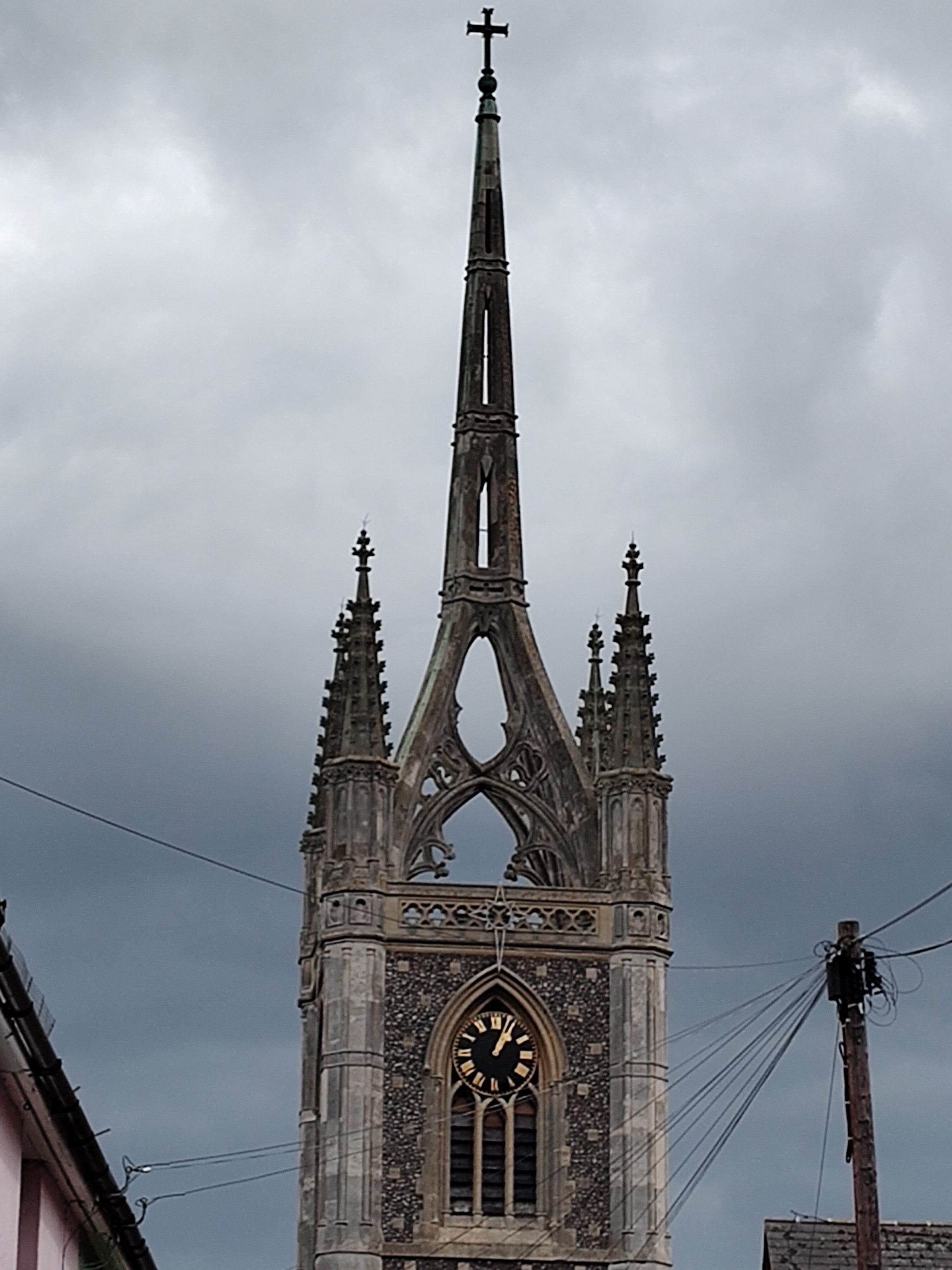
Despite having one of the best ‘stories’ to tell, Matilda’s gather has been a bit limp. I knew it would be, I knew all I could do was walk through the churchyard and see the sport’s hall standing where the abbey used to be, and then sit in the church knowing I had at least walked where she did, been where she had been. The abbey was a labour of love for her and Stephen, and she would have spent months here overseeing its construction. The church is nice: covered in flint nodules and has a very unusual hollow spire, but having wandered around as much as I could inside I didn’t see any sign of the purported tomb, and it didn’t feel like the sort of place I could linger so I came back out into the town and found a more friendly looking pub to do the gathering.
I feel a bit guilty because its been so long since I finished the research that her life and queenship has boiled down to that one event, the siege of Winchester, when actually she was fully inhabiting her role as countess and queen long before and for a good time after. We don’t know much about her before her marriage to Stephen in 1125, and my sense is she was given as a gift by Stephen’s uncle, Henry I. On the retirement of her father Eustace she became enormously wealthy, and one writer has estimated they were the 7th wealthiest couple in the country. She would have been used to travelling and dealing with an army of stewards overseeing her land in Boulogne and in England, mainly in Kent, Essex and London. She essentially controlled one of the best shipping routes between France and England, giving her responsibility but also huge leverage which she wasn’t shy of using. She did her duty to Stephen and had a fairly quick succession of children including a nominated heir and one dedicated to a convent from birth. None of her land was held by right of her husband so I imagine, like Edward I and Eleanor of Castile, her work became their focus, the lynchpin of the rest of their daily lives. Meetings, channel crossings, charters, court rulings etc etc. And then Henry I died, and Stephen took a huge gamble for them both, banking on his cousin the Empress Matilda (the proclaimed and acknowledged heir of Henry I) being slightly slower off the mark and crucially, just that little bit further away in Brittany than he was in Boulogne, to enable him to cross the channel to England, secure the royal treasury and have himself crowned before she even knew what was going on. He left Matilda heavily pregnant and unable to travel for a few months: one account has her running through Boulogne town in agitation and in advanced labour (no doubt recorded by someone with very little understanding of childbirth) crying out for the intercession of Bernard of Clairvaux to save her. Whether the saintly monk heard her entreaties we do not know, but she was safely delivered and a couple of months later she is in London being crowned Queen of England. Because Stephen’s coronation had been in such haste, Matilda’s was the more lavish affair and I like the symmetry of her coronation outshining his, just as her strategic manoeuvring would outshine his five years later. The prayer at her coronation read ‘…the English people rejoice being ruled…by the prudence of the queen’s virtue…’
At this point Stephen was probably an unknown quantity as a king, but Matilda had a decade of solid, wise governance of huge tracts of lands in both countries under her belt and she was already well respected, and sought out for her acumen. She acts as an advocate in court hearings, she slowly teaches her son Eustace the family business, she makes grants as both countess and as queen and seemingly balances these two demands effortlessly. But the Empress is still in the background gradually becoming more of a threat as she demands or tries to take by force the crown she fully believes is hers. There is no real ‘start’ to The Anarchy, as this long slow-burn civil war is known. Stephen made his move and things started quietly rumbling, and then less quietly and eventually the pair find themselves at war with some of their own people. Stephen had the benefit of actually being the anointed king (and in possession of a penis) but there was a lot of sympathy for the Empress, particularly from her half-brother Robert of Gloucester and some of the barons who had sworn to uphold her claim, and having honourable men on her side made things difficult. To return to Matilda’s reputation, I think no-one recognised her value more than Stephen, evidence by his sending her to lay siege to Dover Castle while he attended to other crises. She brought her land troops from her own lands in Kent to besiege the land-side and her own men from Boulogne in their ships to blockade the Channel; she probably personally received the surrender of the castle, which didn’t take too long as these things go.
The next 18-months is relatively quiet, a few consecrations of abbeys, a few gifts given to loyal friends and allies, Matilda is closely involved in the negotiation of a peace treaty with Scotland using her ‘female shrewdness’. For any other woman we might say ‘well what other weapon could she use?’ But Matilda’s resources seem endless. As the Empress’s sallies against crown castles and lands start to cause real trouble, Matilda first represents Stephen at negotiations with the Empress’s followers, then when Stephen is captured and held prisoner at Bristol she starts to act for herself. Not so overtly as the Empress, Matilda is always careful to couch her pleas in terms of working in her husband’s name, in her son’s name, she is only a poor wife and mother doing her best as a feeble woman, take pity ye powerful men! When diplomacy fails, she changes tack and while the Empress is in London celebrating the crown being within her reach by taxing the Londoners until their heads spin, Matilda ranges her forces on the South Bank and start bombarding the city. It takes very little to sway the Londoners away from the woman wringing every last penny out of them and towards the woman who is already queen and has overwhelming force on her side. The Empress is forced to flee and Matilda is welcomed back into the city.
But reclaiming London isn’t enough. The Empress is still at large, still a threat, and still has Stephen in her control. Matilda cannot rest on her laurels. What follows is unique in English history and why more isn’t made of it I don’t know. The Empress has fled to Winchester hoping to catch up with her former follower, Stephen’s slippery brother Henry of Blois. Henry hears she’s coming for him and makes a run for it, commanding his men to hold the castle against her in his name. The Empress occupies Winchester and lays siege to the castle. And then, like Gandalf arriving from the east on the third day at Helm’s Deep, Matilda arrives with her army of Kent men and angry Londoners, surrounds Winchester completely blockading it and effectively starves the Empress and her retinue out over the next two months. The Empress’s strategic retreat turns into an embarrassing rout and Matilda finally has the power to negotiate for Stephen’s release. She boldly offers herself in exchange as an act of faith, and also, giving the lie to the idea that all is done in Stephen’s name and she really has no power, Matilda negotiates the release with the castellan of Bristol, Mabel of Gloucester, showing where the real power lay in that moment. Stephen is re-crowned and I wonder whether he felt pride or gall that he was only enthroned at the pleasure of his wife.
Matilda would only live another nine years after Winchester. She personally oversaw the construction of Faversham Abbey, which was intended to be the dynastic vault of the House of Blois. For better or worse there was only ever one Blois king: possibly erring towards the better, since Matilda’s son Eustace had become an unpleasant young man and the Archbishop of Canterbury refused to pre-emptively crown him for that reason. Matilda died at Hedingham in Essex with her husband and one of her sons with her. She didn’t live to see Stephen’s final defeat at the hands of the Empress’s son Henry of Normandy, nor did she have to grieve for the relatively early deaths of her son and husband. Somehow Matilda managed to do all the things only men were supposed to do: she ran her estates, she dispensed justice, she literally waged war and she did it in such a way that the critics barely noticed, casting her in stark relief to the Empress who also did those things but also couldn’t help rubbing people’s noses in it. Matilda was intelligent, wise, and in the face of perceived failure she would simply try something else and keep going until she succeeded. She was extraordinary in the breadth of her understanding and skill, as evidenced by what happened to her family when she was no longer there to bolster them up. Richard of Hexham said of her ‘the ardour of woman’s heart is unconquerable’ and he was right. Matilda of Boulogne, Queen of England, I honour you.
The Life of Matilda of Boulogne (or what we know of it)
I haven’t quoted from texts such as the Gesta Stephani or William of Malmesbury because they are so loaded with bias and inaccuracies, preferring to stick with mostly modern writers who can interpret and parse them better than I. Again, with many of the very early queens, there is some disagreement about dates, especially around the births of her children.
1103-1105
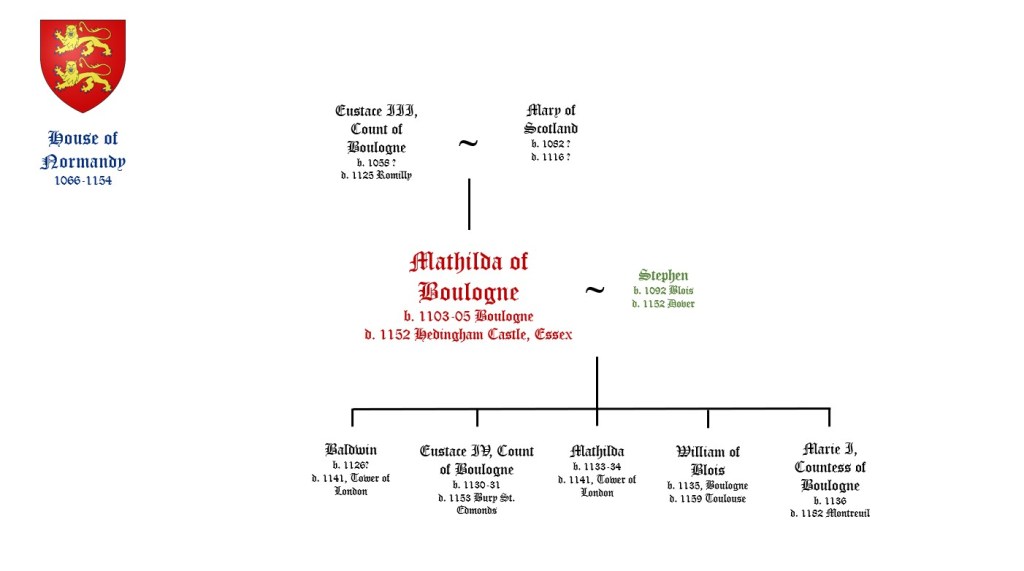
- Matilda of Boulogne is born to Mary of Scotland, daughter of Malcolm III of Scotland, and Eustace III, Count of Boulogne. As her father is highly involved in Henry I’s political affairs, and signed or witnessed many charters with him, it is likely Matilda is raised at or near to the English court [3, 12]
1116
- May 30: Matilda’s mother, Mary of Scotland, dies and is buried at the Cluniac abbey of Bermondsey [6]
1118
- Matilda’s father is offered the throne of Jerusalem after his brother Baldwin I dies. However he gets as far as Apulia before hearing that distant relative has been crowned in his place [4]
1125
- Matilda is married to Stephen [5]
- Spring: Matilda’s father Eustace of Boulogne retires to the Cluniac monatsery at Romilly, devolving all his lands and responsibilities on his daughter and son-in-law. Matilda is present and affixes her personal seal to her father’s abdication charter. As countess of Boulogne, Matilda inherits not only the county of Boulogne in France, along with its important trading ports of Boulogne and Wissant, but the honour of Boulgne in England, encompassing vast land-holdings in London, Essex and Kent. Between them, Stephen and Matilda become the 7th richest family after the king. Matilda’s father dies at his monastery later that year [3, 6]
1126
- Matilda gives birth to her first child, a son named Baldwin [12]
1130-1131
- Matilda gives birth to her second child, a son named Eustace [12]
1133-1134
- Matilda gives birth to her third child, a daughter named Matilda [12]
1135
- December 1: Matilda’s uncle Henry I of England dies at Lyon-le-Foret. Matilda is with Stephen in Boulogne where they hear news of Henry I’s death. Stephen immediately leaves France and sails for England [2, 9]
- December 15: Matilda’s husband Stephen is crowned king of England at a hasty ceremony in Westminster Abbey [11]
- December: Matilda gives birth to a her fourth child, a son who is given the Anglicised name of William. It is probably this pregnancy that nearly ended in catastrophe, and during which Matilda is reported to have run out of the city to find Bernard of Clairvaux. During her labour, having made preparations for death, she invokes his name and begged for his help, and is safely delivered. [3, 12, 13]
1136
- January: Matilda arrives in England in advance of her coronation [13]
- March: Matilda is crowned queen of England at Westminster Abbey by William de Corbeil, who had also officiated St Stephen’s coronation. The service is better attended than his, including by the couple’s son and heir Eustace. During the festivities, Matilda’s daughter Matilda, aged just 2 years is married to Waleran de Beaumont, Count of Meulan and 1st Earl of Worcester. Henry of Huntingdon describes it as ‘…more splendid for its throng and size, for gold, silver, jewels, robes and every kind of sumptuousness than any that had ever been held in England…’. As part of the crowning ceremony, after the ring is placed on her, the prayer reads ‘…the English people rejoice, being ruled by the authority of the king and being governed by the prudence of the queen’s virtue…’ [3, 8, 11, 12, 13]
- May: Matilda is present at Winchester where she and Eustace witness a charter to the abbey of Cluny [3]
- June: Matilda is with Stephen and Eustace at Winchester for a great court, during which she witnesses a charter granted by Stephen to the abbey of Cluny [13]
- Summer: Matilda spends the summer at Corfe Castle while Stephen and Robert of Gloucester besiege Exeter [13]
- Matilda gives birth to her fifth child, a daughter named Mary or Marie, and who was immediately dedicated to a convent at Lillechurch in Kent [12]
- December: Matilda acts as an advocate for the plaintiff in a corum rege by Prior Norman of Holy Trinity, Aldgate. The fact that she is named first among the advocates points to her importance, her status, and the attractiveness to appellants of having her on their side [3, 13]
1137
- March: Matilda, Stephen and Eustace land at La Hougue with a large retinue ready to besiege the Empress Matilda’s husband Geoffrey of Anjou [13]
- March-April: Matilda is in Evreaux with Stephen and Eustace, where she grants a charter giving Cressing Temple and St. Mary’s church, both in Essex, to the Knights Templar, likely in honour of her father Eustace III’s crusade to the Holy Land [3, 13]
- July: Matilda is with Stephen at Rouen where she witnesses a charter of 100 marks to the abbey of Fontevrault [3, 13]
- Summer: Matilda is with Stephen at Lyons-le-Floret where she witnesses a charter confirming the possessions of Mortemer Abbey [3]
- Autumn: Matilda has returned to England and is at Westminster to execute a charter in her own name, ordering the return of a ship and belongings to the abbot of St. Augustine [3]
- December: Matilda is with Stephen at Marlborough, possibly on his way to Dunstable, where she witnesses a charter confirming Roger FitzMiles in the lands of his father. [3]
- December 25: Matilda and Stephen are at Kingsbury Palace, Dunstable, for the Christmas holidays [13]
1138
- January: Matilda is with Stephen at Eye, and attests a charter confirming its holdings. [3]
- February 2: Matilda accompanies Stephen part of the way north as he moves to quell border plundering by King David of Scotland [13]
- Summer: Matilda personally directs the siege and blockade of Dover Castle, aided by her kinsman Pharamus of Boulogne, and her military commander William of Ypres. She likely brings in knights and soldiers from her own lands in Kent and Essex, along with ships from Boulogne to blockade the castle form the sea [3, 11, 13]
- August-September: Matilda likely receives the capitulation of Dover Castle in person from Walchelin Maminot [3]
- September: Matilda begins peace negotiations with King David of Scotland, supported by the papal legate Alberic, Cardinal of Ostia. She is reported as using ‘her female shrewdness and address’ [13]
- December 24: Matilda attends the election ceremony of the Archbishop of Canterbury, Theobald, formerly abbot of Bec-Hellouin [13]
- December 25: Matilda and Stephen are at Westminster for the Christmas holidays [3, 13]
1139
- January 8: Matilda attends the consecration at Battle Abbey of Archbishop Theobald, performed by Cardinal Alberic. Theobald’s translation would cause difficulties with Henry of Blois, Stephen’s brother, who had wanted the role but had been side-lined by Matilda and Stephen as potentially making him too powerful [3, 13]
- January 9-12: Matilda is present at the consecration of Godstow Abbey, to which she makes a grant of ten marks a year [3, 13]
- January 13: Matilda and Stephen are together at Oxford for the confirming of gifts to the abbey, including those from Matilda. While there she continues into negotiations with Alberic of Ostia over a truce between Stephen and her uncle King David of Scotland [3]
- April 9: Matilda is present for the ratification of the peace treaty at Durham between Stephen and King David of Scotland. The treaty is described as having been arrived at through the ‘persistent, prolonged pressure’ applied by Matilda on Stephen. In Richard of Hexham’s account of the treaty, he says ‘the ardor of woman’s heart is unconquerable’ [3, 13]
- December: Matilda and Stephen are at Salisbury for the Christmas holidays [5, 13]
1140
- February: Matilda is present for the betrothal ceremony between her son Eustace and Constance, the sister of King Louis VII of France. As part of the ceremony, Matilda persuades Louis to invest Eustace as Duke of Normandy [5, 13]
- August: Matilda is present for a conference at Bath between herself representing Stephen, his brother Henry of Blois as papal legate, and Archbishop Theobald, to discuss the mounting lawlessness driven by Empress Matilda’s continued military actions against Stephen. This is likely the first time the succession of Empress Matilda’s son Henry was suggested, though Matilda was opposed. As a result of Stephen’s prevarications over several days, the talks stagnate and collapse. Afterwards, Matilda meets in secret with Henry of Blois at Guildford to discuss the excommunication of Stephen’s supporters [1, 2, 3, 5, 13]
1141
- February 9: Matilda is with Eustace in London to hear the news of Stephen’s capture and imprisonment at Bristol. While at the Tower of London, intending to leave and take her daughter in law Constance with her, she is physically restrained by Geoffrey de Mandeville, who forcibly takes Constance, leaving Matilda to depart alone. From his captivity, Stephen demands the girl’s return, which is done with poor grace. While there, they jointly give a charter granting rent to Arrouaise Abbey, in Artois. It is likely they granted this charter together as a way of Matilda teaching Eustace about ruling the county, while still in his minority [3, 13]
- April 10: Matilda sends a letter to the Empress Matilda’s court, requesting the release of Stephen. There was an initial attempt not to have the letter read, but Christian, Matilda’s clerk, reads it aloud anyway. In it, Matilda begs the release of her husband, the acknowledgement of Eustace’s claim to Boulogne, and the offer that on release, both Matilda and Stephen would retire to a religious life. It is likely Matilda didn’t attend to speak herself for fear of being arrested and imprisoned. The suggestion to enter religious houses would almost certainly have come from Matilda, since she and Stephen would have to dissolve their marriage to take vows. [3, 13]
- June: Matilda and her forces encamp on the southern bank of the Thames and begin to lay siege to London as Empress Matilda is within arranging her coronation. On the 24th, the citizens rise up in Queen Matilda’s name and the Empress and her cohort are forced to flee. [13]
- July: Matilda is admitted to the city of London by the citizenry with a great welcome [13]
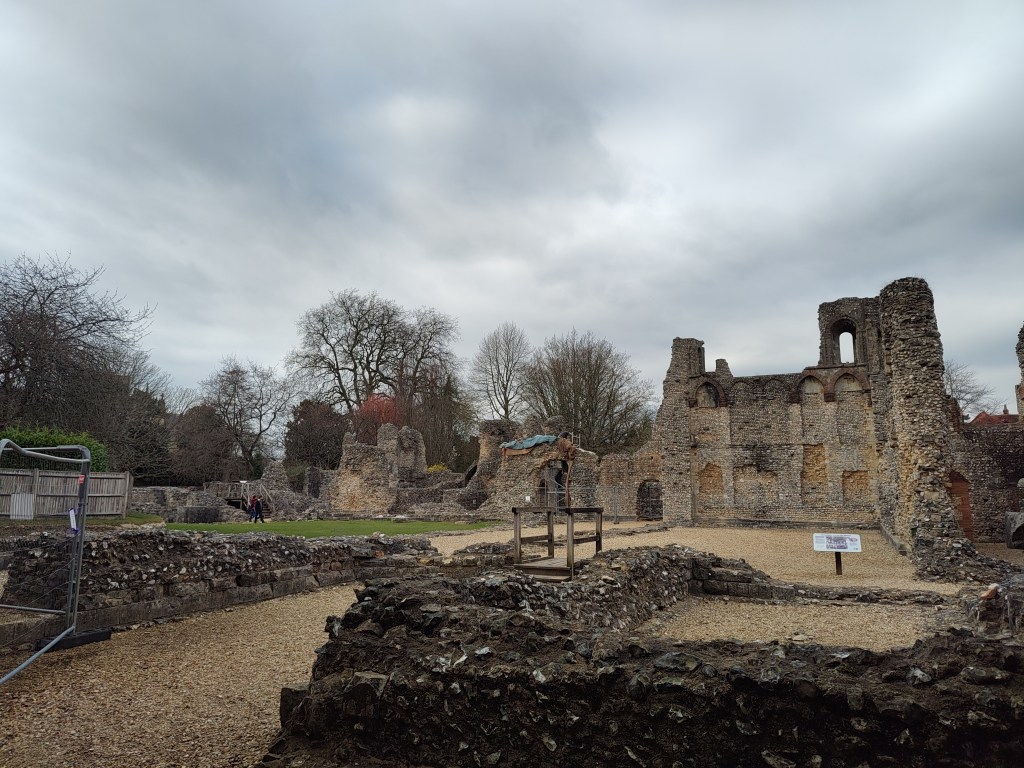
- July 31: Matilda, William of Ypres and an impressive force of Kent men and angry Londoners arrives at Winchester where Empress Matilda is recovering from her flight. She begins a blockade of Wolvesy Castle, securing all roads lest any supplies be smuggled through to the Empress. The siege would last for two months, which a greater part of the town being destroyed by fire from within. Matilda’s lieutenant William of Ypres attacks the Empresses forces as they try to establish a supply route to the besieged castle, forcing them to hide in a nearby nunnery. William sets fire to the nunnery to force out the rebels, capturing many and reclaiming their supplies for the Queen [5, 7, 13]
- September 14: Matilda’s forces surround the fleeing Empress and her retinue, and the men brought from London enter the city and loot it. As Matilda’s forces pick off sections of the Empress’s party, their orderly retreat becomes a running battle along the road to Stockton [7]
- Winter: Matilda’s daughter Matilda and son Baldwin die in the Tower of London, where the royal family is lodging. They are both buried by the high altar of the Priory of the Holy Trinity, Aldgate [5, 13]
- November 1: Matilda and Eustace arrive at Bristol Castle, where, having treated directly with Robert of Gloucester’s wife Countess Mabel, chatelaine of the castle, she sees Stephen released from his 9-month imprisonment. Matilda and her sons were to remain in custody at Bristol until Robert of Gloucester had likewise been released. [13]
- November 4: Matilda and her sons are released from captivity at Bristol Castle. The family then enter London in triumph. In honour of the victory, Matilda’s son Eustace is knighted as the Count of Boulogne. [13]
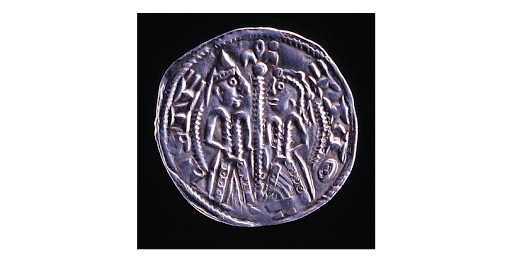
- December: Matilda is present at Canterbury Cathedral as Stephen is re-crowned by Archbishop Theobald. In celebration, Stephen has a coin minted showing the full-length figures of the king and queen, acknowledging his debt to Matilda [13]
1142
- April: Matilda and Stephen depart on a royal progress, stopping at York to help break the siege between William Earl of York and Alan Earl of Richmond [3, 13]
- June 21: Matilda and Eustace are in Lens, where she grants a charter giving her tithe for Merck to the church of St. Nicholas in Arrouaisse [3, 5, 13]
- Autumn: Matilda returns to England and is immediately required by Stephen to raise troops to reinforce his own at Oxford, where he is besieging the Empress Matilda [13]
- October: Matilda grants a charter to the abbey of Clairmarrais with her son Eustace, which is witnessed by Bernard of Clairvaux [3]
1146
- December: Matilda and Stephen are at Lincoln for the Christmas holidays [3, 13]
1147
- July 6: Matilda receives a letter from Pope Eugenius III, begging her to intervene with Stephen in the case of Robert de Sigello, Bishop of London. Sigello had been the Empresses Matilda’s man, and Stephen was angry at his refusal to swear an oath to him. There is no evidence of Matilda’s intervention, but Sigello retains his post until his death in 1150 [13]
- December: Matilda and Stephen are in London for the Christmas holidays [3, 13]
1148
- Matilda’s son William marries Isabel, 4th Countess of Surrey, daughter of William de Warrenne [8, 12]
- Matilda founds the convent and hospital of St. Katherine by the Tower [10]
- April: Matilda and Stephen are in London for the Easter holidays [13]
- April-May: Matilda intercedes on behalf of Theobald, Archbishop of Canterbury, after he is evicted from England by Stephen for secretly attending a papal council, and requests he stay with her at St. Omer so he can be available to negotiators from Stephen [3]
- May-August: Matilda is a regular visitor to St. Augustine’s Abbey, Christchurch, Canterbury as she oversees the foundation of Faversham Abbey in her own and Stephen’s name. As St. Augustine’s is a silent order, she has monks brought from a nearby house to sing and pray with her [13]
- December: Matilda and Stephen are at Lincoln for the Christmas holidays [13]
1152
- March: Matilda is present for a great council, convened by Stephen in London, at which the magnates are asked to swear an oath of allegiance to Eustace [5, 13]
- April: Matilda is present with Stephen at a synod where Archbishop Theobald refuses to crown Matilda’s son Eustace, who had grown into an unpleasant and dissolute man. [13]
- April: Matilda visits a former serving damsel, Euphemia de Cantilupe, Countess of Oxford, at Hedingham Castle in Essex. While there she catches a fever and being afraid for her life, summons her confessor and Stephen. She asks for a grant to Holy Trinity to be drawn up on her deathbed, which is witnessed by Stephen, and requests the presence of her personal confessor, Prior Ralph of Holy Trinity, Aldgate. Personal lay confession had not yet migrated to England from the continent, and her reliance on Prior Ralph suggests she was aware of and embraced modernity within Christian doctrine [3, 13]
- May 3: Matilda dies of a fever at Hedingham Castle, Essex, with Stephen and Eustace with her. Her body is later carried to London, and then to Faversham Abbey, where it is buried in the choir. [13]
References
- Bradbury, Jim (1996) Stephen and Matilda. Stroud, Alan Sutton Publishing
- Chibnall, Marjorie (1991) Empress Matilda. Oxford, Basil Blackwell
- Dark, Patricia A. (2005) The Career of Matilda of Boulogne as Countess and Queen in England, 1135-1152. Oxford, University of Oxford
- Eustace III of Boulogne wiki page https://en.wikipedia.org/wiki/Eustace_III,_Count_of_Boulogne
- Hilton, Lisa (2008) Queens Consort: England’s medieval queen. London, Weidenfeld & Nicholson
- https://historytheinterestingbits.com/2024/03/08/matilda-of-boulogne-from-countess-to-queen/
- Isaac, Stephen (2022) Women in Command: the Matildine War of 1141. War & Society 41:4, October 2022, p.247-263
- Matilda of Boulogne wiki page https://en.wikipedia.org/wiki/Matilda_I,_Countess_of_Boulogne
- Norton, Elizabeth (2011) England’s Queens: the biography. Stroud, Amberely Publishing
- Stricland, Agnes (1858) Lives of the Queesn of England fro the Norman Conquest. https://www.gutenberg.org/files/47121/47121-h/47121-h.htm#link2HCH0005
- Vitalis, Ordericus (1856) Ecclesiastical History of England and Normandy v.4. London, HMSO
- Weir, Alison (2002) Britain’s Royal Families: the complete genealogy. London, Pimlico
- Weir, Alison (2017) Queens of the Conquest: England’s medieval queens. London, Jonathan Cape
 Anglica Regina
Leave a comment